
November 27, 2025
Zohran Mamdani is re-writing the political rules around support for Israel | Kenneth Roth
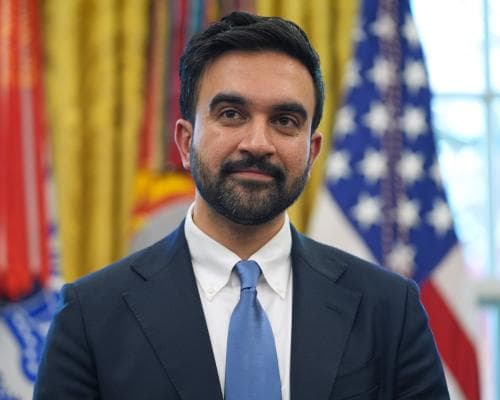
Zohran Mamdani's recent election as New York City mayor marks a significant shift in the political landscape regarding support for Israel, challenging the long-held notion that Jewish voters prioritize backing the Israeli government over other issues. His candid and critical stance on Israel's actions in Gaza, which he describes as genocidal, has resonated with a substantial portion of the electorate, including one-third of Jewish voters. This shift suggests a broader acceptance of criticism towards Israel among progressive voters in New York and may signal a changing tide in U.S. politics, potentially impacting future support for Israel at the national level. Roth argues that Mamdani's victory could embolden other progressive candidates to adopt similar positions, undermining the traditional pro-Israel consensus.
Stoic Response
Reflection on Political Shifts and Stoic Wisdom
Embracing Change
The election of Zohran Mamdani as New York City mayor signifies a transformative moment in political discourse. In Stoicism, we recognize that change is an inherent part of life. Marcus Aurelius reminds us that the universe is in constant flux, and we must adapt our perceptions accordingly.
- Acceptance of Change: Embrace the evolving political landscape as a reflection of collective values.
- Focus on Virtue: Regardless of political affiliations, we must prioritize virtue and integrity in our actions and beliefs.
The Power of Dialogue
Mamdani's candid criticism of Israel's actions has opened channels for dialogue that were previously constrained by convention. Epictetus teaches us that our perceptions shape our reality; thus, open discourse can lead to greater understanding.
- Encourage Discussion: Engage with differing viewpoints to foster a more nuanced understanding of complex issues.
- Seek Common Ground: Focus on shared human experiences rather than divisive rhetoric.
Compassionate Engagement
While Mamdani's views may evoke strong reactions, it is crucial to approach the topic with compassion. Seneca advises us to consider the broader context of human suffering and to respond with empathy.
- Acknowledge Pain: Recognize the genuine concerns of all parties involved, including the suffering of both Palestinians and Israelis.
- Promote Healing: Advocate for solutions that prioritize justice and peace, fostering an environment where healing can occur.
The Role of Responsibility
As citizens, we bear the responsibility to engage thoughtfully with the political process. Stoic philosophy emphasizes personal accountability and the impact of our choices on the community.
- Act with Intention: Make informed decisions that reflect your values and contribute positively to society.
- Influence Change: Use your voice to advocate for justice and equality, understanding that every action contributes to the larger narrative.
In conclusion, let us navigate these complex waters with the wisdom of Stoicism, embracing change, fostering dialogue, and acting with compassion and responsibility.
Source Body Text
Israeli prime minister Benjamin Netanyahu should be quaking in his boots at the decisive victory of Zohran Mamdani in the 4 November New York City mayoral election. Not because of absurd allegations of antisemitism for which there is no evidence, but because Mamdani has broken the longstanding taboo for successful New York candidates against criticizing the Israeli government. And he has only reinforced his approach in the month since his election. New York has the largest Jewish population in the United States – and the second-largest of any city in the world after Tel Aviv. The longstanding assumption was that many Jewish voters prioritized the defense of the Israeli government over other issues, so criticism of Israel would set them against a politician. Mamdani blew that assumption out of the water. During the campaign he spoke accurately and openly about the genocide that Israel was committing in Gaza. He insisted that all residents of Israel should have equal rights. He said he would arrest Netanyahu were he to show up in New York. Yet one-third of New York’s Jewish voters cast a ballot for him. As did many others. Some Jews may have been uncomfortable with Mamdani’s criticism of Israel but liked other aspects of his candidacy, such as his relentless focus on affordability. Others, myself included, were attracted by his candor on such an important issue as Israel. Many were also probably appalled by the efforts of Mamdani’s principal opponent, Andrew Cuomo, to tar Mamdani with fact-free allegations of antisemitism. Mamdani has only continued his openness on Israel since the election. In his remarkably friendly meeting with Donald Trump in the White House on 21 November, Mamdani repeated his genocide views and noted that the US government was funding it. Trump let the comment slide without a response. After a major Manhattan synagogue hosted a group that was encouraging American Jews to emigrate not only to Israel (a normal enough appeal) but also to Israel’s settlements in the occupied West Bank, Mamdani noted the illegality of the settlements. That is an accurate reflection of article 49 of the fourth Geneva convention, which prohibits an occupying power from transferring its population to occupied territory. It is hard to overstate how unusual such comments are on the part of a successful New York City candidate. It is not as if New York candidates never criticize Israel. In March 2024, Chuck Schumer, the Jewish Senate minority leader from Brooklyn who represents New York state, gave a much commented-upon speech in which he said that although Israel has a right to defend itself, it must do so while minimizing harm to Palestinian civilians in Gaza. But his language was carefully couched – tame compared to Mamdani’s – and he refused to endorse Mamdani, even after he won the Democratic mayoral primary. Already Mamdani is attracting other progressive candidates to New York City congressional contests who are willing to criticize Israel and challenging those who don’t. By all appearances, he has broken the ice and started a trend. We shouldn’t equate New York with the US at large. It is a solidly Democratic, extraordinarily progressive city. More to the point, my experience as a longtime resident is that much of its Jewish population shares that progressivism. As I have traveled around the United States, I have noticed that smaller Jewish populations are more likely to see themselves as a vulnerable minority and hence to back Israel as a potential haven from persecution. In New York, Judaism is part of the fabric of the city. The sense of security that being a New York Jew engenders is more likely to yield an openness to honest criticism of the Israeli government. The political shift on Israel that Mamdani’s victory represents should be a wake-up call for the Netanyahu government. Its genocidal conduct in Gaza has turned Israel into a pariah state in much of the world. Even Germany briefly suspended the sale of arms that could be used in Gaza. Britain, Canada, France and Australia recognized a Palestinian state. Israel has been charged with genocide before the international court of justice, and Netanyahu and his former defense minister face war-crime charges before the international criminal court for starving and depriving Palestinian civilians. Israel today is overwhelming dependent on the military aid, arms sales, and diplomatic support of one country: the United States. That means Trump. And he reads the polls. He must see that Aipac, the reflexively pro-Israel lobby, can no longer corral Jewish votes as it once did. He must see that even his Christian evangelical base – traditionally the most reliably pro-Israel votes – is having qualms after Israel’s atrocities in Gaza. Israel’s growing unpopularity in the United States seems to be part of why Trump felt free to impose his 20-point peace plan on Netanyahu despite its failure to accede to his maximalist demands. The diminishing esteem for Israel will undoubtedly play a role again as Trump decides whether to insist on a clear pathway to a Palestinian state, as Arab leaders want. Trump will depend on them to fund Gaza’s reconstruction and to provide an international stabilization force for the territory. That support for Israel is no longer de rigueur in New York could come to mean that it is no longer obligatory in Washington either. That is good news for the rights of Palestinians. But it is bad news for the hopes of Netanyahu and his far-right allies that the US government will endlessly close its eyes as the Israeli government attempts to “solve” the Palestinian conflict through the use of genocide, forced mass deportation, or endless apartheid. Kenneth Roth, former executive director of Human Rights Watch (1993-2022), is a visiting professor at Princeton’s School of Public and International Affairs. His book, Righting Wrongs: Three Decades on the Front Lines Battling Abusive Governments, is published by Knopf and Allen Lane To support the Guardian, order your copy of the UK edition at guardianbookshop.com. Delivery charges may apply