
January 7, 2026
The Trump doctrine exposes the US as a mafia state | Jan-Werner Müller
Executive Summary
The Trump administration's approach to international relations, particularly regarding Venezuela and Greenland, reflects a troubling shift towards a "mafia state" model, characterized by the prioritization of personal and corporate interests over traditional diplomatic norms. Trump's invocation of the Monroe Doctrine and his actions suggest a strategy aimed at securing resources for U.S. oil companies while undermining international law and promoting a culture of extortion and exploitation. Key indicators of this shift include the manipulation of public procurement processes, the sidelining of anti-corruption measures, and the open discussion of territorial acquisitions. This evolving doctrine poses significant implications for U.S. foreign policy and global governance, necessitating careful monitoring and strategic responses from leaders.
Stoic Response
The Tension of Control in International Relations
In reflecting on the article, one chief tension emerges: the troubling shift in U.S. foreign policy towards a "mafia state" model, where personal and corporate interests overshadow traditional diplomatic norms. This is starkly illustrated in the claim, “Trump’s promise to ‘run the country’ for the sake of US oil companies signals the internationalization of one aspect of his regime.” The implications of this shift are profound, as it undermines international law and promotes a culture of exploitation.
Recognizing What You Can Control
In the face of such geopolitical shifts, it is crucial to understand the Stoic dichotomy of control: discern what is within your power and what is not. You cannot control the actions of governments or the decisions of leaders, but you can control your own responses and choices. Focus on your own principles and values, ensuring they align with a greater good rather than personal gain.
Act with Integrity
-
Stay Informed: Engage with credible sources and stay updated on international affairs. Knowledge empowers you to make informed decisions and articulate your views clearly.
-
Advocate for Ethical Standards: Support policies and leaders that prioritize ethical governance and international cooperation. Use your voice to promote accountability and transparency in political systems.
-
Engage in Community Action: Participate in local initiatives that align with your values. Whether through volunteering, activism, or dialogue, your actions can contribute to a more just society.
Cultivate Inner Resilience
-
Practice Mindfulness: Regularly reflect on your thoughts and emotions. Acknowledge feelings of frustration or helplessness but do not let them dictate your actions.
-
Focus on Personal Growth: Invest in your own development. Read, learn, and cultivate skills that enhance your ability to contribute positively to society.
-
Embrace Stoic Principles: Remember the teachings of Stoicism: accept what you cannot change, focus on your virtue, and act with wisdom and courage. This mindset will fortify you against the chaos of external events.
By adhering to these principles, you can navigate the complex landscape of international relations with a Stoic resolve, ensuring that your actions reflect integrity and purpose amidst uncertainty.
Article Rewritten Through Stoic Lens
Journal of Marcus Aurelius
Reflection on International Affairs
In the unfolding of human affairs, I observe a troubling inclination toward self-interest and exploitation, particularly in the realm of international relations. The recent actions of a leader in the West, invoking the Monroe Doctrine, reveal a mindset that prioritizes personal gain over the common good. It is a reminder that the essence of governance must be rooted in virtue and the welfare of all, rather than the avarice of a few.
Acceptance of Nature's Order
The world is governed by a natural order, and the events surrounding Venezuela and Greenland illustrate the folly of attempting to manipulate this order for selfish ends. The desire to control resources and territory, as seen in the discussions regarding Greenland, reflects a misunderstanding of our place in the cosmos. We must accept that all things are transient and that true power lies not in domination, but in harmony with nature.
The Virtue of Restraint
In witnessing the strategies employed to secure resources for certain interests, I am reminded of the importance of restraint. The so-called “mafia state” model, where loyalty is bought and public procurement is manipulated, stands in stark contrast to the principles of justice and integrity. We must strive to uphold these virtues, even in the face of corruption and exploitation. The true leader is one who seeks to elevate the moral fabric of society, not tear it asunder.
Contemplation on Power and Responsibility
The notion of power as a means to extract rather than to serve is a grave error. The call for intervention in Venezuela, framed as a noble endeavor to promote democracy, is often a guise for ulterior motives. It is essential to recognize that the ends do not justify the means. We must ask ourselves: are we acting in accordance with virtue, or are we merely perpetuating cycles of oppression and exploitation?
The Illusion of Security
The laughter shared among leaders regarding the security of Greenland serves as a poignant reminder of the absurdity of human ambitions. Security, when sought through domination and control, becomes an illusion. True security arises from cooperation, mutual respect, and the recognition of our shared humanity. We must cultivate relationships based on trust rather than fear, for it is in unity that we find strength.
The Call for Wisdom
As I reflect on these matters, I am called to cultivate wisdom in my own actions and decisions. The world may be rife with challenges, but it is through the practice of virtue that we can navigate these turbulent waters. Let us strive to be examples of integrity, humility, and compassion, recognizing that our legacy will be measured not by what we possess, but by how we uplift others.
Conclusion: Embracing the Path of Virtue
In the face of adversity and moral decay, let us embrace the path of virtue. The pursuit of power for its own sake leads only to ruin, while the pursuit of wisdom and justice leads to true fulfillment. May we remain steadfast in our commitment to the greater good, accepting the natural order of the universe, and striving to embody the ideals of a just and harmonious society.
Source Body Text
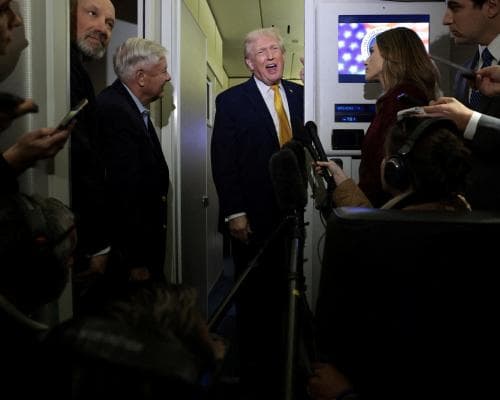
When a bleary-eyed Trump explained the kidnapping of Nicolás Maduro this past Saturday, he invoked the Monroe doctrine: while the US president sounded as if he were reading about it for the first time, historians of course recognized the idea of Washington as a kind of guardian of the western hemisphere. Together with the national security strategy published in December, the move on Venezuela can be understood as advancing a vision for carving up the world into what the Nazi jurist Carl Schmitt called “great spaces”, with each in effect supervised by a great power (meaning, in today’s world, Washington, Moscow and Beijing). But more is happening than a return to such de facto imperialism: Trump’s promise to “run the country” for the sake of US oil companies signals the internationalization of one aspect of his regime – what has rightly been called the logic of the mafia state. That logic is even more obvious in his stated desire to grab Greenland. The theory of the mafia state was first elaborated by the Hungarian sociologist Bálint Magyar in 2016. Such a state is less about corruption where envelopes change hands under the table. Instead, public procurement is rigged; large companies are brought under the control of regime-friendly oligarchs, who in turn acquire media to provide favorable coverage to the ruler. The beneficiaries are what Magyar calls the “extended political family” (which can include the ruler’s natural family). As with the mafia, unconditional loyalty is the price for being part of the system. As so often with Trump 2.0, practices that other regimes try to veil have been unashamedly in the open: the “pausing” of the Foreign Corrupt Practices Act signaled that the US is not only open for business but also bribing (be it with a jet or a fake prize from Fifa); not only do pardons appear to be for sale; and not only can companies curry favor by financing a grotesque ballroom – but also the president’s political family, which includes billionaires like Steve Witkoff and Howard Lutnick, seems poised to profit handsomely, including from foreign deals, and now foreign military adventures; according to the investigative reporter Judd Legum, the Trump oligarch Paul Singer (owner of the oil company Citgo), is to set to do very well with a Trump-controlled government in Caracas. This does not mean that the US’s “special military operation” in Venezuela is entirely a matter of “it’s the oil, stupid”; there is an argument that it helps push back against Iran, China and Russia (even if the precedent that killing 40 people and kidnapping sets also legitimizes interventions by other powers, as those lamenting the weakening of international law have rightly pointed out). There is also the old-style neoconservative justification for removing a tyrant from power, something that the former self of Marco Rubio, before bending the knee, would have favored – though leaving a decapitated regime in place has made talk of democracy and human rights protection a tad implausible. But the point is not regime change, as long as a regime is fine with Trumpian exploitation. The alternative is extortion: if the US oil companies get “total access”, the rulers of what is also a mafia state of sorts can stay in place; if not, it’s a bigger boss talking to a minor boss along the lines of: “Nice country you have there; pity if we had to do a full-scale invasion.” What really gives the game away is the almost immediate follow-up chatter not just about Cuba, but about Greenland. Aboard Air Force One, Trump, Lutnick and Lindsey Graham had a good – in fact, obscene – laugh about the supposed inability of Denmark to provide security in the Arctic Circle; the joke that had the sycophants in stitches consisted of saying that Denmark was now providing one more dog sled for security (the reality is that Copenhagen recently decided to send new naval vessels and surveillance drones – though an important elite dog-sled patrol does actually exist). In any case, the US has long had a base in Greenland and in many ways used the territory as it saw fit: despite a Danish policy against nuclear weapons, during the cold war, the US started flying nuclear-armed B-52s over Greenland, and they did so, it turned out, with the tacit consent of the Danish government (some footage of Dr Strangelove was filmed over Greenland). What Danish politicians are only slowly realizing is that the main issue isn’t national security, but the Trumpian euphemism of “economic security”. Greenland holds critical minerals; but it also provides a seemingly blank slate for the kinds of settler colonial fantasies that another set of Trump allies, the tech bros, have long been cultivating: charter cities, “network states” or even “seasteading”, based on a combination of libertarian ideology and limitless AI experiments. A company called Praxis – with funds from Peter Thiel – has been pursuing the idea of starting new countries with cryptocurrency; one of its founders, Dryden Brown, went on record claiming that “Praxis would like to support Greenland’s development by coordinating talent, companies, and capital to help secure the Arctic, extract critical resources, terraform the land with advanced technology to make it more habitable, and build a mythical city in the North”. Again, as with Latin America, there is a larger background story that matters: Pat Buchanan, the 1992 presidential candidate, already had his eyes on Greenland; plus, there is the fact that the current president is attracted to – how to put this politely – strong visuals; he once observed: “I love maps. And I always said: ‘Look at the size of this … That should be part of the United States.’” But the logic of extraction (if, necessary, preceded by extradition to a US court), exploitation and, if necessary, extortion is what most seems to be animating the quest for what one sycophant in Congress has claimed should be re-named “Red, White, and Blueland”. Jan-Werner Müller is a Guardian US columnist and a professor of politics at Princeton University