
January 25, 2026
From Target to Disney, 2025 proved boycotts work. Here’s how to build on them | Michael Shank
In his report, Michael Shank highlights the resurgence of boycotts in 2025, drawing parallels to historical protests against British taxation that helped shape American independence. Major retailers like Target and Walmart faced significant backlash for perceived failures in diversity and inclusion commitments, resulting in financial repercussions such as layoffs and declining sales. Shank concludes that effective boycotts require not only sustained community engagement and alternative institutions but also perseverance to achieve lasting impact. He emphasizes that the lessons from history can guide contemporary movements in their efforts to challenge oppressive systems.
Stoic Response
Stoic Meditation for Dawn Practice
Author's Claim
Michael Shank asserts that effective boycotts, rooted in historical precedent, require sustained community engagement, alternative institutions, and perseverance to challenge oppressive systems. He notes that “the lessons from history can guide contemporary movements in their efforts to challenge oppressive systems.”
Weighing Against Nature and Logos
In the natural order, every action has a consequence. The Stoics teach us that our choices reflect our character and values. Just as the colonists chose to divest from British goods, we too must evaluate our consumption and its implications. Logos, or rationality, guides us to consider the broader impact of our actions—not merely on ourselves but on the community and the world.
Reflection
-
Community Engagement: How can I engage with my community to foster unity and collective action? Reflect on ways to build relationships that strengthen resolve in shared values.
-
Building Alternatives: What alternatives can I support or create that align with my values? Consider local businesses or initiatives that promote equity and sustainability.
-
Perseverance: Am I committed to long-term actions that reflect my beliefs? Reflect on the importance of patience and sustained effort in any movement for change.
Actionable Reflections
1. Cultivate Community
- Action: Attend or organize local gatherings focused on shared values. This could be a community meeting, a volunteer day, or a discussion group centered on social justice.
- Reflection: How does participating in these activities reinforce your commitment to collective action?
2. Invest in Alternatives
- Action: Research and support local businesses that align with your values. Choose to purchase from them instead of larger corporations that do not meet your ethical standards.
- Reflection: What impact does supporting these alternatives have on your community and your own sense of agency?
3. Embrace Patience
- Action: Set a long-term goal related to your values—whether it’s a year-long commitment to a boycott or a project that requires sustained effort. Document your progress and setbacks.
- Reflection: How does this journey of patience and perseverance shape your character and outlook on life?
Conclusion
As the dawn breaks, let us remember that our actions today set the stage for the future. By engaging with our communities, supporting alternatives, and committing to perseverance, we align ourselves with the Stoic virtues of wisdom, courage, and justice. Let the lessons of history guide us as we forge our paths forward.
Article Rewritten Through Stoic Lens
A Stoic Reflection on Boycotts and Social Action
In the year 2025, as the United States marks the 250th anniversary of its founding, it is prudent to reflect on the historical significance of boycotts as a means of social change. The founders of this nation engaged in protests against British taxation, notably the Stamp Act and Townshend Duties, which imposed burdens on essential goods. Their actions were not merely reactions to oppression but deliberate exercises in virtue, demonstrating the power of collective agency and self-reliance.
Historical Context: Cause and Effect
The colonists' response to British taxation was not born from emotional upheaval but from a rational assessment of their circumstances. They recognized that enduring hardship could lead to greater autonomy. By boycotting British imports and fostering domestic production, they exemplified the Stoic virtues of wisdom and courage. They understood that while they could not control the actions of the British Parliament, they could control their own choices—divesting from foreign goods and investing in local alternatives.
Contemporary Boycotts: A Rational Examination
In 2025, we observe a resurgence of boycotts against major retailers such as Target and Walmart, which faced criticism for perceived shortcomings in their commitments to diversity and inclusion. These actions are not mere expressions of discontent but strategic responses grounded in the principles of justice and temperance. The financial repercussions faced by these companies—layoffs, declining sales, and diminished stock prices—serve as a reminder that actions have consequences. However, it is essential to recognize that while we can influence our purchasing decisions, we cannot control the broader market dynamics or the decisions of corporate leaders.
The Path Forward: Community and Alternatives
To foster effective boycotts, we must focus on three key imperatives: community engagement, the creation of alternative institutions, and the cultivation of perseverance.
Building Community
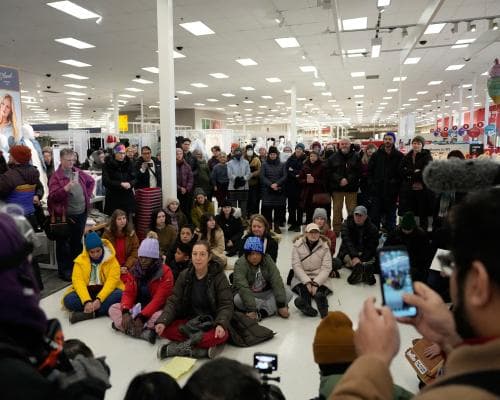
The colonists’ protests were a unifying force, transcending regional and social divides. The act of spinning yarn together or organizing collective actions created a sense of identity and purpose. Today, initiatives like TargetFast.org aim to replicate this sense of community. It is through such collective endeavors that we can bolster morale and withstand external pressures.
Creating Alternatives
As we divest from institutions that do not align with our values, we must simultaneously invest in alternatives. The colonists did not merely stop purchasing British goods; they began producing their own. Similarly, contemporary boycotters must strategize to develop parallel institutions that fulfill their needs without reliance on the entities they oppose. This requires foresight and planning, as divestment alone is insufficient for lasting change.
Cultivating Patience and Perseverance
The effectiveness of a boycott lies not in its duration but in its sustained commitment. History teaches us that significant change often requires years of disciplined action. The colonists’ protests against the Townshend Duties spanned several years, as did the Montgomery bus boycott during the civil rights movement. Short-term efforts may yield immediate results, but enduring change necessitates a steadfast commitment to the cause.
Conclusion: The Legacy of Nonviolent Action
The founders of this nation set a precedent for effective nonviolent action, demonstrating that virtue, wisdom, and communal effort can lead to meaningful change. As we reflect on the lessons of history, we must recognize that the true impact of our actions lies not only in the immediate outcomes but in the character and resilience we cultivate along the way. The new history we forge in 2026 will be a testament to our commitment to justice and the enduring power of collective virtue.
In this pursuit, let us remain mindful of what is within our control—our choices, our actions, and our capacity for unity. Through this lens, we can navigate the challenges ahead with clarity and purpose.
Source Body Text
This year, as the United States commemorates the 250th anniversary of the nation’s founding and the signing of the Declaration of Independence, it’s worth remembering the substantial role boycotts played in the American resistance and independence movement. The founders’ sustained protest of Great Britain’s Stamp Act and Townshend Duties –which taxed printed materials, glass, lead, paper, paint and tea in the colonies – placed enough pain and pressure on British merchants and the parliament that the majority of these taxes were repealed. And while the colonists were boycotting taxed British imports, they built an alternative made-in-America marketplace in the process, becoming domestic producers of homespun clothing, paper and other necessities. This building of alternative institutions and self-reliance were an essential complement to their boycott. They divested from British goods while investing in homemade goods. Both types of actions were necessary. This legacy of effective boycott is relevant 250 years later because it illustrates the power of nonviolent action in targeting the pillars that support the most intractable autocratic rule. And Americans appear to be getting back into boycotting: 2025 was a banner year for such protests in the United States. Big box stores like Target and Walmart, for example, faced boycotts for rolling back their commitments to diversity, equity and inclusion. Shoppers boycotted Home Depot after immigration raids near its locations. Amazon was boycotted over its donations to Donald Trump’s administration, treatment of workers and growing monopolization of the market. Tesla was boycotted due to Elon Musk’s role in government dismantling and far-right saber-rattling. And recurring movements, like the Boycott, Divestment and Sanctions (BDS) movement to undermine Israel’s military actions in Palestine, also grew in impact. This year will see a continuation of these boycotts – as Target is back in the sights of boycotters – but the financial and reputational costs are already visible. Target has seen layoffs, decreased sales, lower store traffic and plummeting stock prices. Walmart warned investors of the rising deleterious impact from these boycotts. Tesla’s stocks and sales plunged as the brand became a liability for many current owners and prospective buyers. And even McDonald’s acknowledged its markets were significantly affected by BDS boycotts. In contrast, Costco, which was lauded by activists for doubling down on its commitments to DEI, reported a 7% increase in net sales in April compared with a year earlier. As these boycotts aim to increase their impact in 2026, there is a larger ecosystem of actions and campaigns to consider. Three imperatives come to mind: to communicate and grow the movement, to strategically create alternative institutions, and to sustain participation and morale. First, how can boycotts build community and identity? The colonists’ protests against the Stamp Act and Townshend Duties were a unifying sinew across a diverse set of regions and actors. Protest actions like spinning yarn together, instead of importing it, became a source of community pride and “spinning bee” competitions. The carpooling that was required for the Montgomery bus boycotts during the civil rights movement similarly brought communities closer together, creating a sense of unity, collective action and agency. Today, TargetFast.org is trying to do the same. All of this is a helpful prerequisite for boosting morale, withstanding backlash and creating the foundation for self-reliance. Second, how can boycotts create parallel institutions? Most boycotters will still need the services and goods that they’re protesting. When divesting from one institution, it’s essential to simultaneously build or invest in an alternative. That’s why the colonists started making their own fiber and clothes. That’s why the Montgomery bus boycotters created an entirely new transit system to ensure that everyone could work, shop and play without relying on the bus system. All of this takes strategy, of course. For the boycotters of today, creating alternatives to Target, Home Depot, Walmart and Amazon requires planning. Divestment alone is insufficient. And while Costco, as one alternative, witnessed a boost in consumer spending last year, campaigns that encourage shoppers visit local brick-and-mortar stores will need additional movement support if the boycotted big-box stores are to experience sustained financial and reputational cost. Third, how can boycotts maintain patience and perseverance? For companies or countries to feel the pain of economic noncooperation, it requires sustained discipline and diligence. A one-day boycott probably won’t hurt the pocketbooks of most billionaire owners of these big businesses. A multi-month or multi-year boycott that involves an entire community might, however, especially if there’s a compelling identity holding the movement together and the alternative institutions to support it. The colonists’ protests against the Townshend Duties spanned several years, starting in late 1767 until the taxes were repealed in 1770. That same kind of sustained commitment was visible in the civil rights movement when the Montgomery bus boycott lasted a year and involved about 40,000 Black residents. The United Farm Workers-led boycott against grape growers in the late 1960s, in response to poor wages and working conditions, lasted five years. While shorter efforts have sometimes been effective – like the recent successful weeklong boycott of Disney+ and Hulu, after Disney canceled comedian Jimmy Kimmel’s late-night show – most boycotts require longer engagement. US history is rich with case studies. For new movements, including emerging proposals for boycotting the World Cup in the US, assessing the vulnerability of a target is a key first step, as is an analysis of how a boycott will be perceived by the public. But the nation’s founders set a precedent – effective nonviolent boycott is replicable. Yes, it takes people, parallel institutions, and perseverance., but it’s what is built during the boycott that has the most lasting impact. And that’s the new history to be made, and celebrated, in 2026. What’s giving me hope now We’re witnessing new critical consciousness emerging everywhere and in the unlikeliest of locations. More and more people – who have never spoken out – are now speaking up. More and more people – who have never resisted – are now mobilizing. More and more people are ready to challenge oppressive systems and are hungry for a nonviolent playbook to do so. I’m witnessing this all around me, including in my own circles, and it’s incredibly inspiring. This is what gives me hope. Michael Shank is director of programs at the Albert Einstein Institution and adjunct faculty at New York University’s Center for Global Affairs and George Mason University’s Carter School for Peace and Conflict Resolution.