
January 28, 2026
Two are dead in Minneapolis. Trump is to blame | Kenneth Roth
Executive Summary
The recent killings of two protesters in Minneapolis by federal agents have sparked significant public outrage, raising questions about accountability within the Trump administration. Despite video evidence indicating that neither victim posed a threat, the administration has defended the agents' actions and refrained from initiating a criminal investigation. This situation highlights a troubling pattern of justifying lethal force and undermining the right to protest, which could have serious implications for public safety and trust in law enforcement. Urgent reforms are needed to address these issues and restore accountability.
Stoic Response
Stoic Field Manual Entry: Accountability and Virtue in Crisis
What is Within Our Power
- Our Responses: We can choose how to respond to injustice. Anger, while natural, should be tempered with reason.
- Public Discourse: Engage in constructive dialogue about accountability and reform.
- Action: Advocate for changes in policy and law enforcement practices that promote justice and protect citizens' rights.
What is Opinion
- Media Narratives: Be wary of narratives that blame victims for violence. Understand that opinions can distort the truth, especially in politically charged situations.
- Political Rhetoric: Recognize that statements from officials may reflect personal or political agendas rather than objective truth.
- Public Sentiment: Public outrage is valid, but it should be channeled into meaningful action rather than mere emotional reaction.
What Action Virtue Demands
- Demand Accountability: Advocate for thorough investigations into the killings of Good and Pretti, ensuring that justice is served without bias.
- Promote Nonviolence: Uphold the principle that protest, even in the face of aggression, should remain peaceful and dignified.
- Challenge Injustice: Stand against the normalization of lethal force and the erosion of civil liberties. Support reforms that prioritize human rights and accountability in law enforcement.
- Cultivate Resilience: In the face of adversity, maintain a steadfast commitment to virtue and justice, inspiring others to do the same.
Conclusion
In times of crisis, the Stoic approach encourages us to focus on what we can control: our actions, our responses, and our commitment to virtue. Let us not be swayed by opinion or fear, but rather stand firm in our pursuit of justice and accountability.
Article Rewritten Through Stoic Lens
Executive Summary
The recent deaths of two protesters in Minneapolis at the hands of federal agents present a critical examination of accountability and the principles of justice. While the actions of the agents have incited public outrage, it is essential to assess the situation through a lens of virtue, wisdom, and rationality. The evidence suggests that neither individual posed a threat, yet the administration has defended the agents' use of lethal force, raising questions about the integrity of our institutions and the moral fabric of our society.
Understanding Control
In the face of this tragedy, it is vital to distinguish between what lies within our control and what does not. The actions of the federal agents, while regrettable, are beyond the immediate control of the public. However, our responses to these events, our pursuit of justice, and our commitment to reform are entirely within our grasp. We must remember that our virtue is defined not by the actions of others but by our own choices and responses.
The Nature of Accountability
The deaths of Renee Good and Alex Pretti serve as a reminder of the importance of accountability in governance. While it is easy to assign blame to a singular figure, such as the president, we must recognize that systemic issues contribute to these outcomes. The administration’s defense of the agents reflects a broader pattern of justifying excessive force, which undermines the principles of justice and temperance. It is incumbent upon us to advocate for reforms that emphasize accountability and the rule of law.
Examining Cause and Effect
The assertion that Good and Pretti were responsible for their own deaths is a misapplication of reason. The evidence indicates that they were engaged in lawful protest, an exercise of their rights that should be protected. The agents' actions, characterized by aggression and a lack of de-escalation, illustrate a failure in judgment and wisdom. It is crucial to analyze the causes of such behavior, recognizing that frustration and a desire for control can lead to irrational actions.
The Role of Leadership
Leadership is defined by the ability to uphold justice and act with integrity. The response from the administration, including the removal of certain officials, does not absolve the broader systemic issues at play. True leadership requires a commitment to justice and a willingness to confront wrongdoing, rather than deflecting blame or minimizing accountability. The failure to initiate a thorough investigation into these incidents signals a troubling disregard for the principles of justice.
The Pursuit of Virtue
In the wake of these events, we must reflect on our own values and the virtues we wish to embody. The right to protest is foundational to a democratic society, and we must protect it with courage and resolve. It is not enough to express outrage; we must channel that energy into constructive action that promotes justice and accountability.
Conclusion
The tragic deaths of Good and Pretti remind us of the fragility of our rights and the importance of virtuous governance. While we cannot control the actions of others, we can control our responses and our commitment to justice. Let us strive for a society that values wisdom, courage, and temperance, ensuring that the principles of justice prevail in the face of adversity. In doing so, we honor the memory of those lost and work towards a more just and equitable future.
Source Body Text
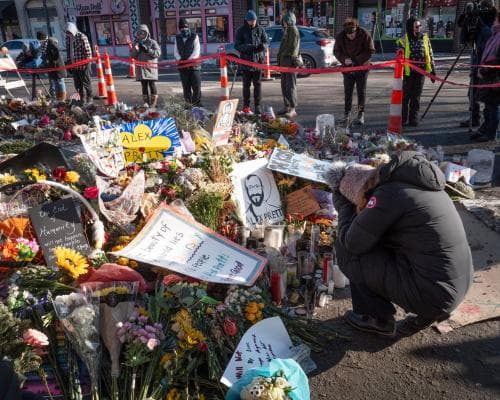
As public outrage grows over the killing of two protesters by Donald Trump’s deportation agents in Minneapolis, the White House is going into damage-control mode. It has its work cut out for it. Trump didn’t pull the triggers that killed Renee Good and Alex Pretti, but he bears political responsibility for having greenlighted the agents’ regularly lawless conduct. Good and Pretti should not have been killed. As far as can be seen in the ample video evidence that has emerged, neither posed a threat to the agents at the scene or anyone else. Their sole “offense” was to take a stand against the deportation raids. Yet trigger-happy agents needlessly shot them – Good as she was turning her car away from the agents, Pretti while he was restrained by agents on the ground. There was no plausible self-defense to justify these killings. Yet the Trump administration has been reflexively defending deportation agents whenever they use lethal force. In each of the 16 times since July that they have fired shots, either while detaining people or at protesters, Trump officials have declared their actions justified without waiting for investigations to be completed, sometimes in blatant contradiction of video evidence. The killing of Pretti is illustrative. Stephen Miller, the deputy national security adviser who is directing the deportation sweeps from the White House, pronounced Pretti a “domestic terrorist”. Kristi Noem, the homeland security secretary who oversees the raids, said Pretti was responsible for “domestic terrorism”. Yet video analysis shows that Pretti posed no danger to the officers who killed him. These senior Trump officials blamed the victim for his death. Sensing public hostility, Trump has now removed Gregory Bovino, the border patrol commander who had been directing the deportation operations in Minneapolis. But Trump still has not repudiated the statements of Miller and Noem. He should fire them both for encouraging such lawlessness by defending the indefensible. Trump himself has been no better. His initial response to the killing of Pretti was to castigate Democrats for creating “chaos” by refusing to cooperate with the deportation sweeps. Yet the video evidence shows that it was federal agents who needlessly escalated the situation, “shoving bystanders”, “showering them with pepper spray at close range”, giving “muddled” directives and passing up opportunities to de-escalate, as the New York Times reported. To make matters worse, the Trump administration has avoided trying to initiate a criminal investigation. So far, it is conducting only a “use of force” “review” of Pretti’s killing rather than a criminal investigation into whether he was murdered. Similarly, the FBI supervisor in Minneapolis who tried to investigate the killing of Good resigned after her superiors in Washington pressed her to discontinue the inquiry. Again, the signal from senior Trump officials is that even the unjustified use of lethal force will be treated with kid gloves. Trump’s supporters have been no better. Fox News blamed Pretti for his own death because if he hadn’t shown up to protest, he wouldn’t have been killed. “He should not have been there,” said Fox & Friends co-host Charlie Hurt on the network’s flagship show. So much for the first amendment right to protest! Others have noted that Pretti was lawfully carrying a gun, as if that might justify his killing, even though the video evidence shows he never drew it or removed it from his holster, and it appears to show agents taking it from him before shooting him as he lay restrained and helpless on the cold ground. This blame-the-victim argument has even outraged Trump’s second amendment supporters. Since when does lawfully carrying a gun – never brandishing it, never using it in a threatening manner – permit federal agents to summarily shoot you? The real “weapon” that Pretti held that seemed to outrage Trump’s agents – the same tool being used by Good’s wife at the time of her killing – was a mobile phone camera. Opponents of Trump’s raids have regularly used their phones, as the first amendment permits, to film agents in action to document any misconduct. That is largely how we know that Trump officials’ cover stories for the killings of Good and Pretti were fictitious. We will never know precisely what went through the minds of the federal agents who needlessly shot Good and Pretti to death, but it is hard to discount the role of their frustration at the video recordings that stood between their apparent tough-guy instincts and their quest for impunity. Back when he still lived in Trump Tower in New York City, Trump liked to say that his supporters were so loyal that he could descend to Fifth Avenue and shoot someone without losing any votes. There has been a disturbing degree of truth to that observation, because so many of his supporters seem to admire his willingness to buck the system, even when that involves crossing legal lines. But most Americans don’t like a police state, which is what Trump seems to be trying to impose on Democratic-run cities. The raids are bad enough. But if Trump’s deportation agents can kill with impunity, if the instincts of Trump and his senior officials are to exculpate lawlessness rather than to hold officials to the law, then Trump deserves the plummeting polls that now face him. Let’s hope that for the safety of US city dwellers, his notorious quest for public approval leads to a change of direction. Kenneth Roth is a Guardian US columnist and visiting professor at Princeton’s School of Public and International Affairs, and former executive director of Human Rights Watch. He is the author of Righting Wrongs: Three Decades on the Front Lines Battling Abusive Governments