
February 6, 2026
Trump’s family is embroiled in a $500m UAE scandal. We’ve hardly noticed | Mohamad Bazzi
In a recent report, Mohamad Bazzi reveals a $500 million deal involving a cryptocurrency startup founded by the Trump family and an investment firm linked to the UAE royal family, signed just before Donald Trump’s return to office in January 2025. The transaction, which grants the UAE significant influence over a U.S. president, raises serious ethical concerns about Trump's ability to negotiate foreign policy without conflicts of interest. Despite the scale of this scandal, it has garnered minimal media attention, overshadowed by Trump's ongoing controversies. Bazzi concludes that this situation highlights a troubling intertwining of personal profit and presidential duty, posing a significant threat to democratic integrity.
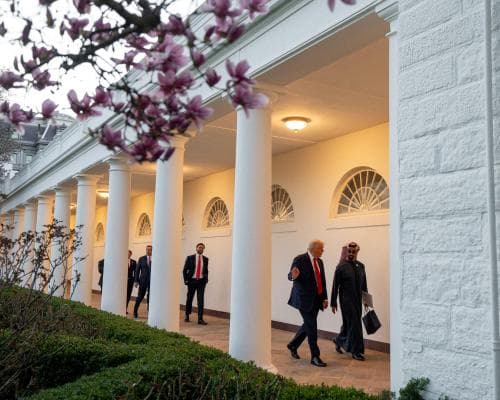
Stoic Response
Address to the Students of the Stoa
Greetings, seekers of wisdom. Today, we stand before a pressing matter that weighs heavily on our shared moral fabric. The intertwining of personal gain and public duty, as revealed in recent dealings of those in power, deserves our profound contemplation.
Recognize the Challenge
- Unhealthy Judgments: It is easy to cast aside the gravity of ethical breaches when they are cloaked in the mundane noise of daily life.
- Distraction of Controversy: We must not allow the relentless cycle of sensationalism to dull our discernment.
Disciplines to Cultivate
To navigate this moral quagmire, we must anchor ourselves in the Stoic disciplines of desire, impulse, and assent:
-
Discipline of Desire:
- Desire for Integrity: Cultivate a longing for virtue over wealth.
- Reflect on True Value: Ask yourself, “What is worth pursuing? The fleeting satisfaction of riches or the lasting peace of a clear conscience?”
-
Discipline of Impulse:
- Pause Before Action: Restrain your immediate reactions to scandals.
- Consider the Consequences: Weigh your impulses against the greater good. Will your actions uphold justice or merely serve personal interest?
-
Discipline of Assent:
- Examine Your Assumptions: Challenge the narratives presented to you.
- Seek Truth: Do not accept claims at face value. Investigate the motivations behind actions that seem beneficial but may hide deeper conflicts.
Imperatives for Ethical Living
- Engage in Critical Reflection: Regularly assess your values and the alignment of your actions with them.
- Foster Open Dialogue: Encourage discussions about ethics and integrity within your communities.
- Act with Courage: When faced with moral dilemmas, choose the path of virtue, even when it is difficult.
In closing, remember that the essence of our philosophy is not merely to observe the world but to engage with it. Let us not be swept away by the tides of corruption but stand firm as guardians of integrity and virtue. In doing so, we honor not only ourselves but the very principles upon which our society rests.
Reflect and Act
- What will you choose to pursue today?
- How will you uphold your values in the face of adversity?
May we strive for wisdom and virtue in all our endeavors.
Article Rewritten Through Stoic Lens
Journal Entry: Reflections on Recent Events
Contemplation on Wealth and Influence
In the days preceding the return of a leader to his post, a significant transaction has come to light—a $500 million investment in a cryptocurrency venture associated with his family. This deal, orchestrated with a member of the UAE royal family, reveals the intricate dance between personal gain and public duty. It is a reminder that wealth, while a source of comfort, can also ensnare the soul in webs of ethical ambiguity.
Acceptance of Nature’s Order
The unfolding of these events is not a cause for despair but an opportunity to observe the workings of fate. The intertwining of personal ambition and political power is not new; it is a reflection of human nature itself. I must accept that such transactions occur within the grand tapestry of existence, where ambition often overshadows virtue.
The Call for Virtue Amidst Scandal
Though this situation may appear scandalous, it presents a profound opportunity for virtue. The leader’s actions—monetizing his office and intertwining his fortunes with foreign powers—challenge us to examine our own commitments to integrity. How often do we find ourselves tempted by the allure of wealth at the expense of our principles? This is a moment to cultivate discernment and remain steadfast in our values.
The Nature of Attention
It is curious how the media, often a relentless force, has turned its gaze away from this significant affair. In a world where trivial matters dominate headlines, the silence surrounding this transaction invites reflection. It serves as a reminder that true wisdom lies not in the clamor of public opinion but in the quiet contemplation of our actions and their implications.
The Interconnectedness of Actions
The leader’s dealings with foreign dignitaries—transactions that blur the lines of ethical governance—serve as a reminder of the interconnectedness of our actions. The very fabric of our democracy is woven from the threads of integrity and accountability. When these threads fray, we must ask ourselves: what is the cost of our silence?
Embracing the Challenge
As I observe these events, I am reminded that challenges present opportunities for growth. The ethical dilemmas faced by those in power compel us to rise above complacency and demand accountability. It is our duty, as citizens, to engage with these issues, not with anger or despair, but with a resolve to foster a more virtuous society.
Conclusion: The Path Forward
In the face of corruption, let us not succumb to cynicism. Instead, let us embrace the challenge to uphold our principles and advocate for justice. The unfolding of these events is a call to action, urging us to reflect on our own lives and the legacy we wish to leave. May we strive to live with integrity, recognizing that true wealth lies not in material gain, but in the strength of our character and the quality of our contributions to the world.
Source Body Text
Days before Donald Trump returned to office in January 2025, an investment firm controlled by a senior member of the United Arab Emirates royal family secretly signed a deal to pay $500m to buy almost half of a cryptocurrency startup founded by the Trump family. Under any other president, such an arrangement, which was revealed this past weekend by the Wall Street Journal, would cause a political earthquake in Washington. There would be demands for an investigation by Congress, televised hearings and months of damage control. But this latest example of corruption involving Trump and his family business hardly made a blip over the past few days, relegated to a passing headline in a relentless news cycle often dominated by Trump’s actions and statements. This scandal deserves our attention: a half-billion-dollar transaction with a foreign government official, executed in the shadow of Trump’s inauguration, which directly enriched the president and his family. The deal to acquire a 49% stake in World Liberty Financial, the crypto company founded by the Trump family and several allies in the fall of 2024 during Trump’s presidential campaign, was backed by Sheikh Tahnoon bin Zayed Al Nahyan, one of the most powerful officials in the UAE. Known as the “spy sheikh”, Tahnoon is the brother of the UAE’s president and serves as national security adviser. He also oversees one of the largest investment empires in the world, serving as chair of two Abu Dhabi sovereign wealth funds, which have $1.5tn in assets, and G42, a firm focused on artificial intelligence. It’s dizzying to keep up with the ways that Trump has monetized the presidency and used it for personal profit in his second term. The Trump Organization, run by the president’s sons, has negotiated foreign real estate deals worth billions of dollars, some of which involve private companies backed by governments of the three wealthiest Arab petrostates: Saudi Arabia, Qatar and the UAE. In May, as Trump prepared to visit the Middle East, Qatar’s government donated a $400m luxury Boeing jet, which is being refitted by the US military so Trump can use it as Air Force One. It was probably the most expensive gift from a foreign government in US history – and Trump has said the plane will be transferred to his presidential library when his term ends in 2029, meaning he could still use it after he leaves the White House. In late May, the president hosted a private dinner at his Virginia golf club for the 220 largest buyers of his memecoin, called $Trump, which is a type of cryptocurrency connected to an online joke or mascot and has no inherent value. The top 25 buyers in the crypto contest got invited to a VIP reception with Trump and a White House tour. In all, the Trump family’s crypto business raked in about $148m from the contest, most of it from foreign or anonymous buyers. The top spender was Justin Sun, a Chinese crypto billionaire who bought more than $20m worth of Trump’s memecoins. (In February 2025, a few weeks after Trump took office, the Securities and Exchange Commission suspended a civil fraud case it had brought against Sun in 2023 – leading to accusations that he was getting favorable treatment because he had invested $75m in another of the Trump family’s crypto projects. (A spokesperson for Sun said he had “not requested special treatment, nor conditioned any commercial activity on regulatory decisions”.) Despite the sheer scale of these conflicts surrounding Trump over the past year, the $500m deal involving World Liberty and the UAE’s Tahnoon is “the only known case of a foreign government official purchasing a major stake in a Trump company after his election”, as the Journal reported. By intertwining his personal fortune with the ruling families of the Gulf, Trump has compromised his ability – and the ability of his entire administration – to negotiate foreign policy and act as an honest broker. How can Washington credibly pressure the UAE on its role fueling a civil war in Sudan, when the Emirates’ national security adviser is a business partner of the US president? Over the past decade, Tahnoon has steered foreign policy negotiations with the US over major issues including fighting terrorism, economic investments and securing UAE access to advanced computer technology. In March, he visited Washington and met with Trump, gaining access to top cabinet members and being feted at a White House dinner – honors normally bestowed on a visiting head of state. The public did not know about the secret deal Tahnoon’s investment firm had signed two months earlier with the Trump family’s crypto company. The revelations also underscore why Trump’s foray into crypto has turned into the most lucrative, and dangerous, way for him to profit from the presidency. After Trump’s first term, his family business expanded beyond a real estate conglomerate that licensed the Trump brand to hotels, golf resorts and residential towers around the world – it now includes media platforms such as Truth Social and various crypto ventures. Overall, the Trumps generated $1.4bn from crypto projects over the past year, making up almost a fifth of the family’s estimated fortune of $6.8bn, according to Bloomberg. These crypto ventures are particularly ripe for exploitation because they allow Trump and his family to collect hundreds of millions of dollars from foreign investors and government officials who would usually have a difficult time channeling money to a US politician. Trump is not only enriching himself through the presidency, he’s tapped into an industry that is rife with fraud and a lack of transparency. Within months of returning to office, the Trump administration began to deregulate the industry and ordered the justice department to disband a national unit dedicated to investigating crypto-related fraud, which was set up in 2022 under Joe Biden’s administration. While the infusion of $500m into World Liberty Financial last year was a great deal for Trump and his family, it didn’t make much financial sense for Tahnoon, the UAE royal who engineered the investment into a fledgling crypto firm that was doing little business before Trump took office. So what did the UAE get in return for its money? It seems the authoritarian monarchy got the keys to unlock the future of artificial intelligence. Tahnoon’s secret investment turned out to be one of two large transactions last year involving the Trump family’s crypto company and the UAE government. At a crypto conference in Dubai in May, Trump’s son Eric and a business partner, Zach Witkoff (who is also the son of Steve Witkoff, the president’s special envoy to the Middle East), announced that MGX, another company chaired by Tahnoon, would invest $2bn using a stablecoin issued by World Liberty. A stablecoin is a type of digital currency that maintains a price of $1, and the MGX transaction could generate tens of millions of dollars in interest revenue for the president and his family each year. At the crypto convention, Zach Witkoff hailed the MGX deal as an endorsement of World Liberty’s capabilities as a tech startup. But he failed to disclose that the two companies shared major investors and were being led by some of the same executives. Tahnoon’s earlier $500m investment enabled him to name two members of World Liberty’s board – and those two directors also served on the MGX board, according to the Journal’s investigation. Two weeks after MGX’s $2bn investment in the Trump family’s crypto firm, the Trump administration allowed the UAE to buy hundreds of thousands of advanced computer chips critical for AI development. The chips are made by US companies, especially Nvidia, and the Biden administration had restricted how many chips certain foreign countries can buy to prevent the technology from being misused. But Trump scrapped those restrictions. Some US national security officials objected to selling advanced chips to the UAE and worried that Emirati companies would share them with China, which could use the technology to enhance its military systems. In an investigation published in September, the New York Times revealed that the UAE’s negotiations with the Trump administration over access to AI chips involved Steve Witkoff and Tahnoon – and intersected with the Emirates’ investment in the Trump (and Witkoff) families’ crypto venture. The White House insists that there was no connection between the World Liberty crypto transaction and the administration’s decision to sell AI technology to the UAE – and claims that Trump and Witkoff have no conflict of interest because they have stepped aside from their family businesses. “The president has no involvement in business deals that would implicate his constitutional responsibilities,” the White House counsel, David Warrington, said on Sunday, after the latest revelations about the UAE royal’s investment in World Liberty. “President Trump performs his constitutional duties in an ethically sound manner, and to suggest so otherwise is either ill-informed or malicious.” While Trump’s aides argue that he’s living up to the highest ethical standards, the Republican-led Congress has shown little interest in investigating an astonishing series of corrupt actions and self-enrichment that would have devastated any other presidency. And as Trump and his family tally the expanding profits from their crypto empire, the rest of us must reckon with the cost to our democracy. Mohamad Bazzi is director of the Center for Near Eastern Studies, and a journalism professor, at New York University