
February 8, 2026
This Black History Month, the leaders of the past can teach real resistance | Eric Morrison-Smith
Talking Points: Eric Morrison-Smith's "This Black History Month, the leaders of the past can teach real resistance"
-
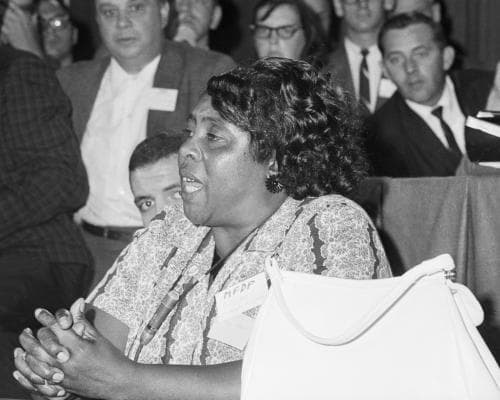
Protagonist and Argument: Eric Morrison-Smith positions Ella Baker and Fannie Lou Hamer as key figures in the ongoing struggle for civil rights, emphasizing that true resistance requires grassroots organizing and collective action rather than reliance on charismatic leaders. He argues that the lessons of the past remain relevant today, challenging us to take responsibility for building community and enacting change.
-
Implications of Complacency: Morrison-Smith warns against the dangers of distraction and complacency, suggesting that passive observance of Black History Month undermines the urgency of social justice work. He calls for a shift from symbolic gestures to meaningful engagement, urging individuals to recognize their role in fostering community resilience and fighting systemic oppression.
-
Continuity of Struggle: The narrative underscores that the fight for justice is ongoing and requires sustained effort. By highlighting contemporary organizations like Students Deserve and Pillars of the Community, Morrison-Smith illustrates that the spirit of resistance is alive, demonstrating that victories are hard-won through struggle and that the fight continues even after achieving initial successes.
-
Call to Action: Ultimately, Morrison-Smith implores us to embrace our responsibilities in the struggle for justice, emphasizing that hope is rooted in action and collective effort. He invites individuals to engage actively in their communities, fostering a culture of resistance that honors the legacies of past leaders and lays the groundwork for future generations.
Stoic Response
Voices of Wisdom: Seneca and Musonius Rufus to a Roman Magistrate
1. The Call for Active Engagement
"To observe the world from a distance is the folly of the unwise. True virtue lies not in idle contemplation but in the active pursuit of justice." In the spirit of Ella Baker and Fannie Lou Hamer, we must recognize that our responsibilities extend beyond mere acknowledgment. As Baker taught, "Strong people do not need strong leaders." We must cultivate strength within our communities, fostering collective action to effect change.
2. The Perils of Complacency
"Complacency is the enemy of progress; it is the silent acceptance of injustice." The warning against distraction rings true today. As Morrison-Smith notes, passive observance of our history can lead to stagnation. We must resist the allure of comfort and instead engage with the urgent demands of our time. "We all carry some level of responsibility," he asserts, echoing the Stoic belief that moral duty is universal.
3. The Continuity of Struggle
"Virtue is a journey, not a destination." The struggles of the past are not merely historical; they are the foundations upon which our present actions must stand. Organizations like Students Deserve illustrate that victories are not gifts but hard-won achievements through persistent effort. The fight for justice is eternal, requiring ongoing commitment and resilience. "Hope without struggle is hollow," Morrison-Smith reminds us, emphasizing that our actions today shape the legacy we leave for future generations.
4. Practical Maxims for Action
- Engage Actively: "Do not wait for leaders; become the leader in your own sphere."
- Embrace Responsibility: "Complacency breeds decay; take action to cultivate growth."
- Build Community: "Strength lies in unity; nurture the bonds that connect us."
- Persist in Struggle: "Every small victory is a step toward justice; do not underestimate the power of collective effort."
In the words of both Seneca and Musonius Rufus, let us embrace our duty to act, for "the true measure of a man is not in his words but in his deeds."
Article Rewritten Through Stoic Lens
Reflections on Resistance and Responsibility
The Nature of Leadership
In contemplating the lives of Ella Baker and Fannie Lou Hamer, I am reminded that true leadership lies not in the singular figure, but in the collective strength of the community. Baker’s wisdom teaches us that we must cultivate the potential within ourselves and those around us, fostering leadership from the grassroots. It is not the charismatic savior we should await, but the quiet, persistent efforts of those who stand together in solidarity.
The Perils of Complacency
Let us not fall victim to distraction and complacency, for they are the enemies of progress. In this season of remembrance, we must engage deeply with the lessons of the past, recognizing that passive observance is a disservice to the struggle for justice. Each moment presents an opportunity to act, to build resilience, and to confront systemic oppression. The responsibility lies with us, not with distant leaders or abstract ideals.
The Eternal Struggle
The struggle for justice is not a fleeting endeavor; it is a continuous journey that demands our unwavering commitment. Organizations like Students Deserve exemplify this truth, reminding us that victories are not merely granted but earned through relentless effort. The spirit of resistance, much like the teachings of Hamer, emphasizes that our duty does not cease with a single triumph; it is an ongoing commitment to protect and uplift one another.
The Call to Action
We are summoned to embrace our roles in this noble struggle. Hope is not a passive sentiment; it is rooted in our actions and collective endeavors. As we honor the legacies of those who came before us, let us also lay the groundwork for future generations. Each of us must engage actively in our communities, embodying the spirit of resistance that has been passed down through the ages.
The Art of Resistance
Resistance is both an art and a science, requiring creativity and imagination. We must not shy away from the struggle, for it is through our engagement that we can reimagine what is possible. Artists and writers, too, have a role in this fight, helping to amplify the voices of those who dare to dream of a better world.
Embracing Responsibility
In moments of frustration, let us not retreat from our responsibilities. Change is a protracted journey, not a series of isolated events. We must remember that our ancestors acted despite apathy and repression. To abandon the work because others do not yet join is to misunderstand the essence of social change.
The Path Forward
As we navigate this complex landscape, let us be vigilant against the forces that seek to constrain us. Our commitment to building a multiracial, multigenerational movement must transcend the limitations of outdated frameworks. The work is already unfolding around us, in the quiet acts of those who refuse to be silenced. Each moment is an invitation to learn and to act, to begin where we are.
The Role of Hope
Hope is a fluctuating companion in our struggle. It may ebb and flow, but our duty remains constant. If those enduring unimaginable hardships can continue to resist, then surely we, too, must persist in our efforts. The struggle demands our engagement, irrespective of the tides of hope.
In this reflection, I find clarity: to fight is to honor those who have come before us, to stand against chaos, and to choose community. Let us be the ancestors future generations will thank, embodying the virtues of resilience and collective action.
Source Body Text
Nearly 60 years ago, Martin Luther King Jr posed a question that still haunts us. In his final book, published just a year before his death, Where Do We Go from Here: Chaos or Community?, he argued that we were standing at a crossroads: one path leading toward chaos – deepening poverty, violence, and repression – while the other required us to collectively choose and build community. Too few of us answered his call. At times, we chose distraction, comfort and complacency. At others, we turned away from the violence this country inflicted on the world, allowing the corruption of those in power to harden and accumulate. We can blame politicians and corporations, or those who remained neutral – but the truth is, we all carry some level of responsibility. And still, the challenge remains: are we ready to do what is necessary to build community? To protect one another? To stop outsourcing our power? This Black History Month, we must go beyond the passive commemorations that have become commonplace in our culture. We need to go beyond the hashtags, curated quotes, safe tributes, and parades and learn about how change was actually made – and take responsibility for continuing it. Learning from those who didn’t wait If we want a model for that responsibility, the activist Ella Baker is essential. Often working behind the scenes, she helped build some of the most important organizations of the civil rights movement. One of her most enduring contributions was her insistence on building strong people – so they would no longer need strong leaders. Baker, who died in 1986, believed that people must organize where they are: in their neighborhoods, workplaces and schools. Not by waiting for charismatic saviors, but by developing leadership from below. She understood that young people and poor and working-class communities already possessed knowledge, strength and leadership – and that those capacities, when nurtured, could be mobilized for real social change. That legacy is alive today in organizations like Students Deserve in Los Angeles. This youth-led group has organized students across race to win historic victories, including a $30m reduction to school police funding and the reinvestment of those resources into a Black Student Achievement Plan. These gains were not granted out of the goodwill of elected officials; they were won through struggle and disciplined, student-led organizing. Just as important, Students Deserve understands that struggle does not end with a win. The organization continues defending these victories against white supremacist backlash, holding the principle Baker taught us: responsibility is ongoing, and the struggle is eternal. Getting up and doing something That same clarity lives in Fannie Lou Hamer, who fought for civil rights, voting rights and women’s rights in the 1960s and 70s and made it clear that neither wealth nor formal education were prerequisites for resistance. At some point, being “sick and tired of being sick and tired” had to turn into action. That spirit remains today in organizations like Pillars of the Community, which organizes with people often written off as “unorganizable”: currently and formerly incarcerated people and others most affected by state violence. Pillars leads police-watch efforts, coordinates legal defense work, and – when historic floods devastated parts of California in 2024 – provided disaster relief when government response fell short. This is Hamer’s legacy in practice: people deemed disposable by the system deciding to protect one another anyway. Prayer was never enough. Today, scrolling isn’t either. At some point, we must decide to do everything within our power to become free and recognize that our freedom is bound up with the freedom of others. Protection, power and imagination I think, too, of the Black Panther Party, and their unapologetic commitment to protecting Black communities, even against the state. In a moment when masked agents detain people in public spaces without accountability, that legacy is not abstract. In Oakland, organizations like the Anti Police-Terror Project, Communities United for Restorative Youth Justice and others are carrying that tradition forward – building community-led infrastructure to respond to violence, mental-health crises and emergencies without relying on policing or incarceration. We are also seeing communities build safety networks and protect one another in real time from ICE attacks. But resistance must also be imaginative. Revolution is both an art and a science. Art that avoids struggle, or stays safely on the surface, is not neutral, it participates in the choice of chaos. And we need our writers, actors and artists connected to these fights, not necessarily to lead them, but to help people reimagine what is possible– to teach, to energize, to amplify the work and to refuse capitulation to the demands of the capitalist machine. Staying in the struggle There is another impulse we must name and refuse: the temptation to tap out, to disengage out of frustration when others do not participate, do not vote the “right” way, or do not move fast enough. A person defeated in spirit will soon be defeated in reality, and forgetting that social change is a protracted struggle is a sure path to lost morale. History is often taught as a series of dramatic moments: a march, a speech, a bill signed into law. What gets erased are the decades of organizing that made those moments possible. When people expect immediate transformation without understanding the long arc of struggle, disappointment is inevitable. None of our ancestors waited for mass participation before acting. They organized amid apathy, repression and isolation. To abandon the work because others have not yet joined is not radical – it is a misunderstanding of how change has always happened. Here, the activist Kwame Ture (formerly known as Stokely Carmichael) offers needed clarity. Voting once every few years is not democracy – it is delegation. As Ture said, politics is daily. It lives in workplaces, schools, housing and food systems. Resentment toward people who did not vote the “right” way is not political maturity. This moment requires building the conditions for participation, not shaming people for their absence. Taking responsibility now For the Alliance for Boys and Men of Color, this moment requires taking our work to the next level, and refusing to remain confined by what liberalism tells us is acceptable. As fascism actively dismantles the liberal world order we were told to trust, clinging to those limits is no longer strategic; it is dangerous. Too often, we exhaust ourselves naming external enemies while ignoring the internal forces that limit our ability to build real power. Many of our organizations – and many of us within them – remain constrained by liberalism in ways that actively undermine our ability to win tangible gains for poor and working-class communities. If we are serious about building multiracial, multigenerational power rooted in those most harmed by violence and exclusion, then we must be just as serious about outgrowing the frameworks that no longer serve this moment. And the work is already happening every day in communities across this country. There are organizations to join, movements to plug into, people already doing the hard, unglamorous work of building power. Each moment is an invitation to learn, to be imaginative and to begin where you are. Movements are not born fully formed – they begin when ordinary people decide to act anyway. And maybe, just maybe, the work will be a little easier for those who come after us because you decided to begin. Now is the time to become the ancestors future generations will thank, to take our place in history as people who stood against fascism and chose community over chaos. What’s giving me hope now Hope matters to me. But one thing I’ve learned over the years is that hope without struggle is hollow, and struggle without hope is unsustainable. The truth is, hope ebbs and flows. There are moments when it feels abundant, and moments when it feels distant. But whether we feel hopeful or not, our responsibility does not change. What keeps me grounded is this: if political prisoners can continue to fight from inside cages, and if people experiencing genocide can continue to resist under conditions meant to break them, then I have a responsibility to keep fighting here, in the United States. Not because I always feel hopeful, but because the struggle demands it. Whether the wind is pushing us forward or pushing us back, the task is the same. To fight. Some people say the will to fight comes from believing another world is possible. I’d add this: if you want people to have hope, get them into struggle. Help them win something real. Because hope doesn’t just live in ideas – it lives in action, in collective effort, and in the knowledge that we are not facing this alone. Eric Morrison-Smith is executive director of the Alliance for Boys and Men of Color Do you have an opinion on the issues raised in this article? If you would like to submit a response of up to 300 words by email to be considered for publication in our letters section, please click here.