
February 11, 2026
Why has Maga lost its mind over Bad Bunny? | Moustafa Bayoumi
In a recent interview, Megyn Kelly expressed outrage over Bad Bunny's Super Bowl halftime show, claiming it was a "middle finger" to America for being performed entirely in Spanish. This reaction, echoed by other conservative commentators, reflects a broader sentiment within the MAGA movement that perceives cultural diversity as a threat to American identity. The backlash highlights a growing divide in the U.S. over cultural representation, as Bad Bunny's performance celebrated inclusivity and joy, contrasting sharply with the MAGA narrative of victimhood and cultural preservation. This clash underscores the ongoing cultural war in America, where differing views on identity and representation continue to polarize society.
Stoic Response
Citizens of the Agora, gather 'round! Today, we stand at the crossroads of culture and identity, a moment that calls for our collective wisdom and virtue. The recent uproar surrounding Bad Bunny's Super Bowl halftime show, deemed by some as a "middle finger" to America, reveals a profound tension within our society. This reaction, particularly from figures like Megyn Kelly, embodies a struggle between the cardinal virtues of courage and temperance, as we navigate the complexities of cultural representation in our nation.
Let us consider the data: with approximately 65 million Spanish speakers in the United States, we find ourselves in a vibrant tapestry of diversity. This is not a threat to our identity; rather, it enriches our collective experience. Bad Bunny’s performance celebrated inclusivity, joy, and the very essence of what it means to be American in this era—a celebration that contrasts sharply with the narratives of victimhood espoused by some. In this light, we must exercise courage, not fear, in embracing the multifaceted identities that coexist within our borders.
As we reflect on the contrasting responses to this halftime show, we see a divide that threatens to deepen. The MAGA narrative, steeped in a sense of cultural preservation, often overlooks the fundamental truth that diversity is our strength. It is not a zero-sum game; the joy of one culture does not diminish another. Instead, it invites us to engage with one another in a spirit of understanding and compassion. We must embody the virtue of justice, ensuring that all voices are heard and valued in our national discourse.
Let us not be swayed by the vitriol that seeks to divide us. Instead, I urge each of you to embrace the beauty of our differences, to dance to the rhythm of our collective heartbeat, and to cultivate a culture that celebrates love over hate. Bad Bunny’s closing message, “Together, we are America,” is a clarion call for unity—a reminder that our strength lies in our ability to come together, despite our differences.
So, citizens, I charge you: Stand firm in your commitment to inclusivity and joy. Engage with your neighbors, learn their stories, and celebrate the rich diversity that defines our nation. Let us reject the narratives of division and instead foster a culture of understanding, where every voice contributes to the symphony of what it truly means to be American. Together, let us build a future that honors both our shared history and the vibrant tapestry of cultures that enrich our lives.
Article Rewritten Through Stoic Lens
Reflections on Cultural Discontent
The Nature of Outrage
In observing the recent expressions of discontent surrounding Bad Bunny's performance at the Super Bowl, I am reminded of the Stoic principle that we must accept the world as it is, rather than how we wish it to be. Megyn Kelly’s vehement criticism of the show, labeling it a "middle finger" to America, reveals not merely her personal sentiments but a broader struggle against the currents of change.
It is in our nature to resist what we do not understand. Yet, to embrace the diversity of language and culture is to accept the unfolding of life itself. Should we not strive to find harmony in our differences rather than lament their existence?
The Illusion of Threat
The reactions from various commentators, steeped in a narrative of victimhood, illustrate a profound misunderstanding of the richness that diversity brings to our collective experience. The notion that a performance in Spanish threatens the essence of American identity is a reflection of fear, not of reality.
As I ponder these sentiments, I recognize the opportunity for virtue in the face of such anxiety. Instead of succumbing to outrage, we can cultivate understanding and appreciation for the myriad expressions of humanity.
The Call for Inclusivity
Bad Bunny's performance was not merely an act of entertainment; it was a celebration of life, a reminder that joy transcends language. The banner proclaiming, "The only thing more powerful than hate is love," resonates deeply with the Stoic belief in the supremacy of virtue over vice.
In a world that often feels divided, let us choose to embrace love and connection. The performance was an invitation to dance, to feel, and to celebrate our shared humanity, regardless of the languages we speak.
The Duality of Experience
The contrasting reactions to the Super Bowl halftime shows—one a celebration of cultural diversity, the other a retreat into a singular narrative—highlight the duality of human experience. It is a reminder that we have the power to shape our perceptions.
In the face of such division, we must ask ourselves: Do we choose to see our neighbors as adversaries, or do we recognize the beauty in our collective existence?
The Path Forward
Let us not be swayed by the vitriol that seeks to divide us. Instead, let us engage in dialogues that promote understanding and acceptance. The Stoic path is one of resilience, of finding virtue in adversity and strength in unity.
As we navigate this cultural landscape, may we strive to embody the principles of love and inclusivity, recognizing that our true strength lies in our ability to come together, regardless of our differences.
In this, we find not only wisdom but also the essence of what it means to be truly human.
Source Body Text
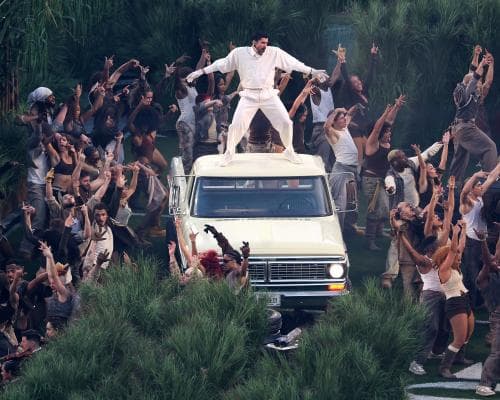
Can someone explain to me why Megyn Kelly is so angry? In an interview with Piers Morgan, the political commentator began ranting so hard about Bad Bunny’s Super Bowl half-time show that I was starting to worry about her health. “I’m sorry Piers. To get up there and perform the whole show in Spanish is a middle finger to the rest of America!” she roared. “We don’t need a Spanish-speaking, non-English performing performer, and we don’t need an ICE- or America-hater featured as our primetime entertainment.” When Morgan challenged her about English being the official language of the United States, she quickly shot back. “This attitude that you have here is why you in Great Britain have lost your culture. You have ceded your culture to a bunch of radical Muslims who came in and took over and now it’s gone,” she said. “We’re not allowing that here. It’s not happening in the United States of America. That’s why President Trump was elected.” Naively, I had thought this interview was about the Super Bowl. Lucky for me, Kelly did return to the game. “Football, that kind of football, is ours. They call it American football.” (I was glad for the clarification.) “And the half-time show, and everything around it, needs to stay quintessentially American. Not Spanish, not Muslim, not anything other than good old-fashioned American apple pie. There should be a meatloaf, maybe some fried chicken, and an English-speaking performer. That’s what the Super Bowl should be.” Definitely no nachos found on football night at the Kelly house, I quickly surmised. (Seriously, who eats meatloaf on game night?) Kelly wasn’t the only commentator whose reaction to Bad Bunny’s half-time show seemed outsized, if not just a little too extreme. The Federalist called the show “a humiliation”, even linking it to the Great Replacement Theory: “The audience was not invited into a shared civic experience. Instead, they were required to bear witness to the replacement of their own culture.” Trump confidante Laura Loomer wrote on X: “There’s nothing American about any of this.” Conservative commentator Will Chamberlain opined that “yes the Bad Bunny trash was political and yes it’s about weakening and undermining the United States.” And Donald Trump called the show “a ‘slap in the face’ to our Country”, and said that “Nobody understands a word this guy is saying.” Actually, Mr President, according to a 2025 report from the well-respected Instituto Cervantes, the United States currently has approximately 45 million native speakers of Spanish, and another 20 million non-native speakers, which the institute defines as those with “sufficient knowledge to communicate in Spanish with native and non-native speakers”. At 65 million Hispanophones, the United States has more Spanish speakers than Spain. Thank you for your attention to this matter. This kind of vitriolic response blows back regularly from the right, with the force of an exhaust from a jetliner. It’s not virtue signaling. It’s vitriol signaling, and it’s part of the right’s attack arsenal. Even though it is now the party in power, holding both the executive and legislative branches of government along with a generally sympathetic US supreme court, the Maga-right believes that it is the one truly aggrieved population in the country. Not only does Maga believe this, Maga wallows in the idea of its own persecution. Maga sings songs to it. Maga celebrates it. That was precisely the mood at the “alternative” half-time show organized by Turning Point USA (TPUSA), the conservative organization founded by Charlie Kirk, who was assassinated last year. Dubbed the “All-American Halftime Show”, this extravaganza hosted four different country music singers – Brantley Gilbert, Gabby Barrett, Lee Brice and Kid Rock – who offered about 15 minutes of music as a tribute to Kirk, who was celebrated at the end of the show as a martyr for their cause. Those who dare decry the lack of diversity on stage at the All-American show simply failed to look deeply. There was country music sung by a white guy with a beard, country music sung by a white guy with a shorter beard, country music sung by a woman with blond hair and Kid Rock. Diversity is our strength. Erika Kirk, the current CEO and chair of TPUSA and Charlie Kirk’s widow, told Fox News days earlier that what’s “beautiful” about TPUSA is its ability to “provide an alternative that is pro-America, that is just pro-everything”. Meanwhile, some of the biggest applause of the night came when Brice trotted out a new song – Country Nowadays, in which he sang: “It ain’t easy being country, in this country nowadays.” Why, you ask? Brice will tell you: “The directions, the finger pointing, when everything goes up in flames.” Finger pointing. Right. At every opportunity, including the All-American half-time show, the right tells us that they find it very upsetting if you hurt their feelings. We should stop that. Apparently, it’s un-American. And this is what the right’s vitriol signaling ultimately comes down to. It’s long been the case that, to those who have power over others, equality looks a lot like oppression. The Maga world wants to elevate this moral hypocrisy into an angry talking point, then a meme, then a song, and then a veritable discourse on its own so it feels true, even when it’s not. Contrast this, then, with Bad Bunny’s official half-time show. There was nothing maudlin or self-pitying about his performance. It was joyous and complex, intimate and historical, and it managed to do all of that all at once. It felt like a celebration of life, and you didn’t need to follow the words, because you just needed to feel the beat. (Asked if people must know Spanish to appreciate this show, Bad Bunny said: “It’s better they learn to dance. There’s no better dance than the one that comes from the heart.”) The performance concluded with a big banner that read “The only thing more powerful than hate is love” and with Bad Bunny holding a football (the USA kind) with text that read: “Together, we are America.” That American conservatives saw that last line as “subversive” shows you the depths of the problem we face in this country. While some of us realize that we have and even like our neighbors, others seem to think we live, or should live, in a hermetically sealed-off land. The two positions are completely incommensurate, which is why, in this case, two halves – that is to say, two half-time shows – will never equal one. Moustafa Bayoumi is a Guardian US columnist