
February 17, 2026
ICE holds people in disgusting conditions. Now it’s turning warehouses into camps | Moira Donegan
In her report, Moira Donegan highlights the Trump administration's acquisition of large warehouses across the U.S. to convert them into detention camps for immigrants, raising concerns about inhumane conditions. The facilities, intended for goods rather than human habitation, could house thousands of detainees, exacerbating existing issues of overcrowding and poor treatment in ICE facilities. Local communities and some political figures, including both Democrats and Republicans, are mobilizing against these developments, citing moral objections and potential harm to local infrastructure. Donegan concludes that despite the administration's efforts, there is a growing resistance to these camps, reflecting a broader societal rejection of the policies driving mass detention and deportation.
Stoic Response
Citizens of the Agora,
Today, we gather under the weight of a troubling reality that challenges our moral fabric and our commitment to the cardinal virtues of justice and compassion. Moira Donegan's report reveals a deeply concerning initiative by the Trump administration to convert vast warehouses across our nation into detention camps for immigrants. These facilities, built for goods and commerce, are now poised to house thousands of human beings in conditions that are anything but humane. We must ask ourselves: what does it mean to uphold the dignity of every person, regardless of their origin?
Consider the stark reality presented to us: one warehouse in Surprise, Arizona, spans the size of seven football fields and was acquired for a staggering $70 million. This is not merely a financial transaction; it is a moral indictment of our priorities. With ICE currently detaining around 70,000 individuals each night in facilities known for overcrowding and inadequate care, we stand on the precipice of a crisis that threatens to expand this inhumane system. The very essence of our humanity is at stake, and we must not turn a blind eye.
Yet, amid this darkness, a flicker of hope shines through. Local communities, joined by political leaders from both sides of the aisle, are rising in resistance against these developments. They are not merely protesting the acquisition of these warehouses; they are standing up for the virtues of empathy and solidarity. From Maryland to Oklahoma City, citizens are demanding accountability and compassion, reminding us that our strength lies in our unity and our refusal to accept cruelty as a norm.
As we reflect on these events, let us draw inspiration from the courage displayed by those who have taken a stand. It is our duty to embody the virtue of fortitude, to voice our objections, and to challenge policies that dehumanize our fellow beings. We must engage in dialogue, raise awareness, and mobilize our communities to advocate for justice and humane treatment for all.
I charge you, citizens, to take action! Attend town hall meetings, speak to your neighbors, and contact your elected representatives. Let your voices resonate in the halls of power and in the hearts of those who would see us divided. Together, we can foster a society that honors the dignity of all individuals and stands firmly against the tide of injustice. The time for silence has passed; let us rise and be the change we wish to see!
Article Rewritten Through Stoic Lens
Journal of Contemplation: Reflections on Recent Events
The Nature of Change
In the unfolding of human affairs, I observe the acquisition of vast warehouses by the administration, intended to serve as detention camps for immigrants. These structures, built for the storage of goods, now seek to confine human beings. In this, I recognize the constant flux of existence, where the intentions of men often clash with the dignity of life itself.
Acceptance of Nature's Order
The world is governed by a natural order, where the actions of one may lead to the suffering of many. The facilities, cold and unwelcoming, are a testament to the harsh realities of our times. Yet, I remind myself that suffering is a part of the human experience. In accepting this, I find the opportunity to cultivate compassion and virtue in the face of adversity.
The Call to Virtue
As I reflect on the reports of inhumane conditions, I am reminded of the Stoic principle that our responses define us. Rather than lamenting the state of affairs, I see a chance to embody justice and empathy. The voices of local communities rising against these developments are a beacon of hope. They remind us that virtue can flourish even in the darkest of times.
The Power of Collective Action
I observe that individuals from various backgrounds—Democrats and Republicans alike—are uniting in moral opposition to these camps. This collective action illustrates the strength of community and the shared values that bind us. It is a reminder that, while the machinations of power may seem overwhelming, the will of the people can lead to meaningful change.
The Nature of Suffering
The accounts of those detained, their struggles to communicate their suffering, resonate deeply. Their plight is a call to awaken our shared humanity. In recognizing their pain, we are reminded of our own vulnerabilities. It is through this shared experience that we can cultivate a deeper understanding of compassion.
The Role of Oversight
The limited access to these facilities raises questions about transparency and accountability. In the shadows, where oversight is stifled, we must remain vigilant. The Stoic teaches us to seek clarity and truth, for it is in understanding the full scope of our actions that we can align ourselves with virtue.
The Path Forward
In the face of these challenges, I find solace in the resilience of the human spirit. The protests and organized efforts against the camps reflect a growing consciousness among the populace. This awakening is a testament to the enduring power of moral conviction.
Embracing Hope
Though the path may be fraught with difficulties, I choose to embrace hope. The resistance to these policies signifies a rejection of cruelty and a desire for justice. It is a reminder that our shared humanity can prevail over fear and division.
Conclusion: A Call to Inner Strength
As I close this reflection, I remind myself that the true measure of our character lies in how we respond to the trials of life. Let us cultivate virtue, extend compassion, and stand united against injustice. In doing so, we honor not only our own humanity but that of all who share this world with us.
Source Body Text
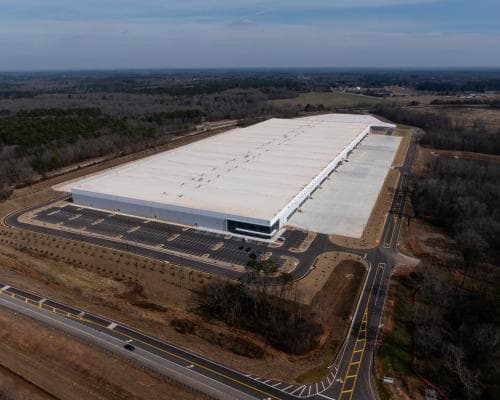
There is a vast building, reportedly the size of seven football fields, in Surprise, Arizona, a suburb of Phoenix; ICE bought it for $70m. Another building, along the southern border in San Antonio, Texas, was valued at $37m; it’s 640,000 sq ft. In January, ICE bought a warehouse in Upper Bern Township, Pennsylvania, not far outside of Philadelphia, for $87.4m. In Williamsport, Maryland, outside Hagerstown, the cost of a facility on a nearly 54-acre plot was $102m. These are massive, industrial spaces, built for holding goods to be shipped elsewhere. Warehouses are drafty and difficult to heat, hard-floored and high-ceilinged, not meant for human habitation. But the Trump administration is aiming to convert them into vast detention camps for immigrants. Some of the buildings could house as many as 9,000 people at a time. The rapid slew of new warehouse purchases by deportation agencies brings to mind the words of the ICE director, Todd Lyons, who told a conference last year that he wanted the effort to operate “like Amazon Prime, for human beings”. ICE currently incarcerates about 70,000 people on any given night, holding them across 224 detention facilities. The number has nearly doubled over the past year. But in recent weeks, as the Trump administration looks to accelerate its mass deportation agenda, ICE and the Department of Homeland Security (DHS) have been scouting and purchasing huge facilities. With the $45bn in ICE funding that Congress appropriated in the “big, beautiful bill”, the agency now aims to use these new warehouses to capture and imprison vastly greater numbers of men, women and children. The new warehouse strategy represents an apparent shift in immigrant concentration and detention practices by the Trump administration, which has previously relied on smaller facilities. But the administration has already come under fire for the conditions in which it is housing the migrants it has captured – including those at a sprawling tent facility in Fort Bliss, Texas, and in the hastily assembled “Alligator Alcatraz” tent camp in the Everglades – as well as for the unsafe, unsanitary, diseased conditions reported in prisons like the Krome detention center in Miami and the infamous facility in Dilley, Texas, one of several that houses children. “These kids are very traumatized, many of them despondent and depressed,” said the US representative Joaquin Castro after visiting Dilley. Still, the extent of the abuses inside ICE’s detention camps is not well understood, in part because the Department of Homeland Security has taken steps to limit oversight. ICE has repeatedly refused members of Congress access to the facilities, in defiance of the law, and has gone to court to prevent House members from visiting the camps as they are entitled to do. It is worth asking what the DHS is trying to hide. Reporters, too, have managed only partial, sporadic and limited access to information about what is happening in the camps, though some immigrants imprisoned there have tried to make their suffering known: in California, one captive inside the Otay Mesa detention facility wrote a note detailing allegations of widespread illness and inadequate food inside. “It’s cold here, the food is very poor, for 290 [days] we haven’t eaten a single piece of fruit,” they wrote. “We’re in one big room with no doors or windows. We can’t see any grass or trees. We’re constantly sick.” To smuggle their account of life in the detention center to the outside world, the prisoner tied their note to a lotion bottle and threw it over the camp fence. Merriam-Webster defines a concentration camp as “a place where large numbers of people (such as prisoners of war, political prisoners, refugees, or the members of an ethnic or religious minority) are detained or confined under armed guard”. By that definition, ICE already operates a sprawling network of concentration camps where captured immigrants, the largest group of whom have committed no crime, are housed in what countless accounts describe as inhumane conditions, designed to degrade, hurt, sicken and punish them, despite Trump administration claims that ICE facilities are held to “national detention standards”. With its new warehouse purchases, the Trump administration is seeking to expand and intensify this archipelago of torture. Mass illness, abuse, immiseration and death will be the inevitable result. How will we live with the shame? To their credit, many local communities in areas surrounding the newly purchased warehouses are organizing swiftly and powerfully against the camps, objecting to them on moral grounds. Protests have erupted, with locals packing municipal government meetings and picketing in the streets, expressing outrage at the building purchases and pressuring local officials to try to block the facilities. They have had some help from Democratic elected officials. Senator Chris Van Hollen of Maryland joined a large protest against the proposed Hagerstown camp, and said the facility would “further fuel the Trump administration’s cruel and inhumane immigration agenda”. Erin Mendenhall, the Democratic mayor of Salt Lake City, sent a letter to the owners of a warehouse ICE was considering on the outskirts of her town to warn them that any use by ICE would violate local ordinances; she has called ICE’s aggressive and violent enforcement operations in other cities “utterly deplorable”. In Kansas City, a Democratic county legislator, Manny Abarca, uploaded a video online that showed federal officers harassing him in his car when he went to inspect a local facility that was being considered as a potential ICE camp. After the video went viral, the local city council overwhelmingly passed a six-year moratorium on approvals for detention facilities. “They need to understand that you are not going to sell out our community for short-term profit,” one council member said. Increasingly, the camps are being opposed even by Republicans, and even by those who do not seem to hold a principled opposition to the Trump administration’s mass ethnic cleansing agenda. David Holt, the Republican mayor of Oklahoma City, met with the owners of a warehouse close to a largely Latino school district that had been targeted for acquisition by ICE, and succeeded in getting the property holders to back out of a deal with the DHS. “I commend the owners for their decision and thank them on behalf of the people of Oklahoma City,” Holt said in a statement. “As Mayor, I ask that every single property owner in Oklahoma City exhibit the same concern for our community in the days ahead.” Even Senator Roger Wicker of Mississippi – hardly a softhearted immigration dove concerned with human rights –wrote to the DHS secretary, Kristi Noem, to ask the agency to back off plans to open a camp in his state. “I support the enforcement of immigration law,” he emphasized, but said that the detention center would strain the local economy and infrastructure. He is not opposing the detention center out of the goodness of his heart: he is opposing it because of the vast opposition, both locally and nationwide, to the network of camps that the Trump administration is building. Those who want to spend taxpayer money and insult American values to pursue this project of mass concentration and ethnic cleansing are relying on non-immigrant Americans to be deferential, quiet and scared in the face of what is being done to their migrant friends and neighbors. This is one small ember of hope for this country: it is not working. Moira Donegan is a Guardian US columnist