
February 19, 2026
Trump’s bid to name Penn Station after himself looks like a presidential shakedown | Mohamad Bazzi
Talking Points: Trump’s Bid to Name Penn Station After Himself
Protagonist: Donald Trump, the former president and real estate mogul, is seeking to further his personal brand by renaming iconic infrastructures such as Penn Station and Washington Dulles International Airport.
Argument: Bazzi argues that Trump’s proposal, allegedly tied to a quid pro quo involving federal funding for a major infrastructure project, exemplifies a troubling blend of self-aggrandizement and political manipulation, marking a new low in presidential conduct.
Implications: This behavior not only raises ethical concerns about the use of presidential power for personal gain but also reflects a broader public disillusionment with Trump's presidency, as polls indicate a significant majority of Americans perceive his actions as self-serving rather than in the nation's interest.
Stoic Response
Stoic Field Manual Entry: The Case of Trump’s Bid to Name Penn Station After Himself
What is Within Our Power
- Personal Reaction: We control our response to the actions of others, including political figures.
- Judgment: We can choose to critically assess the motivations behind Trump’s actions and the implications for society.
- Virtue of Integrity: Upholding personal and societal values in the face of perceived self-serving behavior.
What is Opinion
- Public Perception: The majority view that Trump’s actions are self-serving rather than in the nation’s interest.
- Ethical Concerns: Opinions regarding the ethics of leveraging federal funds for personal branding.
- Media Narratives: The framing of Trump’s actions as a troubling blend of self-aggrandizement and political manipulation.
What Action Virtue Demands
- Promote Transparency: Advocate for accountability in leadership to ensure actions align with public interest rather than personal gain.
- Engage in Discourse: Participate in discussions about the implications of using political power for personal branding, fostering a culture of ethical leadership.
- Support Integrity: Uphold and promote values that prioritize the common good over individual ambition, encouraging leaders to act with integrity.
Reflection
- Consider the Stoic Principle of Control: Focus on what you can influence—your thoughts and actions—while accepting what you cannot change, such as the actions of others.
- Embrace Ethical Leadership: Seek to embody the virtues of honesty, humility, and service in your own life, setting an example for others.
In navigating the complexities of political behavior, remember that true strength lies in maintaining your principles and acting in accordance with virtue, regardless of external circumstances.
Article Rewritten Through Stoic Lens
On the Nature of Control: A Stoic Reflection on Trump's Bid for Renaming Penn Station
Understanding the Dichotomy of Control
Dear students, let us reflect upon the actions of a prominent figure, Donald Trump, as he seeks to rename significant public infrastructures such as Penn Station and Washington Dulles International Airport. In this pursuit, we must discern what lies within our control and what does not.
External Events: The Realm of Others
Trump’s desire to attach his name to these landmarks is a manifestation of his will, yet it is crucial to recognize that we cannot control the actions of others, nor the outcomes of political maneuvering. The proposal, allegedly tied to federal funding, illustrates how one may seek personal gain through public service. Here, we observe a lesson: we must not be swayed by the ambitions of others. Instead, we can focus on our own judgments and responses to such events.
Discipline in Judgment
As we consider the ethical implications of leveraging public resources for personal glorification, we are reminded of the importance of discipline in our judgments. Trump’s actions may be viewed as self-serving, and it is our duty to cultivate a discerning mind. Ask yourself: how do I respond to such displays of ambition?
Right Action Amidst Manipulation
The alleged quid pro quo involving federal funding serves as a stark reminder of the potential for manipulation in leadership. Yet, we must not allow ourselves to be drawn into the fray of political games. Instead, let us practice right action by maintaining our integrity and focusing on what we can control—our own character and decisions.
The Reflection of Public Sentiment
Perception and Reality
The public’s disillusionment with Trump’s presidency, as indicated by polls, reveals a broader truth: we cannot control how others perceive us. While Trump may seek to bolster his image through naming rights, the reality of public sentiment is beyond his grasp. What remains within our control is how we choose to act in light of others’ perceptions.
Embracing Ethical Standards
As we witness the unfolding of events, we must hold steadfast to our ethical standards. The concerns raised about the use of presidential power for personal gain challenge us to reflect on our own values. In moments of temptation, remember: true wealth lies in virtue, not in public accolades.
Lessons from the Past
Historical Context and Legacy
Let us consider the historical context of naming monuments. Unlike Trump, many leaders have waited years for such honors, often posthumously. This serves as a reminder that the legacy we leave is shaped by our actions, not merely our desires.
The Stoic Path to Honor
As we navigate our own paths, let us strive for a legacy built on integrity and service to others, rather than self-aggrandizement. In every action, ask: does this align with my values? Will it contribute to the common good?
The Power of Resilience
Facing Discontent with Equanimity
The backlash against Trump’s actions, including the cancellation of performances at the Kennedy Center, teaches us about resilience. While we cannot control the reactions of others, we can control our own responses. Let us embrace equanimity in the face of external discontent.
Focusing on What Matters
Ultimately, we must remember that our true measure lies not in public recognition but in our commitment to virtue. In every situation, focus on what you can control: your thoughts, your actions, and your character.
Conclusion: The Stoic Way Forward
In conclusion, let us take these events as opportunities to practice Stoic principles. Reflect on the dichotomy of control, cultivate discipline in judgment, and commit to right action. By doing so, we honor not only ourselves but also the greater good. Embrace the Stoic path, for it is in our responses to the world that we find our true strength.
Source Body Text
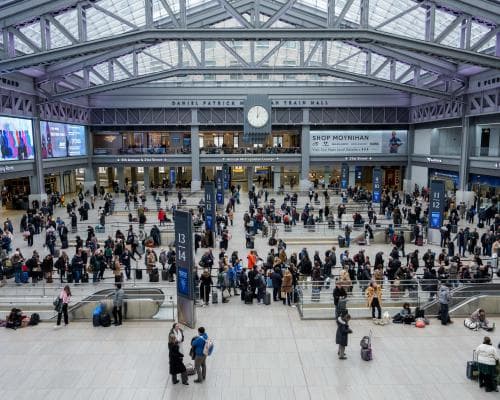
As a real estate developer, Donald Trump built his empire on ostentatious displays of wealth, substantial tax breaks – and lots of free publicity. As president, he has deployed the power of the state to expand his personal brand, adding his name to the Kennedy Center for the Performing Arts, the US Institute of Peace, a class of new navy warships, and even investment accounts for millions of children. Trump is now eyeing yet more grandiose targets in his self-aggrandizement spree. He wants Congress to rename New York’s Penn Station and Washington Dulles international airport in his honor. But there’s a catch: Trump reportedly told Chuck Schumer, the Senate minority leader, that he would unfreeze billions of dollars in federal funding for a major infrastructure project in the north-east – if Schumer supported renaming the two sites. The president seemingly threatened to hold federal funding, which had already been approved by Congress, hostage in his relentless campaign of self-promotion. Even by the standards that Trump set after a year back in the White House, when he has systematically dismantled anti-corruption laws built over decades and used the presidency to enrich himself and his family, trading naming rights as a political favor is a new low. Trump appears to have tried to leverage a $16bn transportation project to build a rail tunnel under the Hudson River, connecting New York and New Jersey, for his personal glorification. Over the past few weeks, Trump and his aides offered shifting explanations regarding whether he sought to extract naming rights in exchange for restoring federal funds – and why the administration had suspended the project’s funding in the first place. After reports of the quid pro quo surfaced this month, Trump said it was Schumer who had suggested renaming Penn Station after the president – a claim that the New York Democrat quickly denied as an “absolute lie”. On 10 February, the White House press secretary, Karoline Leavitt, contradicted Trump’s account when she responded to a question about whether her boss had asked Schumer for help renaming the train station and airport. “About the renaming, why not? It was something the president floated in his conversation with Chuck Schumer,” Leavitt said. In October, at the start of last year’s 43-day US government shutdown, the Trump administration announced it would withhold funds for the sprawling infrastructure program, known as the Gateway project, until it concluded a review into whether diversity practices had played a role in selecting the project’s contractors. But in a statement last month, the administration shifted its argument for suspending the funds, saying it was because Schumer and other Democrats had refused to negotiate with Trump, especially on immigration policies. “There is nothing stopping Democrats from prioritizing the interests of Americans over illegal aliens and getting this project back on track,” said a White House spokesperson, Kush Desai. The administration’s changing rhetoric – railing about diversity and “illegal aliens” – is ultimately a bureaucratic weaponization of culture war grievances to mask a presidential shakedown. On 6 February, a federal judge ordered the Trump administration to release overdue payments for the project while a lawsuit by state officials in New York and New Jersey winds its way through the courts. By 18 February, the administration had released $205m in federal funds owed to the project since it withheld funding in October. Construction work on the Gateway tunnel could resume next week, after it was stopped earlier this month because funds had run out. But the US transportation department has appealed the judge’s order, and it could freeze payments once again if other courts rule in its favor. For now, Trump has failed to use the cudgel of federal funding to expand his presidential branding opportunity. But he’s still eager to satiate his impulse as a real estate mogul, trying to use his second term to slap his name on as many monuments, buildings and federal projects as possible. And Republicans in Congress are keen to flatter their leader by plastering his moniker on a range of landmarks. One Republican Congress member last year proposed renaming Dulles airport as “Donald J. Trump International Airport”, while another introduced a bill requiring the National Park Service to add Trump’s face to Mount Rushmore, the monument in South Dakota which features sculptures of the US presidents George Washington, Thomas Jefferson, Abraham Lincoln and Theodore Roosevelt. Trump is also lobbying owners of the NFL’s Washington Commanders team to name their planned $3.7bn stadium after him, and he’s reportedly pressing US government bodies that must approve the project to pave the way for such a tribute when the stadium opens in 2030. (When asked about these reports, Leavitt, the White House press secretary, responded: “That would surely be a beautiful name, as it was President Trump who made the rebuilding of the new stadium possible.”) No previous US president has tried to put his name on so many buildings or monuments, especially while still in office. Most leaders have waited years or decades for such honors, which are usually initiated by subsequent presidents or legislators. One exception was John F Kennedy, who was memorialized shortly after his assassination in 1963, with a federal building and the Kennedy Space Center named after him. In 1964, Congress renamed a planned national cultural center in Washington in JFK’s honor – and the Kennedy Center for the Performing Arts has served as a “living memorial” to him since it opened in 1971. In December, Trump’s name was added to the Kennedy Center after a vote by its board of trustees, a majority of whom were appointed by Trump last year, when he purged the board and installed himself as its chair. That decision promoted outrage and a lawsuit by a Democratic lawmaker, arguing that only Congress has the authority to change the institution’s name. If a new US administration, or a Democratic-controlled Congress, takes power, it’s very likely to remove Trump’s name from the center. The Kennedy Center’s renaming backfired on the president in other ways, with a cascade of high-profile artists and groups declaring that they would cancel performances. On 1 February, Trump abruptly announced that he plans to close the center for two years of renovations, starting in July. It seems Trump decided to avoid the embarrassment of keeping open a cultural institute that now bears his name but fails to attract enough high-level programming. Many Americans are also getting tired of Trump’s endless self-promotion and narcissism. A CNN poll released last month found that 58% of the US public thinks Trump has “gone too far” in using the power of the presidency. In response to another question about Trump’s “changes to cultural institutions such as the Kennedy Center and the Smithsonian”, 62% of Americans said he had “gone too far” on that as well. But among the most damaging responses was that only 37% of those surveyed said Trump “puts the good of the country above his personal gain” – meaning that nearly two-thirds of respondents think the president is mostly out for himself. The recent CNN poll, among others, show that Americans are put off by Trump’s brazen attempts to profit from the presidency since he returned to office. But the potential conflicts around Trump’s campaign to enrich himself and his family are complicated, especially as the White House insists Trump has no conflicts of any kind. It’s easier for Americans to see through the hypocrisy of a leader who claims to be addressing deep economic problems while spending a lot of time building – or renaming – monuments to himself. Mohamad Bazzi is director of the Center for Near Eastern Studies, and a journalism professor, at New York University