
February 24, 2026
Trump’s vicious attacks on judges fuel his bid for unchecked power | Steven Greenhouse
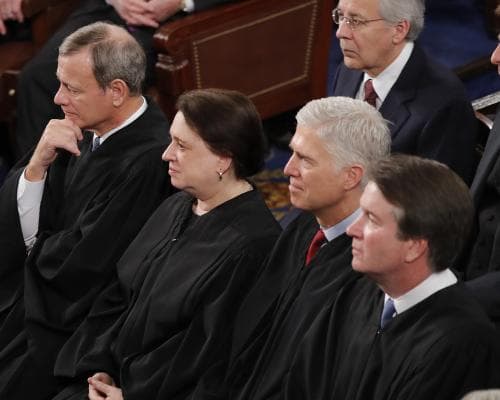
In his report, Steven Greenhouse highlights Donald Trump's aggressive attacks on judges, labeling them as part of a systematic campaign to undermine the judiciary and consolidate power. Following a particularly harsh tirade against Supreme Court justices, Trump and his aides have consistently targeted judges who oppose him, fostering an environment of intimidation and fear. Greenhouse concludes that these actions reflect an authoritarian strategy to delegitimize the judiciary, making it easier for Trump to act without legal constraints. He calls for a united response from all branches of government and legal professionals to confront and denounce these attacks on the rule of law.
Stoic Response
Citizens of the Agora,
Today, we gather to reflect on a troubling chapter in our democracy, one that threatens the very foundation of our rule of law. In his recent report, Steven Greenhouse reveals an alarming trend: the systematic denigration of our judiciary by former President Donald Trump. This is not merely a political spat; it is a grave affront to the principles of justice and fairness that underpin our society. As we stand in this sacred space, let us remember the cardinal virtues of wisdom, courage, and justice that guide our actions and decisions.
Greenhouse highlights a startling fact: Trump and his aides have openly attacked judges, labeling them as “fools” and “disgraces,” creating an atmosphere of fear and intimidation. This is not just rhetoric; it is a calculated strategy to undermine the judiciary, with Trump violating nearly 100 court orders in Minnesota alone. Such actions are a direct assault on the balance of power that is essential for our democracy. When a leader seeks to elevate himself above the law, we must ask ourselves: what becomes of justice?
In the face of this onslaught, we must embody courage. It is our duty as citizens to stand united against these attacks on our institutions. The judiciary is not merely a collection of individuals in robes; it is a bulwark against tyranny, a guardian of our rights. We must not allow the vitriol of one man to erode our faith in the system that protects us all. It is imperative that every branch of government, every legal professional, and every citizen denounce these actions and reaffirm our commitment to the rule of law.
Let us also remember the virtue of justice. We must hold accountable those who seek to undermine the very fabric of our society. The attacks on judges are not isolated incidents; they are part of a broader narrative that seeks to delegitimize dissent and promote an authoritarian agenda. We must rise to the occasion, ensuring that our voices are heard and that our judiciary remains independent and respected.
So, I charge you, citizens of the Agora: stand firm in your convictions. Speak out against injustice, support those who uphold the law, and demand accountability from those who would seek to undermine it. Together, let us safeguard our democracy and ensure that the principles of justice, wisdom, and courage prevail in this critical moment in our history.
Article Rewritten Through Stoic Lens
The Stoic Response to External Turmoil
Understanding the Dichotomy of Control
Dear students, let us reflect upon the recent events surrounding the actions of a prominent leader and his attacks on the judiciary. In such moments, we must remember the Stoic principle that distinguishes between what is within our control and what is not. We cannot control the words or actions of others, but we can govern our own responses and judgments.
External Events as Teaching Moments
When we observe harsh words directed at judges—words that seek to undermine the very fabric of our legal system—we have an opportunity to practice discipline. The leader’s tirade, labeling judges as “fools” and “disgraces,” serves as a reminder that we must not allow ourselves to be swayed by the tumult of external opinions. Instead, let us cultivate our own reasoned judgment, recognizing that the integrity of the judiciary is essential for justice.
Discipline in the Face of Intimidation
Consider the atmosphere of fear that such rhetoric creates among judges. This is a moment for us to reflect on our own courage. When faced with intimidation—whether in our personal lives or in society at large—we must remain steadfast in our commitment to justice and truth. The Stoic ideal teaches us to act with virtue, regardless of the chaos surrounding us.
Judgment Amidst Hostility
As we witness the systematic campaign to vilify judges, we must exercise our judgment wisely. The aim of such attacks is to erode public trust, making it easier for those in power to act without accountability. We must not fall prey to this manipulation. Instead, let us engage in constructive dialogue and support those who uphold the rule of law, recognizing that our voices can contribute to a more just society.
Right Action in Response to Aggression
When we see leaders defying judicial rulings, we are reminded of our duty to uphold the principles of justice. It is not enough to remain silent; we must advocate for the integrity of our institutions. In doing so, we practice right action—standing firm against those who seek to dismantle the checks and balances that protect our freedoms.
The Power of Collective Response
Finally, the call for a united response from all branches of government and legal professionals is an invitation for us to reflect on the power of community. We are stronger together, and by supporting one another in our pursuit of justice, we embody the Stoic ideal of solidarity. Let us encourage one another to speak out against injustice, for it is through collective action that we can safeguard our principles.
Conclusion: Embracing Stoic Principles
In conclusion, let us take these external events as a canvas upon which to paint our Stoic virtues. We cannot control the actions of others, but we can control our responses. Let us practice discipline, judgment, and right action, ensuring that we remain steadfast in our commitment to justice and the rule of law. In doing so, we honor the Stoic path and contribute to a more virtuous society.
Source Body Text
When Donald Trump attacked several supreme court justices as “fools”, “lapdogs”, “disloyal to our constitution” and a “disgrace to our nation” after they ruled against his tariffs on Friday, it was probably the most vicious public tirade that a US president ever leveled against the country’s highest court. But as extraordinary – and extraordinarily ugly – as Trump’s rant was, everyone should realize that it was part of a systematic campaign in which Trump and his top aides have vehemently denounced and smeared judges as part of Trump’s quest for ever more power. Whether it’s Trump, Stephen Miller, Pam Bondi or others, Trump and his lieutenants often pummel judges with brutal rhetoric. To many judges, these attacks no doubt spur fears that some Trump loyalists will threaten them or worse. Trump’s campaign to vilify judges follows Authoritarian Playbook 101: by mocking and demeaning the judiciary, the autocratic leader seeks to diminish the public’s trust and respect for judges, making it easier for the leader to put himself high above the judiciary and assert that judicial rulings are illegitimate, and it’s fine for him to defy them. In recent months, the Trump administration has repeatedly defied judicial rulings, most notably violating 52 court orders in New Jersey and nearly 100 in Minnesota, according to a judge. Trump and his aides have treated judges with contempt and even enmity, as if judges are out-and-out traitors whenever they side with the rule of law instead of Trump. After Trump faced astonishingly little pushback from the judiciary, Congress or society after repeatedly attacking judges over the past year, he no doubt felt emboldened to savage the supreme court, too. In October 2024, Trump denounced the federal district court judge Tanya Chutkan as “the most evil person”; Chutkan was presiding over the special prosecutor Jack Smith’s election interference case against Trump. In March 2025, Trump attacked the district court judge James Boasberg as a “radical left lunatic” after Boasberg ruled that the administration should turn around flights taking alleged Venezuelan gang members to El Salvador without giving them due process. Last May, Trump railed against judges who had ruled against him in deportation cases, calling them “monsters who want our country to go hell” and “judges who are on a mission to keep murders, drug dealers, rapists, gang members” in “our country so they can rob, murder and, rape again – all protected by these USA hating judges who suffer from an ideology that is sick”. This is a deranged way to talk about a co-equal branch of government. Echoing his boss’s nastiness, Miller, Trump’s homeland security adviser, launched a tirade against the “rogue, radical left judiciary” after several judges ruled that Trump couldn’t suspend due process to deport undocumented immigrants. Last May, after a three-judge panel ruled that Trump’s global tariffs were illegal, Miller denounced the decision as a “judicial coup” and said Americans “are living under a judicial tyranny”. Last October, after a judge issued an order limiting Trump’s deployment of the national guard to Portland, Oregon, Miller ranted that “far-left Democrat[ic] judges” were shielding “leftwing terrorism”. Bondi, the US attorney general, has slammed judges for “an unconscionable campaign of bias and hostility” and “undemocratic judicial activism”, while the White House press secretary, Karoline Leavitt, has blasted judicial decisions as “radical” and “ridiculous”. Trump and his team aren’t just dissing judges, they’re essentially saying judges are so biased, corrupt and disloyal that they shouldn’t be considered a legitimate part of our constitutional structure. In this way, authoritarian Trump is seeking to sabotage the nation’s system of checks and balances. Trump’s attacks have stirred up some horrific threats. One example: John McConnell, chief judge of the US district court for Rhode Island, received a ghastly voicemail after issuing a ruling that temporarily suspended the Trump administration’s efforts to freeze many federal grants. “Tell the son of a bitch we’re going to come for him. His ass is going to prison,” the caller said. “I double dare you to try to put charges on Donald J Trump. And I wish someone would … assassinate your ass.” Many judges who ruled against Trump have gotten unsolicited pizzas anonymously sent to their home – widely seen as an “I-know-where-you-live” weapon of intimidation. Considering how venomous the Trump administration’s attacks have been and how many threats judges have received, it’s startling that there’s been so little pushback from the supreme court and Congress. Fortunately, several dozen lawyers, professors and retired judges have joined together in a group, Speak Up for Justice, to support judges under attack. Chief Justice John Roberts went far to protect Trump in his much-criticized ruling that granted Trump broad immunity from criminal prosecution, but in sharp contrast, Roberts has done remarkably little to defend judges from Trump’s attacks. After Trump called Boasberg a crooked judge who “should be IMPEACHED!!!”, Roberts issued a weak, bloodless response. “For more than two centuries, it has been established that impeachment is not an appropriate response to disagreement concerning a judicial decision. The normal appellate review process exists for that purpose.” In his 2024 year-end report, Roberts wrote: “Attempts to intimidate judges … are inappropriate and should be vigorously opposed.” He added that public officials have a right to criticize judicial rulings, “but they should be mindful that intemperance in their statements” about judges “may prompt dangerous reactions by others”. In his 2025 year-end report, Roberts bewilderingly failed to include a single word about Trump’s more frequent and more venomous attacks against judges. After Trump’s diatribe on Friday, Roberts and the other supreme court justices must be thinking: first they came for district court judges in Washington. Then they came for those in Portland. And now – with us on the supreme court uttering hardly a peep about Trump’s vicious treatment of lower court judges – they’re coming for us. Roberts and the other justices are learning the folly of turning a blind eye to Trump’s viciousness and brutishness. A bully like Trump sees that as weakness, as an invitation to escalate his unseemly war against the judiciary. Trump is an authoritarian seeking to destroy the judiciary’s credibility and legitimacy through insults, intimidation and threats of impeachment – all with the aim of making it easier for Trump to take lawless actions unchecked. Every supreme court justice, every federal, state and local judge, every senator and House member, every governor and state attorney general, every law professor needs to speak out and denounce Trump’s attacks on the judiciary and make clear that those attacks are an unconscionable effort to take a wrecking ball to the rule of law. Steven Greenhouse is a journalist and author, focusing on labour and the workplace, as well as economic and legal issues