
February 26, 2026
Autocracy is rising in the west. But the global south proves it’s not inevitable | Kenneth Roth
In a compelling analysis, Kenneth Roth argues that while autocracy appears to be on the rise in the West, the Global South demonstrates a robust desire for democratic governance. Despite the alarming ascendance of far-right movements and political disillusionment in countries like the U.S. and parts of Europe, many in the Global South are actively resisting autocratic regimes, often at great personal risk. Roth emphasizes that the struggle for democracy is not a lost cause; rather, it requires pro-democracy parties in the West to reconnect with alienated voters by addressing their concerns and fostering inclusivity. Ultimately, he posits that the global yearning for accountable governance underscores the importance of continuing the fight for democracy, as it remains the preferred choice over autocracy.
Stoic Response
Correspondence to a Roman Magistrate
From the Voices of Seneca and Musonius Rufus
1. The State of Governance: A Call to Reflection
Noble magistrate, as we navigate the tumultuous waters of governance, we must heed the lessons of history. Seneca once said, "A good character, when established, is the greatest good." Yet, we find ourselves in an age where the character of our leaders is questioned, and the rights of the populace are trampled underfoot. Musonius Rufus reminds us that "the true philosopher is one who is concerned with the welfare of the state." The rise of autocracy, particularly in the West, stands in stark contrast to the fervent desire for democracy seen in the Global South. As Kenneth Roth notes, "democracy seems sometimes to be held in higher esteem in the global south than in the democratic heartland of the west."
2. The Moral Stakes of Our Time
The moral stakes of our age are profound. The struggle for democracy is not merely a political battle; it is a fight for the dignity and respect of every citizen. We witness the heartbreaking consequences of autocratic rule, where governments serve themselves rather than their people. Roth emphasizes, "unaccountable governments invariably serve themselves rather than their people." This is a clarion call for us to cultivate a governance that listens to its citizens and addresses their needs, lest we succumb to the same fate as those who have fallen under tyrannical regimes.
3. Lessons from the Global South
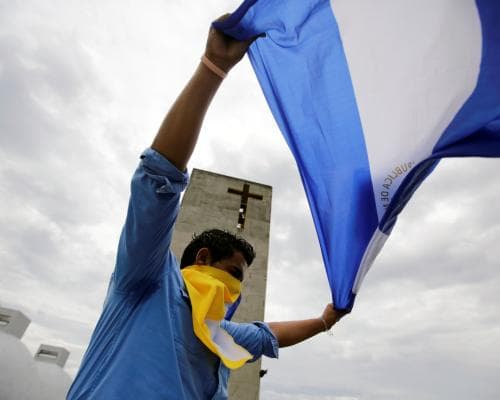
As we observe the Global South, we see a vibrant yearning for democracy, often at great personal risk. Citizens take to the streets, embodying the courage to demand their rights, as seen in movements from Hong Kong to Nicaragua. Roth reminds us, "many in the global south who have experienced life under autocracy want out." This spirit of resistance serves as a beacon of hope, urging us to rekindle our commitment to democratic values. The resilience of these movements teaches us that democracy is not a lost cause; it is a fight worth undertaking.
4. Practical Maxims for Governance
As we reflect on these truths, let us adopt practical maxims to guide our governance:
- Listen and Serve: Engage with the concerns of the populace, ensuring their voices are heard and respected.
- Champion Inclusivity: Move beyond narrow interests and embrace a rhetoric that encompasses all citizens.
- Reject Autocratic Tendencies: Stand firm against the allure of power that seeks to undermine democratic principles.
- Foster Resilience: Cultivate a political culture that values accountability and transparency, ensuring that governance serves the common good.
In the spirit of both philosophy and action, let us strive to embody the virtues of democracy, ensuring that our governance reflects the will and welfare of the people.
Article Rewritten Through Stoic Lens
Reflections on Governance and the Human Spirit
The Nature of Governance
In contemplating the state of governance across the world, I am reminded of the Stoic principle that all things are interconnected and subject to the greater order of Nature. The rise of autocracy in the West, while disconcerting, should not lead to despair. Instead, I recognize that the human spirit has an innate yearning for freedom and accountability, a desire that transcends borders and regimes.
The Struggles of the Global South
The recent uprisings in the Global South serve as a testament to this enduring spirit. In nations where autocracy reigns, the populace bravely risks their safety to demand democracy. This is not merely a struggle against oppression; it is a profound expression of the human will to seek justice and to live in accordance with virtue.
In Iran, the violent repression of protests may seem to extinguish hope, yet it reveals the fear that autocrats harbor towards their own people. They are not invincible; their power is derived from fear, not from the consent of the governed. The courage displayed by those who rise against tyranny teaches us that even in the face of brutal oppression, the flame of democracy persists.
The Dissonance in the West
In contrast, I observe a troubling complacency among some in the West. Those who have long enjoyed the fruits of democracy now flirt with autocratic sentiments, often driven by economic despair and a sense of alienation. It is a reminder that virtue must be actively cultivated; we must not take our freedoms for granted.
The discontent of the working class, feeling unheard and disrespected, is a call to action for those who champion democracy. It is an opportunity to reconnect with our fellow citizens, to listen and to serve. The path forward lies not in division but in inclusivity, addressing the concerns of all, and fostering a collective sense of purpose.
The Impermanence of Power
The dynamics of power are ever-changing. Autocrats may wield control through repression, but history shows that such power is fragile. The fall of leaders like Bashar al-Assad, who relied on fear rather than the goodwill of the people, reminds us that true authority is rooted in mutual respect and accountability.
Even in the face of unfair elections, the resolve of pro-democracy forces can prevail. The lessons from Hungary and Belarus illustrate that the desire for freedom cannot be easily extinguished. The struggle is arduous, but it is a worthy endeavor, for it aligns with the natural order of humanity's quest for dignity.
The Call for Virtue
As I reflect on these events, I am compelled to consider my own role in this grand tapestry. Each of us must strive to embody the virtues of wisdom, courage, and justice. We must reject the allure of complacency and engage actively in the preservation of our democratic ideals.
The challenges we face are not insurmountable; they are opportunities for growth and virtue. By addressing the needs of the marginalized and fostering a spirit of inclusivity, we can reinforce the foundations of democracy.
Conclusion: The Enduring Quest for Democracy
Let us not succumb to fatalism. The global yearning for accountable governance is a powerful reminder that democracy is the preferred choice of the human spirit. We must continue to nurture this desire, recognizing that the struggle for democracy is not merely a political endeavor but a moral imperative.
In the words of the Stoics, we must accept what we cannot change while actively working to improve that which we can. The fight for democracy is ongoing, and it is our duty to engage in this noble cause with humility and resolve.
Source Body Text
There is plenty to worry about in the global contest between democracy and autocracy. Iran’s violent repression of antigovernment protests in January crushed the latest effort to challenge a ruthless regime. In many European countries, including Britain, Germany and France, far-right parties seem ascendant. And Donald Trump is doing what he can to undermine democracy in the United States. Yet a closer analysis shows that autocrats are often running scared of their people. And surprisingly, democracy these days seems sometimes to be held in higher esteem in the global south than in the democratic heartland of the west. These trends show there is nothing inevitable about autocracy’s rise – that the defenders of democracy are on the right side of history and should keep fighting. This is no time for fatalistic despair. In the west, a disturbing number of people have begun to support politicians who disdain democracy. These people are often members of a country’s ethnic majority working class who are struggling, facing economic stagnation amid growing inequality. They feel that government officials do not serve, listen to or respect them. Out of frustration, they increasingly embrace the anti-democratic far right. That the far right offers little practical assistance, and often works against their economic interests, has not been an obstacle. They are attracted to its attacks on governing elites and convenient scapegoating of immigrants and other minorities. To recapture these alienated voters, pro-democracy parties must do a better job of making them feel genuinely heard and respected – of showing a real commitment to serving their interests. That will probably require rejecting limitless free trade and globalization, better delivering social services, and meaningfully addressing the problem of affordability. It will also involve a rhetorical shift away from progressives’ identitarian tendency to speak in terms of a collection of narrow interest groups rather than appeals that encompass everyone. And it will demand taking on the moneyed interests that profit from the status quo and are willing to spend big to defend it. This is not a simple project, but it is doable. That the stakes are the continued viability of democracy should spur political leaders to take the needed steps. By contrast, when one looks at the global south, what is striking is the broad popular embrace of democracy. While some people in the west who have lived their entire lives under democracy seem willing to forsake it, many in the global south who have experienced life under autocracy want out. In country after country in recent years, large numbers of people have periodically taken to the streets to protest against autocracy and in favor of democracy, often at risk of detention and even death. We have seen such uprisings from Hong Kong to Nicaragua, from Russia to Uganda. Sometimes these pro-democracy movements prevail. They ousted the autocratic prime minister of Bangladesh, Sheikh Hasina, and the Rajapaksa dynasty in Sri Lanka. They voted out Jair Bolsonaro as president of Brazil and the Law and Justice party prime minister in Poland. They stymied a presidential self-coup attempt in South Korea. Yet other times, autocratic forces are sufficiently brutal that they crush the pro-democracy movement – at least for a time. That is what happened most recently in Iran. It is also what the authorities have done in Russia, Belarus, Cuba, Nicaragua, Hong Kong and Uganda. But it can be scary for a leader to survive by the barrel of a gun. Most autocrats try to secure at least a degree of popular acquiescence to their rule. But if all they have going for them is repression, few will come to their defense should they face a serious challenge, as Syria’s Bashar al-Assad discovered when a rebel force walked into Damascus virtually unopposed and ousted him. That is why Russia’s Vladimir Putin has nightmares about color revolutions – and why he initially invaded Ukraine in 2014 after the Ukrainian people overthrew a Kremlin-aligned president. Some autocrats have tried more subtle methods of control, allowing elections but trying to tilt the playing field in their favor by controlling the media, civil society and political parties. But that is also a dangerous game, because pro-democracy forces can win even unfair elections, as Hungary’s Viktor Orbán is likely to discover in April, or Belarus’s Alexander Lukashenko learned in 2020. When instead autocrats fall back on repression, as Turkey’s Recep Tayyip Erdoğan has done by imprisoning his principal opponent, Istanbul’s mayor, Ekram İmamoğlu, or Putin’s Russia did by arresting and ultimately killing the charismatic Alexei Navalny, as European intelligence agencies found, they are left with Zombie elections. That ensures a favorable result but conveys none of the legitimacy that was the point of the electoral charade. Autocracy remains unpopular because unaccountable governments invariably serve themselves rather than their people. For example, Orbán spends major European Union subsides on building soccer stadiums to enrich his backers while basic social services such as hospitals are left decrepit. Egypt’s Abdel Fattah el-Sisi is spending huge sums on a vanity project – a new administrative capital – as a vehicle to pay off his military supporters while ordinary Egyptians struggle to afford bread. China was supposed to be the exception. It has indeed lifted hundreds of millions from poverty, albeit starting from the low base of the devastation caused by the Chinese Communist party’s Great Leap Forward and Cultural Revolution. But its slowing economy owes much to that same dictatorship – the demographic echo of the one-child policy, a bloated real-estate sector mired in debt, inadequate consumer spending because a historically poorly funded social safety net requires people to save excessively, and the quashing of companies that become too successful for fear they will challenge CCP power. The inadequacy of CCP rule becomes apparent when compared with China’s more democratic neighbors. China has yet to escape the middle-income trap; few autocracies other than oil-rich kingdoms have managed that. Yet its democratic neighbors – Taiwan, South Korea, Japan, even Hong Kong before Beijing’s crushing of its freedoms – have flourished. That is why hundreds of thousands of people took to the streets of Hong Kong in 2019-2020 to protest against the dictatorship of the CCP, which led Xi Jinping to revoke Hong Kong’s freedoms. The best case for autocracy has long been Singapore, which has managed to avoid the corruption that impoverishes autocracies from Nicolás Maduro’s Venezuela to Robert Mugabe’s Zimbabwe. But there are limits to the lessons to be drawn from a small city state. The fact remains: if one could choose the governing system of the country where one would live, one would be unlikely to choose an autocracy. Democracies have their faults, but those pale in comparison to the alternatives. Yes, western democracies are facing a difficult era. Work is needed to reinforce their legitimacy at home by ensuring that they serve all members of their societies. But we should not despair at the Trumps of the western world. As the global south shows, people want governments that answer to them. They want governments they are able to influence with free media, an unimpeded civil society, competitive political parties, and peaceful protests. In short, they want democracy. We all should. Kenneth Roth is a Guardian US columnist, visiting professor at Princeton’s School of Public and International Affairs, and former executive director of Human Rights Watch. He is the author of Righting Wrongs: Three Decades on the Front Lines Battling Abusive Governments