
March 2, 2026
No one can predict how the war with Iran will unfold | Rajan Menon and Dan DePetris
In a recent analysis, Rajan Menon and Dan DePetris explore the unpredictable nature of the escalating conflict between the U.S. and Iran, sparked by President Trump's aggressive stance and military actions. While Trump has framed his approach as a necessary response to Iran's nuclear ambitions and regional aggression, the authors argue that his true goal appears to be regime change, despite Iran's significant concessions during diplomatic talks. They caution that any military intervention could lead to widespread instability, not just within Iran but across the Middle East, drawing parallels to past U.S. interventions that resulted in chaos rather than democracy. As the situation unfolds, the authors emphasize that the consequences of war are often unforeseen and can have lasting repercussions, leaving both American and Israeli policymakers in uncertain territory.
Stoic Response
Stoic Meditation for Dawn Practice
Author's Claim
In their analysis, Rajan Menon and Dan DePetris assert that the U.S. approach to Iran, particularly under President Trump's administration, is driven more by a desire for regime change than by genuine concerns over nuclear proliferation. They caution that military intervention could lead to widespread instability, drawing parallels with past U.S. interventions that resulted in chaos rather than democracy.
Weighing Against Nature and Logos
Nature teaches us that every action has consequences, often unforeseen and far-reaching. The Stoic principle of logos reminds us to act in accordance with reason and to consider the broader implications of our actions. Menon and DePetris emphasize, “the consequences of war are often unforeseen,” which resonates with the Stoic understanding that rash decisions can lead to chaos and suffering.
In the natural world, ecosystems are delicately balanced. Just as an earthquake can trigger a tsunami, so too can military actions destabilize entire regions. The Stoic sage would remind us that we must act with wisdom, weighing our motivations against the potential for harm.
Actionable Reflections
-
Cultivate Inner Peace: Begin each day with a moment of silence. Reflect on your motivations and ensure they align with the greater good rather than personal ambition or fear.
-
Practice Empathy: Consider the human cost of conflict. Imagine the lives affected by decisions made far from their homes. This will ground your perspective and foster compassion.
-
Embrace Uncertainty: Acknowledge that the outcomes of our actions are beyond our control. Focus on what you can influence: your thoughts, decisions, and responses.
-
Seek Wisdom in Dialogue: Engage in conversations that challenge your views. This will refine your understanding and help you appreciate the complexity of global issues.
-
Act with Integrity: Before taking any action, ask yourself: “Is this in alignment with my values? Will it contribute to harmony or discord?”
Conclusion
As the dawn breaks, let this meditation serve as a reminder of the importance of wisdom, empathy, and integrity in our actions. In a world fraught with uncertainty, we must remain steadfast in our commitment to reason and the greater good. The Stoic path is one of reflection, compassion, and mindful action.
Article Rewritten Through Stoic Lens
Journal Entry: Reflections on the Nature of Conflict and Human Ambition
The Unfolding Strife
In observing the current tensions between the United States and Iran, I am reminded of the inexorable nature of human ambition and the folly that often accompanies it. The leaders of nations, in their quest for power and influence, often forget the fundamental truths of our shared existence. President Trump, in his recent address, painted a grim picture of Iran, attributing to it the sins of past actions. Yet, I must ponder: does this not reflect more on the nature of man than on the actions of a single nation?
The Illusion of Control
Trump’s assertions regarding Iran’s nuclear ambitions reveal a profound anxiety about the future. He speaks of threats, yet fails to recognize that the fear of the unknown is a constant in the human experience. In our desire for security, we often overlook the wisdom of acceptance. The universe unfolds as it must, and to resist this is to invite suffering. The Iranian leadership, too, finds itself in a precarious position, driven by the instinct for survival. They, like all of us, are caught in the web of fate.
The Pursuit of Virtue in Adversity
It is easy to cast stones at those we deem as adversaries. Yet, what virtue lies in such actions? The Iranian people, caught between their government and the ambitions of foreign powers, deserve compassion rather than condemnation. In this moment of turmoil, I see an opportunity for virtue—an invitation to extend understanding rather than animosity. The concessions made by Iran during negotiations, though overlooked, signify a willingness to engage. How often do we miss the olive branch extended in the heat of conflict?
The Nature of War
War, as history has shown, is a tempest that brings chaos in its wake. The desire for regime change, while cloaked in the guise of liberation, often leads to a deeper entrenchment of suffering. The lessons of Iraq, Libya, and Afghanistan linger in the air like a bitter smoke. To believe that the fall of a regime will usher in peace is to ignore the complexities of human society. The fabric of a nation is woven with diverse threads, and to unravel it hastily is to invite discord.
The Unpredictability of Outcomes
As the drums of war beat louder, I am reminded of the unpredictability of human affairs. No one can foresee the consequences of unleashing violence. The chaos that follows may ripple far beyond the borders of the involved nations, affecting countless lives. The interconnectedness of our world demands that we tread carefully, lest we sow seeds of destruction that bear fruit for generations.
A Call for Wisdom
In this moment of uncertainty, I urge those in positions of power to seek wisdom over ambition. Let us not be driven by fear or the desire for control, but rather by a commitment to understanding and compassion. The path of virtue is often fraught with difficulty, yet it is the only path that leads to true peace. May we strive to see beyond the immediate, to recognize our shared humanity, and to act with the grace that befits our nature.
In closing, I reflect on the words of the ancients: “The universe is change; our life is what our thoughts make it.” Let us choose thoughts that elevate us, that connect us, and that bring forth the best in our shared existence.
Source Body Text
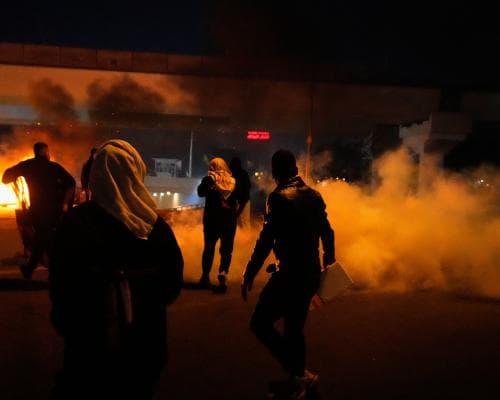
Last week, during his State of the Union address on Tuesday and again on Friday, just before launching Operation Epic Fury, Donald Trump laid out his case for attacking Iran. The US president offered a lengthy bill of indictment against Iran’s Islamic Republic, stretching back to the 1979 revolution: the takeover of the American embassy in Tehran, support for terrorism, brutality towards its citizenry, and support for proxies that have killed Americans. Above all, Trump stressed the peril the US and its allies would face were Iran to build nuclear bombs. Despite the absence of confirming intelligence, he claimed that it would soon possess a missile that could reach the American homeland. Despite this litany of complaints and his characterization of Iran’s government as “evil”, Trump sent his envoys to Geneva to negotiate with Tehran about its nuclear program. After three rounds, Trump tired of diplomacy and blamed the Iranians for refusing to say the magic words: Iran will not become a nuclear weapons state. In fact, senior Iranian officials have done so time and again. “Iran will under no circumstances ever develop nuclear weapons,” Iranian foreign minister Abbas Araghchi tweeted on 24 February. Beyond that, Iran made significant concessions at the talks. Oman’s foreign minister, Badr Albusaidi, who mediated the Geneva talks, said that Iran agreed to reduce uranium enrichment to below 3.67% – the ceiling stipulated in the deal Tehran struck with the Obama administration in 2015 – and allow international nuclear inspectors back into the country with full monitoring powers. The Iranians went even further by agreeing not to accumulate and store any enriched uranium. If Trump were smart, he would have pocketed these unprecedented concessions, claimed victory and bragged – justifiably – about squeezing a better deal out of Iran than Barack Obama had. Trump’s real motive, however, was far more ambitious: the Islamic Republic’s downfall. In January, as the Iranian security forces violently suppressed nationwide demonstrations, Trump urged the Iranian people to “take over your institutions” and assured them that “help is on the way”. Last Friday, one hour after the United States and Israel began their second bombing campaign against Iran in less than a year, he again called on Iranians to “take over your government” once the military operations ended and to not squander what might be “your only chance for generations”. Israeli prime minister Benjamin Netanyahu, who may be more determined than Trump to topple the Islamic Republic, made similar appeals. In hindsight, the Trump administration’s nuclear talks with Iran look more like a check-the-box exercise than a genuine effort to resolve the nuclear problem. Even had the Iranian officials agreed to end all uranium enrichment, the war would probably have happened given the maximalist goal of Trump and Netanyahu. The talks may have been designed to demonstrate that Trump tried diplomacy before deciding on another war. Realizing that what Trump really seeks is the destruction of the Islamic Republic, its leadership – now under fire – won’t go down without a fight to the finish, no matter the wider consequences. The killing of Ayatollah Ali Khamenei, Iran’s “supreme leader for the last 37 years”, has shown them that the Islamic Republic’s very existence hangs in the balance. The war has already become regional: Iran is attacking American-aligned Arab states in the hope that they will pressure Trump to sign a ceasefire. In addition to firing missiles at Israel in retaliation, Iran has attacked Bahrain, Kuwait, Saudi Arabia, Qatar and the United Arab Emirates, which host various US military facilities. As the war continues, Iran may escalate further by blocking the Strait of Hormuz, through which roughly a fifth of the world’s oil supplies pass annually. The shock waves would be felt worldwide. Trump and Netanyahu are betting that Iranians will rise up en masse, as they did in January, and put an end to clerical rule. But whenever Iranians take to the streets, Iran’s security forces crack down ferociously. If protesters swarm the streets once again, the government will be even more merciless: it understands that everything is now on the line. Trump has called on the Islamic Revolutionary Guard Corps and Iranian police to lay down their weapons in return for “complete immunity”, but they may instead stand by the regime. The mass demonstrations that have occurred in Iran over the years and the jubilation over Khamenei’s death in parts of Iran prove that many Iranians revile their government. Yet it would be a mistake to believe that it lacks any broad support and rules solely through fear and force. Neither the United States nor Israel will deploy ground troops, but they can’t destroy the Iranian state with air and missile strikes alone. That will require sustained resistance on the ground. By calling for a mass revolt, they are, in effect, asking unarmed Iranians to serve as their ground troops. If “regime change” does occur, it will not necessarily usher in stability. The American record in such undertakings offers little reassurance. In Iraq, Libya and Afghanistan, the collapse of the state didn’t produce stability, let alone democracy – but prolonged anarchy, intra-state violence, refugee flows, and the spread of terrorism across borders. Iran is larger, more populous and more strategically situated than any of these countries. Its territory exceeds that of France, Germany and Spain combined. It sits astride vital energy corridors, and its 93 million people include diverse ethnic and political constituencies with competing visions of the country’s future. A sudden power vacuum in such a setting could produce turmoil. If a war aimed at ousting the Islamic Republic produces disorder rather than order, the consequences – above all for Iranians – could eclipse the upheaval that followed earlier regime change wars. The instability may not remain confined within its borders; it could ripple across the Middle East and unsettle global energy markets. Can anyone predict how this war will unfold? No. That includes American and Israeli policymakers. War, once unleashed, can produce all manner of unintended consequences, including some that prove uncontrollable and enduring. Rajan Menon is professor emeritus of international relations at Powell School, City University of New York, and senior research fellow at Columbia University’s Saltzman Institute of War and Peace Studies. Daniel R DePetris is a fellow at Defense Priorities and a syndicated foreign affairs columnist at the Chicago Tribune.