
March 14, 2026
Trump faces a ‘personal Vietnam’ in Iran | Sidney Blumenthal
Executive Summary
Donald Trump's approach to the conflict in Iran reflects a chaotic and inconsistent strategy, characterized by erratic communication and a lack of clear objectives. The expectation of a swift victory has faltered, leading to confusion and a potential humanitarian crisis, while his administration's messaging attempts to frame the situation as a manageable "excursion" rather than a full-scale war. Key data indicates a significant credibility gap, with congressional inquiries emerging as a response to the administration's shifting narratives and lack of accountability. Moving forward, a structured examination of the war's origins and strategy may be necessary to address the implications of Trump's decisions on both domestic and international fronts.
Stoic Response
Address to the Students in the Stoa
Greetings, seekers of wisdom. Today, we reflect upon the tumultuous nature of our times, particularly as we observe the actions of leaders who govern not with clarity, but with chaos. Let us consider the case of Donald Trump and his approach to the conflict in Iran, a situation rife with confusion and misguided judgments.
The Nature of Judgments
- Beware of Erratic Thinking: The mind that seeks reason in irrationality is prone to suffering. Do not allow the noise of chaotic narratives to cloud your judgment.
- Challenge Unhealthy Assumptions: Question the narratives that seek to frame confusion as clarity. Recognize that the expectation of swift victory is often a mirage.
The Discipline of Desire, Impulse, and Assent
To navigate the stormy seas of public discourse and policy, we must cultivate a disciplined approach:
-
Desire:
- Cultivate desire for truth, not for the fleeting approval of the masses.
- Seek wisdom above all; let not ambition cloud your vision.
-
Impulse:
- Restrain impulsive reactions to sensational statements.
- Reflect before you act; consider the consequences of your words and actions.
-
Assent:
- Do not grant assent to ideas that lack foundation.
- Question everything that demands your agreement, especially when it serves the interests of the few over the many.
Imperatives for the Stoic Path
- Practice Discernment: In a world where narratives shift like sand, cultivate the ability to discern truth from fabrication.
- Engage in Dialogue: Discuss and debate ideas with your peers, but do so with respect and a commitment to clarity.
- Embrace Accountability: Hold leaders accountable for their actions, and demand transparency in their decision-making processes.
- Foster Inner Peace: Amidst external chaos, cultivate tranquility within. The wise person remains steadfast, unshaken by the storms of public life.
Let us strive not to mirror the confusion of our leaders but to embody the clarity that comes from disciplined thought and virtuous action. In doing so, we become the architects of a more rational and just society.
Article Rewritten Through Stoic Lens
Stoic Reflection on Leadership and Conflict
Executive Summary
The current approach to the conflict in Iran, as exemplified by Donald Trump's administration, reveals a lack of clarity and consistency. This situation underscores the importance of virtue, wisdom, and temperance in leadership. The expectation of a swift resolution has not materialized, leading to confusion and potential humanitarian consequences. It is essential to focus on what lies within our control—our responses and decisions—rather than the chaotic external circumstances that we cannot govern. A rational examination of the origins and strategies of this conflict is necessary to understand its implications for both domestic and international spheres.
The Nature of Conflict
In the realm of international relations, it is crucial to distinguish between perception and reality. The expectation that Iran would yield easily to external pressures reflects a misunderstanding of human nature and the complexities of geopolitical dynamics. The belief that a "perfect scenario" could unfold without disruption is an example of misplaced optimism. The Stoic perspective teaches us that we must prepare for adversity and accept that outcomes are often beyond our control.
Communication and Accountability
The communication strategies employed by the administration reflect a dissonance between intention and execution. The framing of military actions as a "short-term excursion" serves as a diversion from the gravity of the situation. This semantic maneuvering may provide temporary relief from accountability, but it ultimately undermines trust and credibility. A Stoic leader recognizes that clarity in communication is essential for fostering understanding and maintaining integrity.
The Role of Inquiry
The emergence of congressional inquiries into the conflict serves as a necessary mechanism for accountability. Such inquiries allow for a rational assessment of the decisions made and their consequences. The Stoic tradition emphasizes the importance of examining cause and effect, rather than assigning blame. By understanding the motivations and actions that led to the current state of affairs, we can cultivate wisdom and prevent future missteps.
The Pursuit of Virtue
In the face of adversity, it is vital to pursue virtue—wisdom, courage, justice, and temperance. The current administration's approach has often been characterized by impulsivity and a lack of foresight. A Stoic leader would prioritize the well-being of the nation and its allies over personal ambition or popularity. The pursuit of virtue requires a commitment to ethical principles and a willingness to engage in difficult conversations, even when they challenge the status quo.
The Illusion of Control
The narrative surrounding the conflict often reflects an illusion of control. The belief that one can dictate the terms of engagement without considering the perspectives of others is a fundamental misunderstanding of diplomacy. A Stoic approach acknowledges that while we can influence our actions, we cannot dictate the responses of others. This understanding fosters humility and encourages a more measured approach to conflict resolution.
Conclusion: A Call for Reflection
As we navigate the complexities of international relations, it is essential to reflect on the principles of Stoicism. Emphasizing virtue, wisdom, and accountability will lead to more effective leadership and a more stable global environment. By focusing on what is within our control and accepting what is not, we can cultivate a more rational and just approach to conflict. In doing so, we honor the Stoic tradition and strive for a legacy of integrity and resilience in the face of adversity.
Source Body Text
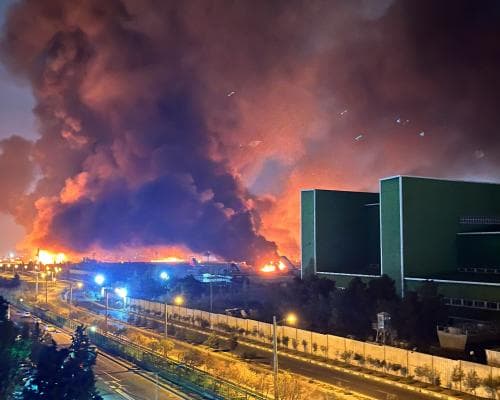
Donald Trump is lost in his fog of war. He compounds confusion with improvised fabrications as his naive expectation of a lightning victory has been sunk in the Strait of Hormuz. Iran, he felt certain, would easily follow the “perfect scenario” of Venezuela, accede to naming a leader who would instantly do his bidding, and there would be no disruption of the oil markets – “a strong game plan”, stated Karoline Leavitt, his White House press secretary, who defends each of his changeable excuses with equal ferocity. There may be few if any facts underlying the delusions upon which Trump constructs his vapid explanations and evanescent strategies. The belief that coherent sense can be made out of Trump’s shuffling words is a weakness of the rational mind that refuses to accept the impulses of the inveterate demagogue for what they are. Searching for reason in the jungle of Trump’s tales may compel hopelessly sensible people to superimpose logic where there is none in order to satisfy the need for some semblance of soundness. Trump’s erratic efforts to reframe his rationale further expose his incompetence and unintelligibility, utterly predictable but now lethal on a global scale. His stream of sputtering remarks has, however, clearly established the ground that should be explored by congressional inquiries into the war’s origins, planning and conduct. Trump is also at war with the English language. His war is not a war, he insists, but a “short-term excursion”, a semantic dodge to skirt congressional and international accountability. Then, when asked whether it’s an excursion or a war, he replied: “Well, it’s both. It’s an excursion that will keep us out of a war.” His rhetorical legerdemain is the equivalent of René Magritte’s painting of a pipe with the caption, “Ceci n’est pas une pipe” – “This is not a pipe.” The title Magritte gave to his painting was The Treachery of Images. Orwell or Magritte? Propaganda or surrealism? Trump has declared he will force “regime change” or negotiate with some unnamed personage in the regime who happens to have been recently killed. “Most of the people we had in mind are dead,” he said. Trump demands “unconditional surrender” or he declares the war “very complete” after an hour-long conversation with Vladimir Putin, after Putin pledged “unwavering support” to the new supreme leader, Mojtaba Khomeini, the 56-year-old son of the assassinated 86-year-old supreme leader, about whose ascension Trump said he was “not happy” and called him a “lightweight”. On 3 March, Trump refuted the reason secretary of state Marco Rubio gave for why Trump launched the war. Rubio explained that the US expected Israel would stage a preemptive attack and that Iran would attack “American forces”. According to Rubio’s logic, which might have some truth: “There absolutely was an imminent threat, and the imminent threat was that we knew that if Iran was attacked, and we believed they would be attacked, that they would immediately come after us.” If true, though, it was Israel that triggered the “imminent threat” and Bibi Netanyahu who manipulated Trump into war. Rubio appears like a contestant in “The Apprentice Goes To War,” in his guessing game in quest of an answer. But Trump dismissed Rubio’s account: “If anything, I might have forced Israel’s hand,” he said. Trump claimed that he was the one who triggered the sequence of the “imminent threat”. But the Pentagon briefed congressional staffers that there was no intelligence at all about an “imminent threat”. Then, Trump tweeted that he had been rushed to judgment. “Based on what Steve [Witkoff] and Jared [Kushner] and Pete [Hegseth] and others were telling me, Marco is so involved, I thought they were going to attack us.” Here Trump seemed to be supporting an element of Rubio’s account, which he had previously brushed aside. “The Apprentice Goes To War” moves on to the championship round. The “excursion” is ending “very soon”, according to Trump, or as defense secretary Pete Hegseth said, “only just the beginning” or “both”, according to Trump when questioned at a press conference on 9 March. “I have a plan for everything,” Trump boasted to the New York Post earlier that day in response to surging oil prices. “You’ll be very happy.” But he fought the gas pump and the gas pump is winning. Grappling to explain his ultimate war aim, Trump said on 9 March to House Republicans: “We’ve already won in many ways, but we haven’t won enough.” One of the most unpopular presidents of the century is attempting to restore his popularity with an unpopular war. Winning is the object constantly receding over the horizon that cannot be seen through the black clouds of acid rain over Tehran. The Trump White House is the first in history to define a war’s purpose as achieving the ecstatic sensation of playing a simulated war video game. Trump’s little shop of horrors, his communications department, has produced a mash-up of clips from action movies, cartoons, football games and images of real bombings of Iran mixed with false images from the Halo video game. These official presidential videos represent the distilled essence of Maga incel culture. The only woman depicted is Lois Lane, silently gazing up at Superman. With a little AI tweak, the communications department geniuses could put Lois in an apron carrying a tuna fish casserole. Trump escaped from serving in the Vietnam war by claiming he had bone spurs. Avoiding getting a sexually transmitted disease, he told Howard Stern on his radio show, “is my personal Vietnam”. He described women as “landmines”. “I feel like a great and very brave soldier.” He told Stern: “You know, if you’re young, and in this era, and if you have any guilt about not having gone to Vietnam, we have our own Vietnam – it’s called the dating game ... Dating is like being in Vietnam.” The survivor of “the dating game” is clueless that there is now no “light at the end of the tunnel”, a phrase Gen William Westmoreland, the US commander in Vietnam, conceived to express his optimism about the war in 1967. In Trump’s Iran war, he faces a real “personal Vietnam”. His “credibility gap”, which bedeviled president Lyndon Johnson, is a chasm. He is stuck in a quagmire. His goals are elusive. His bombing does not force a surrender. The adversary has proved resilient. He has alienated our allies. He is creating a humanitarian disaster. He is generating economic insolvency. He has no exit strategy. Good morning, Vietnam. After the Senate voted down a War Powers Resolution mainly along party lines on 4 March, a group of Senate Democrats declared their intention to hold up Senate business on the floor until Hegseth, Rubio and others testify on the war before the armed services and foreign relations committees. If the Republican controlled Senate leadership were to agree, the hearings would create a public forum for raising crucial questions. If the Democrats were to gain control of the House or Senate, they could run a continuing series of hearings. Those potential hearings would resemble the first hearings on the Vietnam war. In February 1966, senator J William Fulbright, who had been an ally of president Lyndon Johnson, broke with him over Vietnam. As chair of the foreign relations committee, he had supported the Tonkin Bay Resolution in 1964 authorizing US military action without having a formal declaration of war, but became disillusioned as the conflict escalated into a full-scale war. The Fulbright hearings exposed the “credibility gap” between the administration’s demands for more troops and the facts about past claims that had been made in favor of escalation. Within four weeks, Johnson’s approval rating for his handling of the war plummeted from 63% to 49%. An enraged president ordered FBI director J Edgar Hoover to investigate Fulbright as “either a communist agent or a dupe of the communists”. Fulbright elaborated his critique in a book entitled The Arrogance of Power, which he defined as “the tendency of great nations to equate power with virtue and major responsibilities with a universal mission”. He did not believe that “greatness” was proven by demonstrations of belligerence. “I do not think that America’s greatness is questioned in the world, and I certainly do not think that strident behavior is the best way for a nation to prove its greatness. Indeed, in nations as in individuals bellicosity is a mark of weakness and self-doubt rather than of strength and self-assurance.” But Fulbright went unheeded on the Vietnam war. It would destroy Johnson’s presidency and ruin the presidential hopes of Hubert Humphrey. Fulbright had a premonition of the coming of Richard Nixon, cautioning that “without prospect of victory or negotiated peace … hopes will give rise to fears, and tolerance and freedom of discussion will give way to a false and strident patriotism.” Fulbright had in mind “the McCarthy hysteria” and the dangers of its recrudescence in a curdled war. Nixon campaigned in 1968 to end the Vietnam War, suggesting a secret plan, “Peace With Honor”, but his agents subverted Johnson’s peace negotiations in order to tilt the election. Nixon dramatically extended the war with the heaviest bombing since the second world war not only of Vietnam but also of Cambodia and Laos. He called antiwar protesters “bums” and invoked a patriotic “silent majority”. When the Washington Post and New York Times published the Pentagon Papers, he attempted to suppress them. In response, he created a clandestine group called “the Plumbers”, ostensibly to plug leaks, but who were arrested breaking in to the Democratic National Committee headquarters at the Watergate complex. Nixon’s paranoia ran as a continuous thread from Vietnam to Watergate, from the war to domestic politics. On 11 March, Trump traveled to Kentucky to stage his packaged rally with YMCA blaring and bused-in supporters to whip up enthusiasm for his war and a Maga primary challenger to representative Thomas Massie, who is a principal proponent of opening the Epstein files. On the war, Trump declared victory. “You know, you never want to say too early you won. We won. The first hour, it was over.” We are now apparently in the part of war that is an excursion to the aftermath, or both. Then, Trump swiveled to attack Massie. “He is disloyal to the Republican party. He’s disloyal to the people of Kentucky. And most importantly – he is disloyal to the United States of America.” Disloyalty to Trump, according to Trump, is treason to the country. Trump did not specify whether Massie is a traitor because of his dissent on the war or the Epstein files, or both. Sidney Blumenthal, former senior adviser to President Bill Clinton and Hillary Clinton, has published three books of a projected five-volume political life of Abraham Lincoln: A Self-Made Man, Wrestling With His Angel and All the Powers of Earth. He is a Guardian US columnist