
March 18, 2026
Trump needs to reject Netanyahu’s quest for a forever war | Kenneth Roth
In his article, Kenneth Roth critiques the ongoing US-Israeli bombing campaign against Iran, now in its third week, arguing that it lacks a clear purpose and is causing significant civilian harm. He highlights the divergent goals of Donald Trump and Israeli Prime Minister Benjamin Netanyahu, suggesting that the war has only strengthened Iran's hardliners rather than facilitating regime change. Roth concludes that Trump should reject Netanyahu's push for a prolonged conflict, as the war is proving disastrous for both Iran and US interests, leading to declining public support and economic repercussions. Ultimately, he calls for an urgent end to the violence, emphasizing the need for a more humane approach to international relations.
Stoic Response
Correspondence to a Roman Magistrate
Voice of Seneca: The Tragedy of Conflict
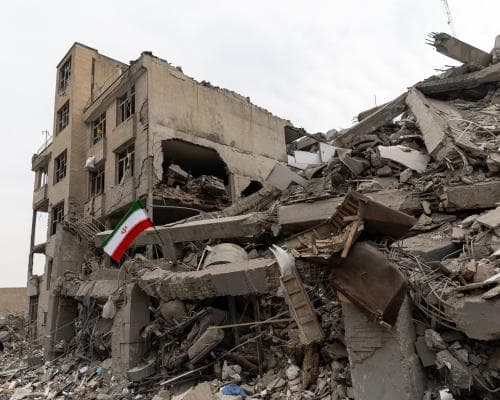
Noble magistrate, reflect upon the current strife that consumes the lands, akin to the turmoil of our own times. As I once mused, “A great mind is one that can hold two opposing thoughts at once.” The ongoing bombardment of Iran, now in its third week, serves as a tragic reminder of the consequences of unchecked ambition. The loss of innocent lives—168 children in a single strike—reveals the true cost of war, a cost that weighs heavily on the conscience of any leader.
Voice of Musonius Rufus: The Moral Imperative
Esteemed magistrate, our duty extends beyond mere governance; it encompasses the moral fabric of our society. The justifications for this violence are as thin as the air we breathe. “It is not the man who has too little, but the man who craves more, that is poor.” The desire for regime change has only solidified the resolve of Iran’s hardliners. Instead of fostering peace, this aggression has sown discord and suffering, reinforcing a regime that thrives on chaos.
The Stakes of Inaction
As the war unfolds, the stakes grow ever higher. The Pentagon’s indifference to civilian life, as evidenced by the deliberate targeting of a school, stands in stark opposition to the principles of humanity and justice. The UN charter forbids preemptive strikes, yet here we are, embroiled in a conflict that lacks a clear purpose. The very fabric of our international relations is at risk, as public opinion shifts against the aggressors. The question arises: will we be remembered as architects of destruction or as harbingers of peace?
Practical Maxims
- Value Human Life: Prioritize the protection of civilians in all military engagements.
- Seek Clarity in Purpose: Ensure that any action taken is justified and aligns with moral and ethical standards.
- Embrace Diplomacy: Engage in dialogue and seek peaceful resolutions before resorting to force.
- Learn from History: Reflect on past conflicts to avoid repeating the mistakes that lead to suffering and chaos.
In this moment of reflection, let us strive for wisdom and compassion, guiding our actions toward the betterment of all humanity.
Article Rewritten Through Stoic Lens
Journal of Marcus Aurelius
Reflections on the Nature of Conflict
As I observe the turmoil wrought by the ongoing conflict between the United States and Iran, I am reminded of the impermanence of human affairs. This war, now in its third week, reveals the folly of seeking power through destruction. The intent behind such actions often remains clouded, yet we must accept that the cosmos has its own order, and we are but players in this grand theater.
The Illusion of Purpose
It is apparent that the justifications for this campaign are frail. The notion of prevention, as espoused by leaders, masks a deeper ignorance of the true nature of peace. To engage in war without a clear purpose is to embrace chaos. The UN charter, a reflection of our shared humanity, cautions against such reckless endeavors. In this, we see the futility of seeking control through aggression; the cycle of violence begets only more violence.
The Strength of the Human Spirit
In the face of suffering, we must cultivate virtue. The Iranian people endure great hardship, not through their own choosing, but as a consequence of decisions made far from their homes. The tragic loss of innocent lives, particularly that of children, serves as a poignant reminder of our shared responsibility to protect the vulnerable. It is in such moments that we must strive to embody compassion and justice, even when the world around us seems indifferent.
The Consequences of Leadership
The actions of leaders, such as Trump and Netanyahu, reveal a divergence in vision that only exacerbates the plight of the innocent. One seeks chaos while the other yearns for control, yet both fail to recognize the wisdom of restraint. As the fabric of society frays under the weight of their ambitions, we are reminded that true leadership lies not in the exercise of power, but in the pursuit of harmony.
The Resilience of the Human Condition
The Iranian regime may appear to fortify itself against external pressures, yet it is the resilience of the human spirit that ultimately prevails. The suffering inflicted upon the populace may strengthen their resolve rather than diminish it. In this, we find an opportunity for reflection: how often do we allow our own struggles to forge our character? The path of virtue is seldom easy, yet it is through adversity that we may discover our true selves.
The Call for Peace
As the world watches this tragic unfolding, we must advocate for an end to the violence. The pursuit of a more humane approach to international relations is not merely an ideal; it is a necessity for the survival of our shared humanity. Let us not forget that the strength of a nation is measured not by its military might, but by its capacity for compassion and understanding.
Embracing the Natural Order
In contemplating these events, I find solace in the acceptance of nature’s order. The rise and fall of empires, the ebb and flow of conflict, all serve a purpose in the grand design. We are reminded that our time is fleeting, and in this fleeting existence, we must strive to leave a legacy of wisdom, kindness, and peace.
Let us then, in our own lives, embody the virtues we wish to see in the world. In the face of turmoil, may we choose understanding over hostility, and compassion over indifference. For in this lies the true essence of our humanity.
Source Body Text
With the US-Israeli bombing of Iran now in its third week, its costs are mounting, its purpose is increasingly muddled and potential off-ramps have become frustratingly elusive. Yet rather than succumb to despair, we should urgently press for this destructive war to end. Iran never engaged in an actual or imminent attack that would justify a war of self-defense. The best that Donald Trump could muster was an argument of prevention – that Iran’s missile program and capacity to disrupt the Middle East must be curtailed, along with its ability to build a nuclear weapon. But the UN charter does not permit armed attacks for mere preventive purposes; that would open the door to endless armed conflicts. And even by the standard of Trump’s inadequate justification for war, his bombing has been a fiasco. Having destroyed Iran’s air-defense systems, the US and Israeli forces quickly established dominance of the skies. They can bomb anywhere at will. Benjamin Netanyahu claims to have plenty more targets to go – three weeks by his latest assessment – but as early as 11 March, Trump admitted that there was “practically nothing left to target”. The difference lies in part in their divergent goals. Much as in Syria, where the Israeli prime minister prefers a country in chaos while Trump has supported the new authorities, the Israeli strategy for Iran is to pummel the country with the seeming aim of postponing the day when it can strike back. Trump, meanwhile, appears to prefer the Venezuelan option, hoping to engineer a regime more amenable to US interests. The ferocity of the bombing has set back Trump’s hopes. Instead of regime change, it has produced regime reinforcement. After supreme leader Ali Khamenei was killed in the war’s first strike, some senior Iranian officials reportedly sought a more moderate alternative who could reach an accommodation with Trump. That might have been possible if the ailing Khamanei had died a natural death, but the US-Israeli bombardment strengthened the hardliners who selected his son as the new supreme leader, signaling an intention to continue his father’s course. This week, Israel made matters worse by killing Ali Larijani, Iran’s top security official who had a reputation as a bridge-builder between hardliners and moderates. He might have led efforts to secure a ceasefire. His death serves Netanyahu’s goal of continuing the war. Other military goals have proved elusive as well. The bombardment seems to have substantially reduced Iran’s long-range missiles, but the ruling clerics have plenty of drones and smaller missiles that continue to wreak havoc in the Gulf Arab states that are close US allies and house US military bases. In addition, using mines and small speedboats, Iran has shut the strait of Hormuz to a significant portion of the world’s daily supply of oil and liquified natural gas, sending prices skyrocketing. Even Iran’s nuclear program remains a threat despite Trump’s claim that the US-Israeli bombing last June had “obliterated” it. Cannisters of highly enriched uranium may still be buried deep underground, according to officials. Extracting them would require a lengthy and risky ground operation – nothing like the quick snatch-and-run operation used to detain Venezuela’s Nicolás Maduro. Meanwhile, the Iranian people are suffering the consequences of the massive bombing campaign. In the most deadly incident, a US missile hit a girls’ elementary school, killing a reported 168 people, mostly students. The Pentagon’s investigation suggested that, far from an errant missile or a blameless mistake, the deliberate double-tap attack on the misidentified facility was the result of “outdated targeting data”, as if that were an excuse. Military attackers have a legal duty to take “all feasible precautions” to avoid civilian harm, yet the Pentagon seemed not to have bothered to notice that the school was distinct from an adjacent military base, public entrances and play facilities were visible from satellite imagery, and the school had “a yearslong online presence, including dozens of photos of the children and their activities”. Was that indifference encouraged from the top? Rather than providing leadership about the importance of sparing civilians, Trump’s defense secretary, Pete Hegseth, said he wants to prioritize “lethality” over “tepid legality”. He also defunded the Pentagon program for civilian-harm assessments. Israel’s attack on 30 fuel depots outside Tehran showed a similar disregard for civilian welfare. Whatever ostensible military justification for the attack – a source of revenue for the Iranian military or fuel for its equipment – was vastly overshadowed by the toxic fumes and soot that drenched Tehran’s 9 million people. In addition, in a replay from Gaza, the World Health Organization recorded 18 attacks on healthcare resulting in eight deaths among health workers, even though international humanitarian law presumptively protects medical facilities. With the war’s goals so poorly defined, there is a growing risk that the Iranian government will be seen to have won simply by enduring. That the Iranian people are suffering has never been of much concern to a regime that was willing to massacre at least 7,000 protesters to retain power. Trump’s appeal to Iranians to rise up and overthrow the regime seemed callously oblivious to the blood they have repeatedly shed in such endeavors. The Iranian regime cannot win a frontal contest on the battlefield, but it may still salvage a perceived victory through asymmetrical warfare. Its targets are the price of a tank of gas in advance of the US midterms, where the affordability crisis could lead to an electoral disaster for Republicans, and the Gulf Arab states, whose self-promotion as havens for tax-conscious businesses turned out to be vulnerable to the whims of its supposed protector in Washington. As the world suffers the economic consequences of this disastrous war of choice, and people see yet another defenseless people being pummeled by the US-Israeli military alliance, public opinion is turning rapidly. American support for Israel has plummeted, first as it committed genocide in Gaza, and apartheid and ethnic cleansing in the West Bank, and now the crime of aggression in Iran. Trump’s lawless belligerence and indifference to international standards have made the public in key democratic allies – Canada, Germany, France and the UK – favor a turn toward China, despite its own repressive indifference to international law. That’s quite an accomplishment. Trump’s aggression is no more popular among allied governments. His pleas for help in defending tankers in the strait of Hormuz have so far come up empty. He has tried to up the ante, suggesting that his commitment to Nato, a defensive alliance built on pledges to support any member under attack, would depend on Nato members joining him in his offensive war of aggression. The response to that threat was decidedly cold. Trump has an endless capacity to make fact-free pronouncements about the brilliant success of his policies. Iranians’ best hope may be that he declare victory and move on. Trump’s demand for Iran’s “unconditional surrender” complicates that face-saving strategy. Yet as the price of Trump’s folly mounts – new inflationary pressure, declining stock markets, worsening midterm prospects, even a disheartened Maga base – we must hope that Trump finds the wisdom to reject Netanyahu’s quest for a forever war and calls it quits. Kenneth Roth is a Guardian US columnist, visiting professor at Princeton’s School of Public and International Affairs and former executive director of Human Rights Watch. He is the author of Righting Wrongs: Three Decades on the Front Lines Battling Abusive Governments