
May 1, 2026
The supreme court’s voting rights decision wasn’t about law – it was about politics | David Daley and Eric J Segall
The Supreme Court's recent decision in Callais v. Louisiana marks a decisive political maneuver, effectively dismantling the Voting Rights Act's protections for minority voters while inviting aggressive gerrymandering by Republican state legislatures. This ruling could lead to a dramatic loss of Black political representation, potentially stripping as many as 19 seats from the House and hundreds from state legislatures, reshaping the balance of power in favor of Republicans. Ultimately, this court's actions reveal a troubling shift towards prioritizing partisan interests over democratic principles, raising alarms about the future of multiracial democracy in the U.S.
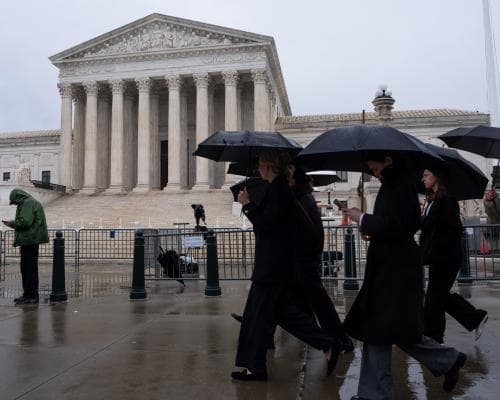
Stoic Response
Stoic Field Manual Entry: Navigating the Aftermath of Callais v. Louisiana
What Is Within Our Power
- Personal Response: We have the power to choose our reactions to external events. While we cannot control the Supreme Court's decisions, we can control how we respond to them.
- Civic Engagement: We can engage in advocacy, educate ourselves and others about voting rights, and participate in local politics to promote equitable representation.
- Self-Reflection: We can cultivate our own virtues—courage, justice, and wisdom—by reflecting on our values and aligning our actions with them.
What Is Opinion
- Political Interpretations: The opinions surrounding the Court's decision are subjective. Some may view it as a necessary update to the Voting Rights Act, while others see it as a blatant act of political power.
- Media Narratives: Different media outlets will frame the decision in various lights, influencing public perception. Recognize these biases and seek objective information.
- Public Sentiment: The reactions of politicians and strategists reveal a spectrum of opinions, but these are shaped by personal interests and agendas rather than universal truths.
What Action Virtue Demands
- Advocacy for Justice: Stand up for the rights of marginalized communities. Use your voice and resources to support organizations that work to protect voting rights.
- Community Solidarity: Engage with your community to discuss the implications of the ruling. Foster dialogues that emphasize unity and collective action.
- Long-Term Commitment: Understand that the fight for justice is ongoing. Commit to being an informed and active participant in the democratic process, regardless of setbacks.
Conclusion
In the face of adversity, such as the Supreme Court's ruling in Callais v. Louisiana, we must remember the Stoic principles of focusing on what we can control, discerning the nature of opinions, and acting in accordance with virtue. By embodying these principles, we can work towards a more just and equitable society, even when the path is fraught with challenges.
Article Rewritten Through Stoic Lens
Reflection on the Supreme Court's Decision in Callais v. Louisiana
Introduction
The recent ruling in Callais v. Louisiana serves as a significant moment in the ongoing discourse surrounding the Voting Rights Act (VRA). As Stoic philosophers, we must approach this event with a rational mindset, focusing on virtue, wisdom, courage, justice, and temperance. Our examination should highlight what is within our control and what is not, allowing us to reflect on the implications of this ruling without succumbing to emotional turmoil.
The Nature of the Ruling
The Supreme Court's decision, rendered by Justices Roberts, Thomas, and Alito, has effectively altered the landscape of voting rights in the United States. While it may appear as a political maneuver, we must recognize that the court's actions are a reflection of the broader societal dynamics at play. The ruling has dismantled key protections for minority voters, particularly those against racial gerrymandering and vote dilution.
Cause and Effect
It is essential to understand the cause and effect of this decision. The court's ruling is not merely an isolated event; it is the culmination of a series of actions that began with the 2013 Shelby County v. Holder decision, which weakened the enforcement mechanisms of the VRA. This erosion of protections has led to a reconfiguration of political power, favoring certain groups over others.
The Role of Virtue and Justice
In the context of this ruling, we must reflect on the virtues of justice and fairness. The court's decision may be interpreted as prioritizing partisan interests over the principles of democracy. However, rather than assigning blame, we should seek to understand the motivations and consequences of this ruling.
What Is Within Our Control
As Stoics, we recognize that our responses to such events are within our control. We can choose to engage in constructive dialogue, advocate for justice, and work towards reforming the electoral process. The actions of the court may seem disheartening, but our focus should remain on how we can uphold the values of democracy and representation.
Courage in the Face of Adversity
The ruling may lead to a significant reduction in Black political representation, impacting both the House of Representatives and state legislatures. This reality calls for courage from all citizens. It is our duty to confront these challenges with resilience and to advocate for the rights of those who may be marginalized by this decision.
The Importance of Wisdom
In navigating this complex landscape, wisdom becomes paramount. We must critically assess the implications of the ruling and the potential for further gerrymandering across the nation. By understanding the historical context and the motivations behind such decisions, we can better prepare ourselves for the challenges ahead.
Conclusion: A Call for Temperance
In conclusion, the Callais v. Louisiana decision presents a moment of reflection for all who value democracy and representation. While the ruling may appear to undermine these principles, it is essential to maintain a temperate approach. We must focus on what is within our control: advocating for justice, engaging in dialogue, and promoting the virtues that underpin a fair society.
As Stoics, we must remember that while we cannot control the actions of the court, we can control our responses and our commitment to the ideals of democracy. Let us strive to embody the virtues of wisdom, courage, justice, and temperance as we navigate this challenging landscape.
Source Body Text
The supreme court justices John Roberts, Clarence Thomas and Samuel Alito have made it their life’s work to unravel the Voting Rights Act and undo the most effective civil rights legislation in American history. On Wednesday, they finished the job. In a 6-3, party line decision in Callais v Louisiana, based on politics, not law, the US supreme court in effect erased the remaining provisions of section 2 of the VRA, which had protected minority voters against racial gerrymandering and vote dilution. They invited Republican state legislatures to draw new congressional maps that will probably create a solid red south, the largest reduction in Black political representation since the death of Reconstruction – a loss of as many as 19 seats in the US House and nearly 200 state legislative seats nationwide – and dramatically remake the balance of power in favor of Republicans. The court that began its assault on the VRA in 2013 by freezing its most important enforcement mechanism, while vowing that section 2 would be enough to catch all future violations, completed years of work to erode their own promise and gut the law’s important protections. Then they congratulated themselves and declared the circumstances “cause for celebration”. The reaction was certainly gleeful amongst Donald Trump’s strategists and advisers, who immediately understood the consequences the court feigned ignorance of: “If states are aggressive, we could see a healthy majority in the House perpetually,” wrote Brad Parscale on Twitter/X. In Tennessee, Marsha Blackburn immediately called on state lawmakers to redraw the state’s one blue congressional district in Memphis, and there were similar calls in South Carolina. Louisiana Republicans moved to postpone 16 May primaries so they could draw a 6-0 Republican map, eliminating two seats currently held by Black Democrats. Florida and Mississippi had already begun the process of bleaching US House and state supreme court districts white in anticipation of this ruling. But if the work of gutting multiracial democracy is just about to begin in earnest in state capitols across the south, Roberts, Alito and the Republican supermajority on the court can declare mission accomplished. For more than a dozen years, since ending the VRA’s key enforcement mechanism in 2013’s Shelby County v Holder, the Roberts court has slowly, patiently and now permanently worked to drain the VRA of its power and render it a dead letter. This is not the work of a court doing law, under any stretch of the word. This is a court exercising raw political power, an unelected body with lifetime appointments doing grave harm to representative, multiracial democracy. This court has in all material respects impaled one of the most important laws in US history. The nation’s highest judges have made up law. They have edited longstanding precedent and claimed it means the opposite. They have ignored the express intent of Congress. They have rewritten the law as they wish it to be, elevating their partisan desires above the near-unanimous wishes of the people’s elected representatives. They have relied on inaccurate census data. They have dishonestly presented basic facts. In the process, they have turned the Reconstruction amendments to the US constitution – perhaps the highest articulation of American ideals of equality for all – inside-out, if not nullified them almost entirely when it comes to protecting minority representation. And on Wednesday, in Callais, the court reworked the law while pretending that it was updating it, and in effect returned an “intent test” to racial gerrymandering and voting rights claims that Congress specifically rejected – all the while pretending that wasn’t what it had done at all. That Congress decisively said no to this “intent test” in 1982 – with a young John Roberts leading the charge to demand it as a young aide in the Reagan-era Department of Justice – just shows the long game at work. The Roberts court has accumulated power to shamefully use on behalf of the darkest forces of our nature. It has continued along this path when the destructive consequences of its decisions can be seen every day in our toxic politics. That the court not only remains willfully blind but can declare a new era of racial harmony – amid unprecedented mid-decade gerrymanders that it unleashed, amid well-documented evidence from the Brennan Center and others of the growing racial turnout gaps since Shelby County, amid multiple states openly preparing to debilitate Black voters as soon as the court allowed it – is a sign of either obliviousness or intentionality. These justices are far too focused and cunning for it to be the former. The Callais decision, after all, modestly pretends to downplay its impact. It casts itself as an update of the Voting Rights Act standards, rather than its final whirr in the shredder. It’s written by Alito, and takes a similar path to his decision in another section 2 case, 2021’s Brnovich v DNC. In both cases, Alito has taken it upon himself to write new standards that counteract the law that Congress has passed and extended, time and again. He replaces the will of Congress with the way that he would prefer the law to read. Then, after scribbling over the work of elected representatives, he suggests that if Congress does not like the decision, they could pass a law. That they already did, nearly unanimously, goes unmentioned. And just as Roberts did in Shelby County – where he manufactured precedent and misconstrued census data to wrongly claim, among other things, that Black registration outpaced whites in Georgia – Alito here frames statistics in an entirely fanciful way. Alito argues that these protections are outdated because Black voters have turned out at higher rates than white voters in Louisiana in two of the last five presidential elections. Trouble is, both of those elections were 2008 and 2012 – with a Black presidential candidate, and before Shelby County. Since Shelby County, the turnout gap has expanded in white voters’ favor – nationwide, and in the once-covered states and localities. His dishonest argument blows away under the slightest scrutiny. Then, amid unprecedented redistricting wars nationwide, themselves invited by this court when it closed the federal courts to partisan gerrymandering claims in 2019’s Rucho v Common Cause, the conservative supermajority makes a fascinating sleight of hand. That party-line decision, penned by Roberts, is one of the most damaging decisions of this century, arriving at a moment when federal judges appointed by presidents of both parties had examined gerrymanders drawn by both parties and declared that they had all the tools they needed to determine when extreme partisan maps crossed the constitutional line. Roberts, with little other than his own vibes, said otherwise, effectively removing the prison guards and any threat of punishment, and inviting the inmates to behave themselves. They did not. Indeed, Rucho also invited racial gerrymandering. While Roberts pretended that complaints about unfair districting were not condemned to echo in a void, the reality was something different. Once lawmakers could say their maps were intended to be non-justiciable partisan gerrymanders – that is, not designed to dilute minority voters but simply to screw Democrats – they could proclaim their racial gerrymanders were fine and good under the law. Callais takes this a step further: Alito actually claims that the decision is necessary in order to protect court-approved partisan gerrymanders from being overturned as racial gerrymanders. If Roberts noticed, or cared, that his assurances from Rucho were themselves now echoing into a void, he did not say so. The ugly reality, however, is that there will be a straight line from this decision to the destruction of minority political power and the number of elected officials. This will impact the national balance of power in Congress, with as many as 19 seats turning red. It will also be harmful in state legislatures, which will probably lose hundreds of elected minority officials, as well as in countless small towns and city councils, where the effect may be entirely invisible except to those who live there. And Democrats will not stand still. They will probably look to redraw maps and gerrymander New York, Colorado, New Jersey and Illinois further to their favor. They may even return to California in search of a 52-0 map. Our spiral to the bottom will continue. Roberts, Alito, Thomas and the conservative supermajority own this shameful mess. We are moving backwards at an alarming rate. It took the Voting Rights Act to make the dreams of the Reconstruction amendments to the constitution real. That horrific chapter also belongs to the supreme court of the 1870s. In a series of cases, the court greenlit decades of Klan and White League terror across the south and south-west. The court’s steady erosion of the Reconstruction amendments – together with its evisceration of congressional efforts such as the Enforcement and Civil Rights Acts – smothered the civil rights movement in the former slave south. The high court also permitted state constitutions to effectively wipe out Black voting rights, launched decades of Jim Crow suppression of the vote and nullified any hope of civic and socioeconomic equality. The upshot of all this regressive and cruel lawmaking from the bench was to erect a regime of injustice and inhumanity nearly as repugnant as slavery itself. This court joins them in ignominy. Both courts, in the 1870s and the 2010s, were eager to declare victory over racism and end new federal protections of the vote in the name of a color-blind society only they could see. Justices on both courts viewed protecting the right to vote as a racial entitlement that gave undue preference to Black citizens. Both courts disingenuously encouraged citizens to win change in state legislatures and sent them back unprotected to engage with an electoral process that the same courts debased and rigged to benefit the white supremacist status quo. And the consequences of both courts’ decisions were visible immediately – yet neither one backed down or changed course. It’s almost as if those were the outcomes they desired – exemplified by this quote from an earlier Thomas dissent: “Perhaps an acceptable system is one in which the minority simply cannot elect its preferred candidates; it is, after all, a minority.” Thomas’s cramped vision is now the law of the land. David Daley’s books include two national bestsellers on voting rights, gerrymandering and the Supreme Court – Antidemocratic: Inside the Right’s 50-Year Plot to Control American Elections and Ratf**ked: Why Your Vote Doesn’t Count. Eric J Segall is the Ashe Family Chair professor of law at Georgia State University and the executive director of the Emmet J Bondurant Center for Constitutional Law, Practice and Democracy