
May 2, 2026
Police are using surveillance tech to stalk love interests. Dystopia, here we come | Arwa Mahdawi
Thesis: Surveillance technology from companies like Flock is increasingly being misused by police to track romantic interests, raising serious ethical concerns.
Stakes: With over 80,000 cameras across the U.S. and minimal oversight, this unchecked access poses a significant threat to personal privacy and civil liberties, as officers exploit data for personal gain.
Takeaway: As surveillance tools become more prevalent, the potential for abuse grows, prompting urgent calls for stricter regulations to protect citizens from invasive monitoring by those sworn to serve and protect.
Stoic Response
Addressing the Students in the Stoa
Greetings, students. Today, we gather to reflect upon the troubling rise of surveillance technologies—specifically, the misuse of tools like those from Flock by those sworn to protect us. Let us engage in a critical examination of our judgments and desires, for therein lies the key to our ethical response.
The Challenge of Unhealthy Judgments
-
Recognize the Nature of Desire
- Desire for security must not blind us to the need for privacy.
- Seek not to fulfill desires through the exploitation of others.
-
Question Impulses
- Resist the impulse to accept surveillance as a necessary evil.
- Challenge the notion that safety justifies invasion of personal space.
-
Examine Assent
- Do not hastily agree to the normalization of invasive technologies.
- Reflect deeply before assenting to practices that may harm others.
Anchoring Advice in Discipline
To navigate these turbulent waters, cultivate the discipline of desire, impulse, and assent:
-
Desire
- Desire wisely: Seek the common good over selfish interests.
- Prioritize integrity: Value the dignity of all individuals.
-
Impulse
- Pause before acting: Reflect on the consequences of surveillance.
- Act with intention: Choose actions that uphold justice and fairness.
-
Assent
- Be discerning: Question the motives behind surveillance initiatives.
- Advocate for regulation: Support measures that protect civil liberties.
Conclusion
As we stand at this crossroads, let us not forget the importance of our choices. The unchecked access to surveillance data poses a grave threat to our freedoms. Stand firm in your convictions; advocate for a society where privacy is revered, and ethical standards guide our technological advancements.
Let us embody the principles of Stoicism as we navigate this modern dilemma. Choose wisely, act justly, and protect the dignity of all.
Article Rewritten Through Stoic Lens
Journal Entry: Reflections on Surveillance and Virtue
The Nature of Surveillance
Today, I ponder the rise of surveillance technologies, particularly those wielded by the company Flock. These automated systems, while designed to serve the public good, have become instruments of potential misuse. It is essential to recognize that the tools we create can reflect both the nobility and the baseness of human character.
In the vast expanse of the United States, over 80,000 cameras now capture the movements of countless individuals. This proliferation of surveillance serves as a mirror, revealing the ethical dilemmas that arise when power is unchecked. As I reflect, I must accept that the nature of existence includes both light and shadow.
Acceptance of Human Fallibility
It has come to my attention that some officers of the law have exploited this technology, using it to track romantic interests rather than serving the community. While this behavior is troubling, I must remind myself that human fallibility is inherent in our nature. It is not the technology itself that is at fault, but rather the choices made by those who wield it.
In the face of such actions, I find an opportunity to cultivate virtue. How can we, as a society, foster a culture of integrity and accountability? The misdeeds of a few must not overshadow the potential for the many to act justly and with honor.
The Call for Regulation
As the misuse of surveillance grows, so too does the call for stricter regulations. This is a natural response to the encroachment upon personal privacy and civil liberties. In the pursuit of order, we must strive to balance security with freedom. It is a delicate dance, one that requires wisdom and foresight.
Let us not view these calls for regulation as mere complaints, but rather as an invitation to engage in the greater discourse on ethics and governance. How can we ensure that those sworn to protect also uphold the dignity of the individual?
The Path Forward
The CEO of Flock, Garret Langley, envisions a future where crime is eradicated through surveillance. Yet, I must question whether such a vision is achievable without sacrificing our essential liberties. To pursue a crime-free society at the expense of our humanity is a path fraught with peril.
In this moment, I am reminded that true security lies not in the omnipresence of surveillance, but in the cultivation of trust and virtue among individuals. We must seek to build a society where respect for one another prevails over fear and suspicion.
Conclusion: Embracing the Present
As I close this entry, I embrace the reality of our current circumstances. The challenges we face with surveillance technology are opportunities for growth. Each moment is a chance to reflect on our values and to strive for a world where technology serves humanity, rather than the other way around.
Let us remain vigilant, not only against the misuse of power but also in our commitment to fostering a culture of integrity, compassion, and understanding. In this endeavor, we may find the strength to navigate the complexities of our time with grace and wisdom.
Source Body Text
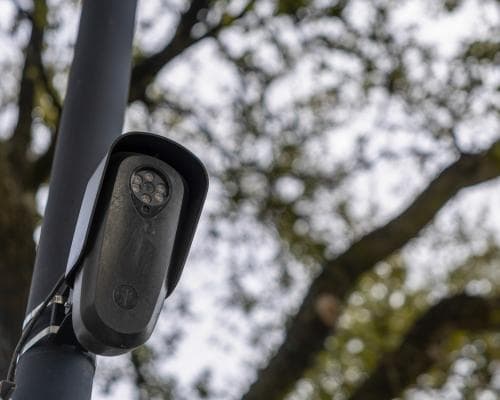
Who would you rate as the world’s most unlikeable tech tycoon? Elon Musk is obviously a major contender. The digital warlord Palmer Luckey is also up there. While there’s a lot of competition, Garret Langley also deserves a shoutout. The CEO of the tech company Flock may not be a household name, but his controversial surveillance technology is rapidly worming its way into daily life. If you live in the US, there’s probably a Flock product on a highway or parking lot near you. The company, which largely sells its products to law enforcement, makes automated license plate readers (ALPRs) which capture license plate data and help track where a vehicle has been. (If you want to check if your license plate has been the subject of a Flock search you can do so at haveibeenflocked.com) Capturing driver data doesn’t sound terrible on the surface. But what makes Flock alarming is the scale of its surveillance network – there are more than 80,000 Flock cameras across the US – and the ease with which data can be accessed. An ACLU investigation last year found that Flock’s default agreement with police departments gave the company the right to share people’s license plate data with federal and local agencies for “investigative purposes”. Various police departments have reportedly shared driver-surveillance data with ICE as part of Donald Trump’s deportation push. (Flock claims it “does not work with ICE”, though its website says that federal agencies it partners with “can establish 1:1 sharing relationships” with other law enforcement agencies.) Some police officers also seem to be using Flock data to stalk their exes, partners and potential love interests. The Institute for Justice, a public interest law firm, recently conducted an analysis of media reports and found at least 14 cases across the US where cops are alleged to have accessed ALPR data to “to keep tabs on their romantic interests, including current partners, exes, and even strangers who unwittingly caught their eye in public”. While nearly all the officers involved were criminally charged and lost their jobs, it’s highly likely that there are far more than 14 examples of this sort of behaviour. According to the Institute for Justice, only a few of the analyzed cases were discovered through internal police investigations; one officer’s alleged misconduct only surfaced after a victim searched their license plate on HaveIbeenflocked.com. And I’m sure you can imagine just how many other victims might have been too afraid to report a police officer to authorities. One could argue that all systems have the potential for abuse and it is unfair to blame Flock for a few police officers behaving badly. The company has said it supports “democratically authorized governing bodies” determining how its technology is used. But as Michael Soyfer, an Institute for Justice attorney who is representing residents in lawsuits challenging their cities’ ALPR surveillance network, has noted: “The fundamental problem with these systems is that they place private information about people’s movements over time in the hands of every officer.” There is huge potential for abuse. Flock has arguably also made it far too easy for officers to tap into a powerful database without warrants. A 2025 Electronic Frontier Foundation (EFF) analysis found that some police departments have been using the Flock network to surveil activist groups and investigate protests. EFF and other civil liberties groups have argued a search warrant should be required for such searches; with Flock, however, police only need to enter some text into a “reason” field in the system. Similarly, 404 Media revealed last year that a sheriff’s office in Texas searched ALPR data to track down a woman suspected of self-managing an abortion. The officer searched 6,809 different camera networks, including in states where abortion access is protected by law. The search record just listed the reason as: “had an abortion, search for female”. This year Flock announced updates to incorporate safeguards that limit federal access and restrict some data sharing. Nevertheless, dozens of towns have ditched the company because of concerns about how broadly its technology can be used. Pushback isn’t going to stop Flock’s lofty ambitions, however. Langley, Flock’s CEO, has painted himself as some sort of real life Batman and has said that he thinks his surveillance tech will help eradicate almost all crime in the US in less than 10 years. And after putting license plate readers on roads across the US, Flock is now expanding its drone program. “I think we can have a crime-free city and civil liberties,” Langley told Forbes, optimistically. “We can have it all.” I don’t know about that. If surveillance drones being weaponized by an increasingly authoritarian regime in cahoots with morally bankrupt tech tycoons is what “having it all” looks like, I think I’ll pass. Some urban birds are more afraid of women than men In a recent study looking at European Great Tits and 36 other bird species, men could get about a meter closer to birds than women. Scientists have no idea why. A Trump immigration judge thinks some women are just a ‘warm, wet hole’ Melissa L Isaak is a temporary immigration judge who was recently appointed by the justice department. She’s also a “men’s rights” family law attorney with some very questionable views. During an interview with the pickup artist Anthony Dream Johnson in 2021, for example, Isaak claimed that there are two types of women. “There are good, solid, valuable women who are major assets to men, if you’re a good woman,” Isaak said. “And then there’s a warm, wet hole.” UN warns women in public life face increasingly sophisticated online violence A new UN Women report has found that the internet continues to be a hotbed of misogyny and artificial intelligence has made online abuse much easier. Of more than 600 women in public life, 6% said they had been victims of deepfakes; nearly a third said they had received unsolicited sexual advances online. Iran war has already cost US $25bn, says Pentagon If that’s the official figure, then you know that the real cost is likely way more. Press freedom at lowest level in 25 years A new Reporters Without Borders (RSF) report has warned that growing authoritarianism and a difficult business model means journalism is “being asphyxiated”. The report also noted that, since October 2023, more than 220 journalists have been killed in Gaza. Even with a supposed “ceasefire”, journalists still aren’t allowed to enter and report from Gaza independently. Abortion bans likely associated with increases in pregnancy-associated deaths during There’s a possible 9.2% increase in pregnancy-associated deaths during or within one year of pregnancy in states with abortion bans, according to a study published in the American Journal of Public Health. While this research comes with a caveat that data limitations make definitive conclusions difficult, various other studies have similar findings, and show that states with a more restrictive abortion policy climate have higher total maternal mortality. The week in pawtriarchy San Francisco’s newest sea-lebrity is a massive sea lion nicknamed Chonkers who has been lounging around on Pier 39. While Chonkers loves a snack, he’s not actually unusually large; he’s a Steller sea lion, which means he is built differently from the smaller California sea lions that are more typical around the area. It’s not clear why Chonkers, who likely came from up north, decided to venture all the way to San Francisco. Perhaps he wants to bootstrap his startup. Or maybe he’s just fishing for compliments. Arwa Mahdawi is a Guardian columnist