
May 11, 2026
Republicans would rather self-destruct than save themselves from Trump | Sidney Blumenthal
In a striking analysis, Sidney Blumenthal argues that the Republican Party has become so entrenched in its loyalty to Donald Trump that it risks its own demise. Following the Indiana primaries, where Trump-backed candidates ousted traditional conservatives, Blumenthal highlights a troubling trend: the GOP's inability to separate itself from Trump’s influence, even as his popularity wanes. He suggests that rather than mount an intervention, Republicans have chosen complicity, sacrificing their principles for personal gain and reinforcing a troubling alliance with Trump’s brand of politics. As the party faces dire electoral prospects, Blumenthal warns that their self-destructive path may ultimately lead to their irrelevance.
Stoic Response
Embrace the Dichotomy of Control
In the face of the Republican Party's entanglement with Donald Trump, as articulated by Sidney Blumenthal, we must recognize the critical tension: the choice between complicity and integrity. Blumenthal asserts, “The Republicans have no instinct for separation from Trump, no will to stage an intervention, no ability to muster an ultimatum.” This highlights a profound failure to act in accordance with principles that transcend personal gain.
Recognize What You Can Control
First, understand that you cannot control the actions of others, including the Republican leadership or their allegiance to Trump. Instead, focus on what lies within your control: your thoughts, beliefs, and responses. As Stoics teach, your virtue and integrity are paramount.
- Reflect on Your Principles: Regularly assess your values. Are they aligned with your actions? In a world where many succumb to the allure of power, recommit to your principles, even when it feels uncomfortable.
Act with Purpose
Second, take decisive action based on your understanding of the situation. While the GOP may be unwilling to intervene against Trump, you can choose to engage in constructive discourse and advocacy for integrity in politics.
- Engage Thoughtfully: Speak out against actions that betray your values. Use your voice in discussions, social media, and local politics to advocate for accountability and principled leadership. Your influence may inspire others to act.
Cultivate Resilience
Third, prepare yourself for the potential fallout of standing firm in your convictions. Just as the Republicans have chosen complicity, you may face resistance. Embrace this challenge.
- Practice Resilience: Understand that your commitment to integrity may lead to isolation or conflict. Cultivate inner strength through practices like meditation or journaling to reinforce your resolve. Remember, the Stoic ideal is to remain unshaken by external circumstances.
Foster Community
Finally, seek like-minded individuals who share your commitment to principled action. Together, you can amplify your impact and support one another in maintaining integrity amidst chaos.
- Build Alliances: Create or join groups that prioritize ethical governance and civic responsibility. Engage in community initiatives that reflect your values, fostering a network of support that can withstand the pressures of complicity.
By adhering to the Stoic dichotomy of control, you position yourself to act with integrity, regardless of the tumultuous political landscape. The path may be challenging, but your commitment to virtue will ultimately define your legacy.
Article Rewritten Through Stoic Lens
The Stoic Reflection on Political Loyalty and Virtue
Introduction
In the realm of political discourse, we witness a troubling entanglement of loyalty and principle, particularly within the Republican Party's relationship with Donald Trump. This situation invites a Stoic examination, focusing on virtue, wisdom, courage, justice, and temperance. We must discern what lies within our control and what does not, reflecting on the nature of cause and effect rather than assigning blame.
The Nature of Loyalty
The recent Indiana primaries serve as a case study in the complexities of loyalty. Trump-backed candidates have displaced traditional conservatives, revealing a party increasingly bound to a singular figure. This loyalty, while seemingly steadfast, raises questions about the virtue of such allegiance. True loyalty should be directed toward principles rather than individuals. The Stoic perspective urges us to evaluate whether this allegiance serves the greater good or merely personal ambitions.
The Illusion of Victory
While Trump may claim victory through these primaries, it is prudent to assess the implications of such outcomes. The Stoic understands that external events are often beyond our control. The apparent triumph of Trump-backed candidates may mask an underlying decline in the party's integrity and coherence. The true measure of success lies not in immediate gains but in the adherence to virtue and the pursuit of wisdom.
Complicity and Consequence
The Republican Party's complicity in its own decline is a matter of concern. Rather than intervening to uphold their principles, they have chosen to align with Trump’s brand of politics. This choice reflects a lack of courage and an abandonment of justice. The Stoic recognizes that complicity arises from fear and a desire for personal gain, rather than from a commitment to the common good. Each individual must reflect on their role in this dynamic and consider the consequences of their actions.
The Pursuit of Wealth Over Wisdom
The allocation of resources, such as the proposed billion-dollar security improvements for Trump’s properties, exemplifies a troubling prioritization of wealth over wisdom. The Stoic philosophy emphasizes temperance and the prudent management of resources. The choice to invest in personal vanity rather than the welfare of the community illustrates a deviation from virtuous governance. It is essential to recognize that true wealth lies in the cultivation of character and the service of others.
The Erosion of Principles
As the party navigates its relationship with Trump, we observe a significant erosion of foundational principles. States' rights, free trade, and free speech—once held sacrosanct—have been compromised. The Stoic approach encourages reflection on the nature of these principles and the importance of maintaining them in the face of adversity. It is through the steadfast adherence to virtue that one can weather the storms of political turbulence.
The Absence of Wise Counsel
History has shown us that political parties can stage interventions when faced with faltering leadership. The absence of a "committee to save America" in the current political landscape is a stark reminder of the need for wisdom and courage. The Stoic philosopher recognizes that the collective pursuit of virtue can guide a community toward a more just and equitable future. The failure to act in the face of declining integrity reflects a lack of moral fortitude.
Conclusion
In conclusion, the current state of the Republican Party serves as a poignant reminder of the importance of virtue, wisdom, courage, justice, and temperance in political life. As we reflect on these principles, we must recognize what lies within our control: our choices, our actions, and our commitment to the greater good. The path forward requires a return to these foundational virtues, allowing us to transcend the challenges of the present and forge a more honorable future.
Source Body Text
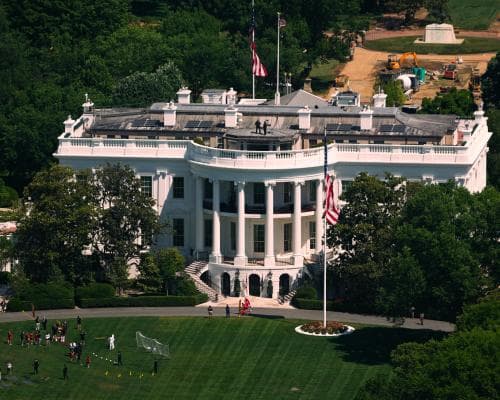
Donald Trump wins, Republicans lose. The Indiana primaries on 5 May, in which five of seven Trump-backed candidates ousted stalwart conservative Republican state legislators who had refused his command to redraw congressional districts, has been the only victory Trump can claim recently. Indiana, happily for him, is not Iran. His appeal still prevails at least over the increasingly narrow band of Maga voters. But the persistence of Trump’s domination is a sign of mounting haplessness. His victory is an augury of repudiation. Maga devotion is hardening in response to his dwindling popularity, a telltale reaction of true believers to a failed prophesy. The cult survives, the party withers. On the same day the Indiana Republicans went down to defeat to sate Trump’s vengefulness, a Democrat won a bellwether Michigan state senate seat by 20 points in a district that Kamala Harris carried by less than a point. The bell tolls for thee. The Republicans have no instinct for separation from Trump, no will to stage an intervention, no ability to muster an ultimatum. They have been complicit in their captivity, co-conspirators in their demise. As the ballots were being cast in Indiana to terminate the Republican dissenters, Republican US Senate leaders proposed $1bn for security improvements to Trump’s extravagant ballroom. Originally, Trump promised that corporate donors, many with federal contracts, would finance his vanity. But this is apparently insufficient. The Republican Congress has now been prompted to throw in the extra billion, compounding the corruption . A tribute to Trump, momentarily assuaging his desire to be worshipped as a god, is a major campaign gift to the Democrats. While the world burns, Trump spends a good deal of his time talking about interior decorating – more swirling gold lettered signage at the White House is a priority. From the balcony of Ned’s private club across from the treasury department, a new favorite hive of Trump officials and the lobbyists clustering around them, one has a bird’s-eyed view of the demolished East Wing. The place appears as if it has been hit by a targeted bomb. Six historic magnolia trees, including some planted by presidents Warren G Harding and Franklin D Roosevelt, and Jacqueline Kennedy’s garden, have been destroyed. The wreckage of the White House grounds is representative of Trump’s presidency. But then he’s already defaced the White House as though it is a mere addition to his collection of clubs as decorated by a more tasteless Liberace. For this, the Republicans have handed him another billion dollars. From the beginning of Trump’s second term, Republicans instantly adjusted to the abnormal as the new normal. One of his first acts, on his inauguration day, was to pardon the sentences of the nearly 1,600 January 6 insurrectionist convicts. The Democrats proposed a resolution to condemn the mass pardons. “We are a week into the Trump administration, and it can be summed up in one word: lawlessness,” said the resolution’s sponsor Senator Patty Murray, a Democrat from Washington state. “From pardoning en masse violent insurrectionists to illegally firing government watchdogs charged with holding him accountable, to issuing blatantly unconstitutional Executive orders to asking [the Office of Management and Budget] to halt funding Congress passed.” But the Republican leadership blocked the resolution, which was never brought to a formal vote. The GOP Congress was positioned as the sole check and balance to Trump, but with the suppression of the resolution on his January 6 pardons, they gave Trump license, shackled themselves to him and sealed their fate. In Trump’s first term, he was relatively constrained through an alliance struck between secretary of state Rex Tillerson, former CEO of Exxon, and secretary of defense James Mattis, former commander of US Central Command, who filtered the options that would be presented to Trump, insisted on the importance of Nato, and argued to keep the US within the Iran nuclear agreement. Gary Cohn, the former director of the National Economic Council, stopped Trump from signing executive orders that would cause economic and national security “catastrophes”, and prevented him from withdrawing from the US-Korea Free Trade Agreement and the North American Free Trade Agreement. “I stole it off his desk,” Cohn told an associate, as Bob Woodward reported in his book Fear. “I wouldn’t let him see it. He’s never going to see that document. Got to protect the country.” The “committee to save America”, as they were dubbed, included the chief of staff, former Gen John Kelly, who made a pact with Mattis that one of them would always be in the country to keep tabs on Trump’s impulsivity. Kelly would reflect that Trump did not understand the Constitution and had “nothing but contempt for our democratic institutions, our Constitution, and the rule of law.” The internal arrangement to contain Trump was broken up by HR McMaster, the national security adviser, a lieutenant general who believed it was his duty as a good soldier to bring all matters before Trump as commander-in-chief to decide. Mattis and Kelly reportedly tried to remove him from his post and reassign him to the bowels of the Pentagon. Mattis reportedly referred to McMaster as “a moron”. McMaster sneeringly called Tillerson and Mattis “the gang of two”. Cohn quit first. Trump fired Tillerson by tweet. Mattis was forced out, but allowed the dignity of a resignation. Kelly quit. Two were corporate executives and two generals; none were of the Republican party. The one Republican, attorney general William Barr, who had systematically enabled Trump, finally was defenestrated, though he filed a letter of resignation, after he refused to participate in Trump’s plot to overthrow the result of the 2020 election . Fully cognizant of that inner history of Trump’s first term, the Republicans deliberately chose not to check and balance Trump in his second, but instead to utterly abandon their constitutional duty. Fear and intimidation only partly account for the Republicans’ slavishness. Cowardice is the most generous explanation. Republicans have done more than go along to get along, the old Washington way. They have gone along because by and large they agree with him and have profited off of him even as many Republicans, particularly in the Senate, detest him. They have endless personal stories to tell about their encounters with Trump’s narcissism, vulgarity and stupidity; and they do tell them, but not in public. They front for him for his utility to their agendas. The “big, beautiful bill” was a cornucopia of corporate tax cuts, while it slashed Medicaid and food stamps. Though many of the Republicans privately consider Trump vile, they have tolerated his bullying if it is directed outward against the enemies within and immigrants. The builders of the massive detention centers, reaping billions in ICE contracts, after all, are big GOP donors. The Republicans indulge in submissive gratification. They assist in building Trump’s kleptocracy in order to get their share of dark money. Through these under-the-table arrangements they have hollowed out the party. More than a few Republicans have transitioned to appear as true believers embracing Maga as Christian Nationalist faith, worshipping the leader, and casting democracy as the diabolical antagonist. Only scattered and sporadic voices have dared to criticize Pam Bondi or Todd Blanche for turning the Department of Justice into a department of retribution or to object to the myriad of other travesties. At any moment, the Republican Congress could have attempted to override Trump’s damaging tariffs, since judged unconstitutional and illegal, which the Republicans almost universally oppose, but about which they have preferred to be silent. Principles formerly considered sacrosanct have gone out the window – states’ rights, free trade and free speech. Hang Jimmy Kimmel! Political parties have staged interventions with failed or floundering presidents in the past. In January 1968, Clark Clifford, who had been President Truman’s counselor and become an influential Washington lawyer, and whom President Lyndon Johnson had just appointed Secretary of Defense, organized a council called “the Wise Men” of former senior national security officials, who persuaded Johnson after the Tet Offensive in Vietnam not to run for re-election. On 7 August 1974, as Richard Nixon faced impeachment by the House of Representatives for the Watergate scandal, Senator Barry Goldwater, the conservative leader, Senator Hugh Scott, the Republican Senate minority leader, and Congressman John Rhodes, the Republican House minority leader, marched down Pennsylvania Avenue to the White House to advise Nixon to resign, which he did two days later. In November 1986, after the Iran-contra scandal was exposed, in which president Ronald Reagan authorized the illegal sale of missiles to Iran to covertly finance Nicaraguan rebels, the former Republican Senate majority leader Howard Baker was installed as chief of staff to clean out house and restore order. Regular Republicans were back in charge. Now, as the Republicans doomscroll through dire polls, they grasp at anything to avoid prospective oblivion. With the invaluable help of the rightwing majority of the supreme court in its well-timed annihilation of the Voting Rights Act, chief justice John Roberts’ lifelong project, the Republicans throughout the former Confederate states are feverishly eliminating Black representative districts. Restoring the Solid South of Jim Crow days is the diehard strategy to preserve Trump and themselves from impending ruin. Constructing the neo-Confederacy, along with the White House ballroom, are among Trump’s legacies. Make America Great Again? Look away, Dixieland. Trump’s takeover of the Republican party has been pretty thorough, marked by the Indiana primaries. There is no phantom Republican party that can be summoned back from the twilight zone. The Republicans are reduced to a Maga Trump. They lack the independence to stand apart. There is no political strategy, no negative campaign, that can overshadow Trump. Where are the rest of the Epstein files? There is no gathering of “Wise Men” to assert authority. There is no one in the Republican leadership who would ride down Pennsylvania Avenue to deliver the news that a “committee to save America” must be imposed over Trump to save the party. The Republicans would rather self-destruct than attempt to rescue themselves. Sidney Blumenthal, former senior adviser to Bill Clinton as well as Hillary Clinton, has published three books of a projected five-volume political life of Abraham Lincoln: A Self-Made Man, Wrestling With His Angel and All the Powers of Earth. He is a Guardian US columnist