
May 26, 2026
Tennessee’s attempt to execute Tony Carruthers failed. It must not try again | Austin Sarat
On May 21, Tennessee's attempt to execute Tony Carruthers failed due to issues with securing IV lines, marking him as the ninth person to survive a botched execution in 80 years. Carruthers' conviction for multiple murders lacked solid evidence, relying heavily on witness testimonies, including a jailhouse informant, and he represented himself during the trial due to inadequate legal support. This case highlights the ethical and legal implications of executing someone with such questionable evidence, raising concerns about cruel and unusual punishment and the principle of double jeopardy. Advocates argue that the state should not attempt to execute Carruthers again, as it would violate constitutional protections and reflect a failure of justice.
Stoic Response
Stoic Meditation for Dawn: Reflecting on Justice and Humanity
Author's Claim
In the case of Tony Carruthers, the author argues that the state of Tennessee should not attempt to execute him again, as doing so would violate constitutional protections and reflect a failure of justice. The author emphasizes that Carruthers' conviction was based on questionable evidence and inadequate legal representation, raising ethical concerns about the state's actions.
Weighing Against Nature and Logos
In nature, we observe the principle of life and the interconnectedness of all beings. The Stoics teach that we should act in accordance with nature and reason (logos). Executing an individual based on flawed evidence contradicts the natural order of justice and fairness. As the author notes, "the state had its bite at the apple," suggesting that the pursuit of justice is not merely about punishment but about ensuring that justice is served rightly and ethically.
Reflective Quote
The author paraphrases a dissenting justice's view, stating that the intentional reapplication of punishment, especially after a failed execution, raises profound ethical concerns. This aligns with the Stoic belief that actions must be virtuous and just, not merely punitive.
Actionable Reflections
-
Examine Your Values: Reflect on your own beliefs about justice and punishment. Do they align with the principles of fairness and humanity? Consider how you would feel if you were in Carruthers' position.
-
Practice Empathy: Put yourself in the shoes of those affected by the justice system—both the accused and the victims. Understand the complexity of human experiences and the need for compassion in all actions.
-
Advocate for Justice: Engage in discussions about the ethical implications of capital punishment. Use your voice to advocate for a justice system that prioritizes truth and fairness over retribution.
-
Cultivate Inner Peace: In the face of injustice, remember the Stoic principle of accepting what is beyond your control. Focus on your reactions and strive to remain calm and rational, embodying the virtues of wisdom and justice.
-
Reflect on Mortality: Contemplate the fragility of life and the moral weight of taking it away. Use this reflection to inspire actions that promote life, understanding, and reconciliation rather than death.
As dawn breaks, let us awaken to these reflections, striving to embody justice, compassion, and wisdom in our daily lives.
Article Rewritten Through Stoic Lens
The Stoic Reflection on Tony Carruthers’ Case
Understanding Control in Execution Attempts
On May 21, Tony Carruthers faced a moment that few can comprehend. The state of Tennessee attempted to execute him but faltered in its endeavor. Herein lies a profound lesson: we must recognize what is within our control and what is not. Carruthers did not choose his circumstances; he was thrust into a situation dictated by external forces.
In every trial, we must remember: our judgment and response are ours alone. While the state acted, Carruthers remained passive, a reminder that our reactions to events define our character.
The Flaws of Evidence and Judgment
Carruthers was convicted based on shaky witness testimonies, lacking solid evidence. This situation presents an opportunity to practice discernment. In life, we often encounter flawed judgments made by others. What matters is how we respond.
As Stoics, we must cultivate the ability to distinguish between what is just and unjust. Carruthers’ case compels us to question the reliability of our judgments and the systems that govern us. Seek truth, and do not accept the words of others without scrutiny.
The Role of Self-Representation
Faced with inadequate legal support, Carruthers represented himself. This illustrates the importance of self-reliance and preparation. In our lives, we may find ourselves unprepared or unsupported. What we can control is our readiness to act.
Use this as a moment to reflect on your own preparations. Are you equipping yourself with knowledge and skills? Discipline in self-education is a Stoic virtue.
The Ethical Implications of Execution
The ethical concerns surrounding Carruthers’ case highlight the principle of cruel and unusual punishment. Here, we confront the reality of our moral responsibilities. We must judge not only the actions of others but also the systems that allow such actions.
As Stoics, we are called to advocate for justice and fairness. Engage in discussions about ethics and morality, and strive to ensure that your actions align with your values.
The Nature of Cruelty in Execution Attempts
The botched execution raises questions about the nature of cruelty. Consider your own actions: do they reflect compassion or indifference? The Stoic approach demands that we act with integrity and kindness, even in the face of adversity.
Recognize that the suffering of others is a reflection of our collective humanity. We must cultivate empathy and strive to alleviate suffering where we can.
The Principle of Double Jeopardy
The notion of double jeopardy, prohibiting punishment for the same crime twice, serves as a reminder of the importance of fairness in our judgments. As we navigate our lives, let us hold ourselves to the same standard.
Avoid retribution and seek to understand. The Stoic path teaches us that true justice lies in understanding the circumstances and motivations of others, rather than perpetuating cycles of punishment.
Witnessing Suffering and Our Responses
Witnesses to Carruthers’ execution reported his suffering, a stark reminder of our obligation to bear witness to injustice. In our lives, we may encounter suffering—both our own and that of others.
How we respond to suffering reflects our character. Choose to act with compassion, to advocate for those who cannot advocate for themselves. This is the essence of Stoic virtue.
The Call for Justice and Reflection
As Carruthers’ fate hangs in the balance, we are reminded of our duty to seek justice. Let us not be passive observers; instead, engage actively in the pursuit of fairness and integrity.
In every situation, ask yourself: What can I control? How can I act justly? These questions will guide you toward a life aligned with Stoic principles.
Conclusion: Embracing Stoic Principles
In reflecting on this case, we find numerous opportunities to practice Stoicism. Embrace the dichotomy of control: focus on your judgments, actions, and responses.
Let the story of Tony Carruthers inspire you to cultivate discipline, seek justice, and act with compassion. In every challenge, there lies a chance to embody the Stoic virtues that guide us toward a life of purpose and integrity.
Source Body Text
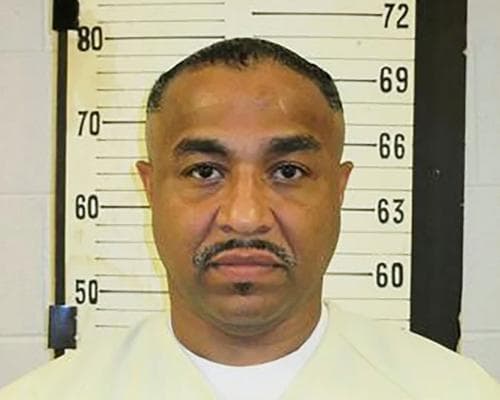
On 21 May, Tony Carruthers had an experience that few others have had. He was taken to the execution chamber, where the state of Tennessee began the process of putting him to death, but it failed to finish what it started. Carruthers was not killed and he lived to tell about it. He became the ninth person to survive a failed execution in the last 80 years. Botched executions are by now quite common in the United States. But on most of those occasions, the people whose executions go awry end up dead. But not Tony Carruthers. He was convicted of the 1994 kidnappings and murders of Marcellos Anderson; Delois Anderson, his mother; and Frederick Tucker. But the case against Carruthers was flawed from the start. The state did not provide fingerprints or any other physical evidence linking Carruthers to the crime. It did have a DNA sample that Carruthers later contended would not, if tested, be a match with him. That meant that the decisive evidence against him at trial was provided by witnesses who testified they had heard him confess, one of whom was a jailhouse informant. And as if that was not enough, Carruthers had to represent himself in his trial, after he received what he considered inadequate representation by court-appointed lawyers. According to the lawyers now representing him, “paranoia and delusions” kept Carruthers from cooperating with his court-appointed counsel. But, as the AP puts it, the judge “viewed the behavior as willful”. The Tennessee supreme court agreed that Carruthers was responsible for his situation. Even after those rulings, the problems in Carruthers’ case should have been enough to give officials in Tennessee pause. About 130,000 people signed a petition asking Bill Lee, the governor, to do just that so that the DNA could be tested, or to exercise his clemency power. Lee was unmoved. Tennessee went ahead with his execution anyway but couldn’t finish what it started. After the failure, Lee gave Carruthers a one-year reprieve. That is not enough. Tennessee should not get another chance to execute him. Not next year. Not ever. Executions are always cruel. But a second execution attempt would be the kind of cruelty that no decent society should countenance. Moreover, it would violate the constitutional prohibition of double jeopardy, which forbids trying or punishing someone twice for the same crime. Before saying more about that, let’s look at what happened to Carruthers. His lawyer, Maria DeLiberato, of the American Civil Liberties Union, was with her client as the state started the execution process. It is a good thing she was. Under Tennessee law, media witnesses are not allowed to see the process for securing the IV lines needed to deliver lethal injection drugs. The AP notes that in Tennessee, “blinds between the witness room and the execution chamber are kept closed until the IV insertion team has left. On Thursday, media witnesses sat in a dark room for over an hour, but the blinds were never raised.” They did, however, hear Carruthers groaning as they waited in the adjoining room. As the Tennessee department of corrections told USA Today, after the execution team established “the primary IV line”, it “‘could not find another suitable vein’ for a backup line, which is required under the state’s lethal injection protocol”. DeLiberato told reporters she saw Carruthers “wincing and groaning” as the execution team tried to find a vein. DeLiberato called it “horrible” to witness. She said she had seen several puncture wounds: “There was a lot of blood.” The state department of corrections said that after failing to find a usable vein in the usual places, the execution team tried to secure a central line “pursuant to the protocol but the procedure was unsuccessful”. After that, “the execution was … called off”. Carruthers was then returned to a holding cell. America’s recent grim history of failed executions began when the state of Louisiana failed in its effort to electrocute a young Black man named Wille Francis in the 1940s. What to do with him? Louisiana’s answer: try again. But Francis, with the aid of a local attorney, had a different idea. He sued, claiming a second execution attempt would be unconstitutional. He lost and the US supreme court used his case to lay down a marker that continues to give states great leeway even today. It allows them to try again if they fail in a first execution attempt. Writing for the court, Justice Stanley Reed explained that “even the fact that petitioner has already been subjected to a current of electricity does not make his subsequent execution any more cruel in the constitutional sense than any other execution … The fact that an unforeseeable accident prevented the prompt consummation of the sentence cannot, it seems to us, add an element of cruelty to a subsequent execution. There is no purpose to inflict unnecessary pain, nor any unnecessary pain involved in the proposed execution.” Francis was, as Reed put it in a supreme understatement, the “unfortunate victim of this accident”. Following Francis, there have been other unfortunate victims of failed execution, most of them since 2009, all of them occurring in Alabama, Idaho, Ohio – and now Tennessee. All of those involved lethal injections which could not be completed due to problems like those that occurred in Carruthers’ case. Citing the supreme court’s decision in the Francis case, other courts have turned a blind eye to the suffering of those whose executions fail and to the torment of having to contemplate another trip to the death chamber. One court even went as far as to say that an execution by lethal injection does not begin until the lethal drugs start to flow. Having needles stuck repeatedly into various parts of the body or having to endure the painful process associated with trying to access a central vein is not a part of the punishment. I doubt that Carruthers or others in the execution survivors’ club, only one other of whom, Thomas Creech, is still alive, would agree. As I and my collaborators note in our study of the people whose executions failed: “Some of them endured a second execution; others escaped that fate only to die in prison; one agreed never to disclose the details of his attempted execution in exchange for the State’s promise not to attempt execution again by the same method; and Creech’s fate hangs in the balance.” Now so does Carruthers’. But there should be no question of what to do with him. As Bernard Harcourt, who represented Doyle Lee Hamm, another execution survivor, put it: “The state had its bite at the apple.” He is right. The government should not get a do-over. The closest any judge has come to embracing that view was Justice Harold Burton, who dissented in the Francis case. As he explained: “Although the failure of the first attempt, in the present case was unintended, the reapplication of the electric current will be intentional. How many deliberate and intentional reapplications of electric current does it take to produce a cruel, unusual, and unconstitutional punishment?” His answer: “The present case demonstrates that, today, two separated applications are sufficiently ‘cruel and unusual’ to be prohibited.” When the state seeks to execute someone, they have a duty “to make sure that there … [is] no failure”. Let’s hope that Burton’s view prevails in Carruthers’ case and that we can all be spared the horror of another deliberate effort to end his life. Austin Sarat, associate dean of the faculty and William Nelson Cromwell professor of jurisprudence and political science at Amherst College, is the author of Gruesome Spectacles: Botched Executions and America’s Death Penalty