
May 31, 2026
The fall of John Cornyn mirrors the fall of the Republican party | Sidney Blumenthal
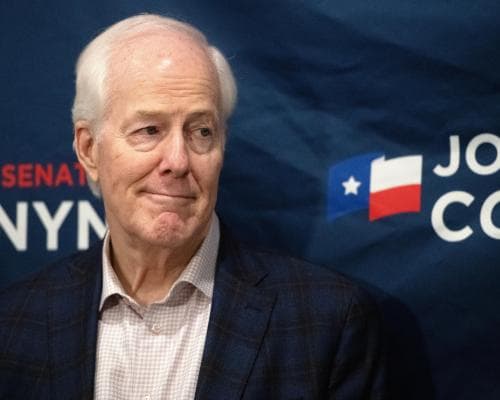
In his article, Sidney Blumenthal examines the defeat of John Cornyn in a Texas Senate primary, framing it as a significant indicator of the Republican Party's decline. Cornyn, a long-time conservative institutionalist, lost to Ken Paxton, a controversial figure backed by Donald Trump, despite spending a record $92 million on his campaign. Blumenthal concludes that Cornyn's loss symbolizes the broader transformation of the Republican Party from a traditional political entity into a cult of personality dominated by Trump, effectively erasing the legacy of past leaders like Reagan and the Bushes. Ultimately, Cornyn's inability to fully align with Trump's brand of politics led to his downfall, reflecting the party's ongoing identity crisis.
Stoic Response
The Nature of Control: A Stoic Perspective
In the wake of John Cornyn's defeat, we face a profound tension within the political landscape that reflects broader societal shifts. As Blumenthal articulates, "Cornyn’s ignominious rejection is not his alone," highlighting the collective turmoil of a party at odds with its own identity. This moment calls for reflection on the Stoic dichotomy of control, which teaches us to discern what lies within our power and what does not.
Recognize What You Can Control
In the realm of politics, as in life, there are elements we can influence and those we cannot. Cornyn's downfall illustrates the futility of attempting to appease a shifting ideology. The Stoic principle asserts that we can control our thoughts, intentions, and responses, but external outcomes—like electoral results—are beyond our grasp.
Action Step: Focus on your own values and principles. Engage in discussions that align with your beliefs, rather than compromising your integrity for approval or popularity.
Accept What You Cannot Control
The tumultuous transformation of the Republican Party into a "cult of personality" is emblematic of a larger, uncontrollable trend. Blumenthal's observation that "Cornyn could not transfer his traditional method of obsequious advancement to Trump" serves as a reminder that adapting to external pressures can lead to personal and professional ruin.
Action Step: Embrace acceptance. Understand that the political landscape will evolve, and your role is to navigate these changes with dignity, rather than succumbing to fear or desperation.
Maintain Inner Equanimity
As Cornyn's experience illustrates, aligning oneself too closely with a volatile figure can lead to instability. The Stoics teach us that our peace of mind should not be contingent upon external validations.
Action Step: Cultivate resilience. Practice mindfulness and reflection daily to maintain a balanced perspective, regardless of external chaos. Engage in self-examination to ensure your actions reflect your core values.
Act with Purpose and Integrity
In the face of uncertainty, it is vital to act with intention and integrity. Blumenthal's assertion that "Cornyn’s original sin in Trump’s mind was to certify the 2020 election" underscores the importance of standing firm in one’s convictions, even when faced with backlash.
Action Step: Commit to principled action. Whether in politics or personal life, let your decisions be guided by your values, not by the shifting tides of opinion. This steadfastness will fortify your character against future challenges.
By embracing these Stoic principles, you can navigate the complexities of a changing world with clarity and purpose, remaining anchored in what truly matters.
Article Rewritten Through Stoic Lens
The Fall of John Cornyn: A Stoic Reflection
Understanding the Dichotomy of Control
Dear students, let us contemplate the recent political events surrounding John Cornyn's defeat in the Texas Senate primary. This situation serves as a profound lesson in the dichotomy of control—what is within our power to change and what is not. Cornyn's downfall illustrates the futility of attempting to control the uncontrollable.
The Illusion of External Validation
Cornyn, a long-time conservative institutionalist, invested a staggering $92 million in his campaign. Yet, despite this effort, he faced defeat at the hands of Ken Paxton, a figure marred by controversy. Here, we see that external validation—money, popularity, and past achievements—cannot guarantee success. Focus instead on what you can control: your principles, your character, and your actions.
The Nature of Judgment
Cornyn's campaign was marked by his attempts to distance himself from Paxton's alleged misdeeds. He labeled his opponent “Crooked Ken,” yet this judgment did not sway the electorate. Reflect on this: our judgments of others can be clouded by our biases. Instead, practice discernment and cultivate a sound mind. Recognize that others’ choices are beyond your control; focus on your own judgments and actions.
Discipline in Adversity
The National Republican Senatorial Committee, once led by Cornyn, swiftly erased his campaign from memory, favoring Paxton instead. This Orwellian erasure reflects the harsh reality of political allegiance. In moments of adversity, discipline is required. Embrace the Stoic principle of resilience. When faced with rejection or loss, ask yourself: How can I grow from this experience? What virtues can I cultivate?
The Transformation of Identity
Cornyn's defeat symbolizes a broader transformation within the Republican Party, shifting from a traditional political entity to a cult of personality under Trump. This change highlights the importance of understanding the nature of identity. While external identities may shift, your internal identity—your values and principles—remains steadfast. Practice self-reflection: Are you aligning with transient trends, or are you grounded in your core beliefs?
The Perils of Obsequiousness
Cornyn's attempts to align himself with Trump, from posing with Trump-themed establishments to proposing a highway renaming, illustrate the dangers of obsequiousness. True virtue lies not in pandering, but in authenticity. Recognize that your worth is not determined by external approval. Instead, cultivate integrity and stand firm in your convictions.
The Lesson of Adaptability
Despite his efforts to adapt to the shifting political landscape, Cornyn remained fundamentally himself—a reliable, yet unremarkable figure. This serves as a reminder that while adaptability is essential, it must not come at the cost of authenticity. Seek to adapt your strategies while remaining true to your core values. This balance is crucial in navigating the complexities of life.
The Unchanging Nature of Character
Ultimately, Cornyn's story is a reflection of the broader decline of a political party once defined by principled leadership. His inability to shed his past and fully embrace the new order led to his downfall. Remember, dear students, that character is the foundation upon which all else is built. Focus on cultivating a virtuous character, for it is the one thing that remains under your control.
Conclusion: Embrace the Stoic Path
As we reflect on these events, let us embrace the Stoic path. Recognize what is within your control and what is not. Cultivate discipline, sound judgment, and authenticity in all your endeavors. In every setback, find an opportunity for growth and self-improvement. This is the essence of Stoicism—transforming external events into moments of learning and virtue.
Source Body Text
The defeat of John Cornyn is a milestone in the downfall of the Republican party. His virtue for decades as a “steady conservative institutionalist”, as the New York Times described him, became his terminal liability. His expenditure of $92m, the greatest amount ever dropped by a candidate in a Senate primary, could not forestall his humiliation at the hands of the scoundrel Ken Paxton, with his lengthy rap sheet of allegations of bribery, abuse of office, felony securities fraud and impeachment by the Republican-controlled Texas House, along with his hostile divorce by his wife on “biblical grounds”. Despite Cornyn’s blast of TV ads against “Crooked Ken”, the “Home Wrecker”, Paxton, carrying the imprimatur of Donald Trump, trounced him by 28 points. Immediately after the primary, the National Republican Senatorial Committee, which Cornyn had once led, set about scrubbing the ads as if there had been no Cornyn campaign at all and the villainous Paxton was the rightful successor to hold the Senate seat Cornyn had occupied for 24 years. The Orwellian erasure was a further measure of the relentless Trump effort to stamp out of existence the remnants of the old party and to build on its ashes his golden idol. Cornyn’s ignominious rejection is not his alone. His loss represents the ongoing shattering of the Republican party whose foundations were laid by Ronald Reagan, laboriously built in Texas by the Bushes, both father and son, with their operative Karl Rove, and, within the Senate, where Cornyn arrived in 2002, the ruling Republican structure established by Mitch McConnell. Cornyn rode on the Reagan wave that swept aside Democrats in Texas, to be raised up as a factotum of the Bush operation, and serve as the indispensable conduit of funds from the oil and gas industry to fuel McConnell’s dark money machine that financed Republican candidates, destroyed campaign finance reform, and secured the conservative majority on the supreme court. John Cornyn is an emblematic Republican of the interregnum between Reagan and Trump, shifting its identity from a conservative party for whom the business of America was business to a cult of personality smashing everyone and everything in its path to erect a kleptocracy and a ballroom. Cornyn, a stalwart of the old order, could not remove the fatal flaw of his past. John Cornyn first met Karl Rove in the early 1980s. By then, Rove was the most influential political consultant in Texas, the “boy genius”, as he was called, of the state’s emergent Republican party. He had been selected chair of the College Republicans in 1973 by George HW Bush when he was Republican National Committee chair. By 1977, Rove was made the executive director of the political action committee run by James A Baker that became the basis of Bush’s presidential campaign in 1980. Two years earlier, Rove had been the political adviser to George W Bush in his failed congressional campaign and to William Clements, the first Republican elected governor of Texas in more than 100 years. Rove created a political machine based on his direct mail firm, electing dozens of Republicans to statewide office. He developed a massive fundraising operation generating tens of millions of dollars by promoting the conservative cause of “tort reform”, working with corporate clients, among them insurance companies, the medical industry, and Phillip Morris and the tobacco lobby, to battle trial lawyers representing consumers pursuing lawsuits. Rove enlisted Cornyn as a 32-year-old lawyer through his “tort reform” movement, and got him slated as a state district judge in 1984. Rove was determined to take over the Texas supreme court, had won three of its nine seats by 1988, and recruited Cornyn to run for the court in 1990. In 1998, Rove anointed Cornyn to run for state attorney general and helped raise more than $6m from his corporate allies to oust the incumbent Democrat who was going after the tobacco giants. Cornyn was swept in on a Republican wave that re-elected George W Bush governor, setting up his 2000 presidential campaign. With Rove’s assistance, Cornyn as attorney general co-founded the national Republican Attorneys General Association, which raised millions for Republican attorney general campaigns across the country. In 2002, Rove worked to make Cornyn a US senator, to fill the seat vacated by Phil Gramm, who had been a Rove client. Cornyn campaigned as a loyal member of “Team Bush”. In 2006, in Bush’s second midterm, the Republicans lost the Senate. With Bush fading as an unpopular lame duck, Cornyn was adopted by a new sponsor, Mitch McConnell, now the Senate minority leader. In 2009, McConnell put Cornyn in charge of the National Republican Senatorial Committee, where he raised more than $100m to enable the Republicans to retake the Senate in 2010. Cornyn was indeed a very popular man within the Senate Republican Conference and in 2012 McConnell made him the whip. McConnell’s great causes were the destruction of campaign finance reform and packing the federal courts. His fundraising technique was more or less the same that Rove had applied to “tort reform” – a virtuous cycle of money, elections and judges: the corporations would finance the Republicans, who would approve federal judges who, in turn, would be favorable to the corporations. Cornyn preserved and protected the system that grew out of the supreme court’s Citizens United 2010 decision, which allowed unlimited and unaccounted corporate campaign contributions. In the Senate, Cornyn battled the Democrats’ Disclose ACT, which would establish transparency about the identity of donors. Cornyn successfully killed it by attaching riders to appropriations bills that restricted the Securities and Exchange Commission from making disclosure rules about campaign donations. Cornyn would raise at least $415m over the years for the Republican Pacs, becoming the top fundraiser after McConnell himself. Cornyn, however, never constructed his own fiefdom, but instead integrated everything he did into McConnell’s operation. Cornyn’s and McConnell’s networks were one and the same. Cornyn’s operations also were tightly linked into the series of Pacs run by Leonard Leo, chair of the Federalist Society, selector of conservative judges, a tangle closely tied into McConnell’s groups. Cornyn’s former chief of staff Monica Popp headed a dark money group called the Conservative Majority Project, which in 2024 distributed $1.5m to Right Vote – a conservative non-profit mainly funded by Leo’s Concord Fund. McConnell tolerated Trump in his first term so long as he churned out Federalist Society approved judges. But after Trump’s failed coup of January 6, the frail McConnell, who was in physical danger during the assault on the Capitol, denounced Trump, whom he considered “despicable,” certified the 2020 election of Joe Biden, and scoffed at Trump as politically finished, which was the reason he made sure Republicans did not remove Trump from office in the post-January 6 impeachment process. Trump unleashed a string of insults at McConnell as a “broken down hack” and “Old Crow”, and targeted McConnell’s wife, Elaine Chao, who was Trump’s Secretary of Transportation, as McConnell’s “China loving wife, Coco Chow!” Cornyn, in McConnell’s shadow, and, before that, in Bush’s, could not help but become collateral damage. Trump’s rage eventually engulfed him – “VERY disloyal to me, as President,” Trump tweeted. Cornyn’s original sin in Trump’s mind was to certify the 2020 election, though he voted to acquit Trump in the impeachment case. He had followed the lead of McConnell. Cornyn desperately tried to compensate in his re-election bid by posting a picture of himself staring at an open copy in his lap of The Art of the Deal as though he was absorbing its wisdom, then posing in front of a Trump-themed joint in Houston run by a Maga fanatic called Trump Burger, and, Cornyn’s coup de grace of flattery, introducing a bill that Interstate Highway 47 be renamed “Trump Interstate”. The toadyism apparently had the reverse effect of inciting Trump’s animosity. He endorsed the miscreant Paxton as “a true MAGA Warrior who has ALWAYS delivered for Texas”. Cornyn could not transfer his traditional method of obsequious advancement to Trump, who would not allow Cornyn to go along to get along. Cornyn’s attempt at loyalty was not cultish enough. Trump could still see McConnell and the Bushes and Rove through him. Cornyn’s rise and fall is the story of the rise and fall of the Republican party that, whatever else might be said about it, was a political party. From the beginning of his career, Cornyn was the man behind the man, a dull, reliable and invaluable figure upon whom parties depend. Cornyn’s record as a dutiful man of the party condemned him. Despite his attempt to adapt himself to Trump, his doom was to remain inescapably himself. Running against an opponent ceaselessly defending himself against real criminal allegations, Cornyn’s indelible offense was being a Republican of his time, which he could never scrub to make himself acceptable. Sidney Blumenthal, former senior adviser to President Bill Clinton and Hillary Clinton, has published three books of a projected five-volume political life of Abraham Lincoln: A Self-Made Man, Wrestling With His Angel and All the Powers of Earth. He is a Guardian US columnist