
July 12, 2026
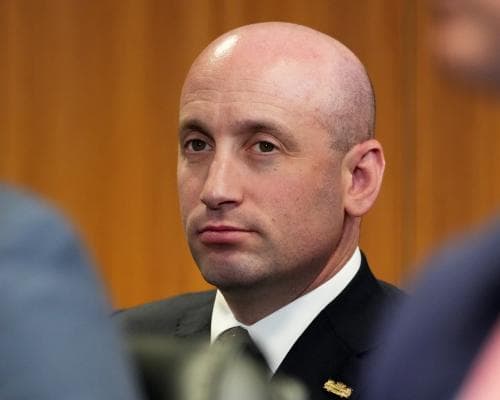
Stephen Miller is outraged over birthright citizenship. His arguments are nonsense | Sidney Blumenthal
In response to the Supreme Court's upholding of birthright citizenship, Stephen Miller expressed outrage, arguing that American citizenship should not extend to children of undocumented immigrants. However, this stance echoes the discredited racial ideologies of the past, particularly those articulated in the Dred Scott decision, which framed citizenship as a matter of "blood" rather than "soil." The article highlights that immigrants have significantly contributed to American innovation and society, contradicting Miller's claims of superiority and emphasizing the dangers of his exclusionary views. This debate matters as it reflects ongoing tensions over immigration policy and national identity in the U.S., with implications for the rights of future generations.
Stoic Response
Citizens of the Agora,
Today, we gather in the spirit of justice and unity, compelled to reflect upon a recent decision by our Supreme Court that upholds the principle of birthright citizenship. This decision stands as a beacon against the exclusionary ideologies that have marred our history, echoing the very sentiments that were laid bare in the Dred Scott decision—a ruling that sought to define citizenship through the narrow lens of "blood" rather than the expansive embrace of "soil." It is our duty to remember that our nation was forged in the fires of diversity, where every individual, regardless of their origins, contributes to the rich tapestry of American life.
Let us consider the facts: over 50% of privately held startups in this country are founded by immigrants, and nearly 30% of practicing physicians are immigrants. These contributions are not mere statistics; they are the lifeblood of our society and a testament to the power of inclusion. The outrage expressed by Stephen Miller, who argues against the birthright of children born on American soil to undocumented parents, reflects a dangerous regression to a past we must not revisit. Such views are reminiscent of discredited racial ideologies that sought to divide us by bloodlines, rather than unite us through shared values and aspirations.
As we stand at this crossroads, we must embody the cardinal virtues of justice and temperance. Justice compels us to recognize the inherent worth of every individual, while temperance guides us to engage in civil discourse, even in the face of vehement opposition. We must not allow fear or prejudice to dictate our national identity. Instead, let us reaffirm our commitment to the ideals enshrined in the Fourteenth Amendment, which champions equality and the universal rights of all people born on this soil.
In the face of exclusionary rhetoric, I charge each of you to stand firm in your convictions. Engage with your neighbors, educate yourselves and others about the contributions of immigrants, and advocate for policies that reflect our shared humanity. Let us not be swayed by those who seek to divide us, but instead, let us build bridges of understanding and solidarity. The future of our nation depends on our ability to embrace diversity and to recognize that our strength lies in our unity.
Together, let us rise to the occasion and ensure that the America we pass on to future generations remains a land where citizenship is a birthright for all, rooted in the richness of our shared soil.
Article Rewritten Through Stoic Lens
A Stoic Reflection on Citizenship and Immigration
Introduction
In the wake of the Supreme Court's decision affirming birthright citizenship, we encounter a discourse that reveals much about human nature and our societal values. The reaction of Stephen Miller, who expressed indignation at the ruling, invites us to reflect on the principles of virtue, wisdom, courage, justice, and temperance. This situation serves as a reminder of the need to focus on what lies within our control and to examine the broader implications of our beliefs and actions.
The Nature of Citizenship
The Supreme Court's ruling in Trump v. Barbara underscores a fundamental aspect of citizenship: it is not merely a matter of lineage or "blood," but rather a principle grounded in the law and the ideals of justice. The historical context of citizenship, particularly the discredited notions stemming from the Dred Scott decision, illustrates how misguided beliefs can lead to exclusion and division. Justice Roberts aptly critiques the idea that citizenship should be defined by race, emphasizing that the Fourteenth Amendment promotes a universalist perspective.
Reflection on Blame and Cause
Miller's reaction reveals a common human tendency to assign blame rather than to engage in rational assessment. His assertion that American citizenship should be exclusive to "Americans" overlooks the contributions of immigrants to society. A Stoic approach encourages us to recognize the interconnectedness of humanity and the value that all individuals bring, irrespective of their origins.
The Contributions of Immigrants
Immigrants have historically played a vital role in the advancement of American society. They have contributed to innovation, science, and culture, often overcoming significant barriers to do so. The assertion that immigrants are detrimental to society is fundamentally flawed and fails to recognize the virtues of courage and perseverance that many exhibit.
The Importance of Rational Assessment
Miller's claims about the inferiority of certain nations and peoples reflect a lack of understanding of history and human achievement. The wheel, for instance, was indeed invented in ancient Mesopotamia, a region that Miller might dismiss as "Third World." This ignorance highlights the importance of wisdom in our discourse; we must strive to base our beliefs on facts and reason rather than fear and prejudice.
The Role of Justice and Temperance
Justice requires us to treat all individuals with dignity and respect, regardless of their background. The policies advocated by Miller, which seek to restrict citizenship based on arbitrary criteria, run counter to the principles of justice that underpin a fair society. Furthermore, temperance calls for moderation in our views and actions; we must avoid extremes that lead to division and strife.
The Danger of Exclusionary Ideologies
Miller's rhetoric echoes dangerous ideologies that have historically justified discrimination and exclusion. By framing citizenship as a matter of "blood," he risks reviving notions that have caused immense suffering. A Stoic perspective urges us to remain vigilant against such ideologies, recognizing that they undermine the very fabric of our society.
Conclusion
As we navigate the complexities of immigration and citizenship, let us strive to embody the Stoic virtues of wisdom, courage, justice, and temperance. The ongoing debate is not merely about policy but about our collective identity and values. By focusing on what is within our control—our responses, our beliefs, and our actions—we can contribute to a more just and inclusive society. Let us reflect on our shared humanity and the potential for growth and understanding that lies within each of us.
Source Body Text
Neither of the supreme court majority opinions in Trump v Barbara, the 5-4 decision upholding the constitutionality of birthright citizenship, mention the true architect of the case. Donald Trump’s Executive Order 14160, which would deny citizenship to children born on American soil if their parents are undocumented immigrants or on temporary visas, is extensively noted, but not the man responsible for it. The omission of Stephen Miller is like Dracula without Dracula. The vampire identified is chief justice Roger B Taney, author of the Dred Scott decision of 1857, though his notorious statement at the heart of his ruling went uncited: that the framers believed that Black people “had no rights which the white man was bound to respect”, that they were excluded from the Declaration of Independence’s principle that “all men are created equal” because of racial inferiority “too clear for dispute,” and that rendered them no different from “an ordinary article of merchandise and traffic.” Roberts refers to Taney’s opinion as “odious,” making citizenship an exclusionary question of race and blood, even for emancipated Black people then. “For them, blood, not soil, was made the rule,” writes Roberts. In her opinion, Jackson underscores that the Trump administration and its apologists – justices Clarence Thomas and Samuel Alito – seek to reinstate the Taney notion of “blood” as the basis of citizenship. “Of course,” she writes, “the ultimate irony is that for all the talk about the detestable Dred Scott decision, the Government and the principal dissent propose a return to its core tenet … It is that odious conclusion that the Citizenship Clause plainly rejects, as the Court explains. I add only that the Fourteenth Amendment’s universalist aims should forever be the death knell for this kind of claim–one that seeks to make bloodline the marker of birthright. The America that was reborn from the rubble of the Civil War simply does not countenance that inequitable result.” Stephen Miller was aroused to a fury at the court’s rebuke of the order. He posted on X: “One of the most destructive and outrageous decisions in the long history of the Supreme Court. American citizenship is not the birthright of the world. It belongs only and solely to Americans. No provision of the Constitution can be read to require our national self-obliteration.” Trump’s deputy chief of staff has been the chief proponent and enforcer of Trump’s worldview on immigration. Trump has repeatedly stated about immigrants that they are “poisoning the blood of our country”. Miller has elevated this principle of “blood” as the great replacement theory of inferior peoples overwhelming “civilization”. “If you import the Third World, you become the Third World,” he has said frequently. The concept is precisely the pseudo-scientific premise of “blood poisoning” (Blutvergiftung) at the core of Hitler’s race theory in Mein Kampf: “All the great civilizations of the past decayed because the originally creative race died out, as a result of poisoning of the blood.” Miller has sought to shift American national identity from a constitutional matter rooted in law to one based on genetic inheritance. His theory dictates his policies. He has driven the strategies of aggressive mass deportations and harsh ICE tactics, restrictive immigration, and voter suppression schemes on the disproven assertion of mass illegal voting by undocumented immigrants. Miller helped draft Trump’s so-called “Save Act” to limit voter participation by requiring proof of US citizenship through often costly documents, in effect a new poll tax, a ploy which is paralyzing the Republican Congress. Miller tweeted on 24 June: “Change the voters, change the country.” Enraged by the rejection of his attempt to overturn birthright citizenship as the capstone of his immigration ideology, Miller told Fox News: “We have people from all over the world from third world nations, nations that on their own would have never invented the wheel let alone modern technology, let alone medicine, let alone air travel, and they can just come into the country, have a baby, and then that baby is automatically a citizen? The baby can sit on a jury when they turn 18?” If Miller were to give these statements as answers in a test for naturalization he would flunk. Wherever the wheel was invented, it was not in the US, 250th anniversary or not, but likely Mesopotamia in 4200-4000 BC, which Miller would call the Third World but was the cradle of civilization. Despite Miller’s boast of scientific superiority, the Trump administration’s fundamental contempt for science refutes Miller’s conceit – more than 10,000 scientists and medical researchers with PhDs have left the federal government and about 25,000 additional scientists and technical personnel have been fired or displaced in Trump’s first year alone, some of whom are immigrants. Trump has terminated or frozen more than 7,800 research grants. As for modern technology, in fact, immigrants have helped found 59% of privately held startups, 66% of artificial intelligence firms have been launched by immigrants, 50% of PhDs in the science and engineering workforce are immigrants and 25% overall. As for medicine, nearly 30% of practicing physicians are immigrants, 36% of American Nobel Prize winners in chemistry, medicine, and physics have been immigrants, and 40% of Nobel winners in science. In the category of air travel, apart from the designer of the Nasa rocket used in the Apollo program (ex-Nazi immigrant Wernher von Braun), an immigrant invented the helicopter (Igor Sikorsky), enclosed cabin aircraft (Giuseppe Mario Bellanca), cargo transport (Michael Stroukoff), and the son of an immigrant invented assembly line airplane manufacturing (William Boeing). No Air Force One “gift” from Qatar to Trump without Mr Boeing. There is also in the history of immigrant and first-generation contributions to science the illustrious example of a figure whom Donald Trump has called a “brilliant genius”: his uncle John G Trump, a pioneer in high-voltage engineering, electron beam acceleration, and radiation therapy. The patterns of immigration coursing through the genealogy of the Trump family reveal how unquestionably they were regarded without suspicion in terms of birthright citizenship under the 14th amendment. If ICE were roaming then under the orders of Stephen Miller, the Trump family, especially the unnaturalized women, could have been easy targets. Trump’s ancestors arrived in the US when the doors of immigration were wide open for Europeans with the only restrictions aimed at Chinese people. The National Origins Act of 1924 established tight quotas tightly restricting immigrants from eastern and southern Europe. Trump long falsely claimed his forbearers were Swedish, establishing his Nordic genes. “Why are we having all these people from shithole countries come here?” he demanded in 2018, referring to Haiti, El Salvador, and some African countries, adding he would prefer immigrants from Norway. This year, Trump has halted the US refugee program to admit only white South Africans (Afrikaaners), whom he asserts are victims of racial discrimination contrary to strong denials of the South African government of “white genocide”. At the time of John G Trump’s birth, his mother, Elizabeth Christ Trump, an immigrant from Germany, was not a naturalized citizen like her husband Frederick, a German immigrant. John was her third child. Her first, Elizabeth, also received citizenship through her father as did her second, Fred, who would become the father of Donald. Fred would marry a Scottish immigrant, Mary MacLeod, a maid in the household of the most famous immigrant of his age, Andrew Carnegie, who revolutionized industrial organization from mass production of steel to vertical integration. Mary was not a naturalized citizen at the birth of her first child, Maryanne, who was a citizen by virtue of her father. If ICE were operating in the past as it is now, the Trumps then might well have been in trouble. The original Trump, Frederick, who was Fred’s father, was a German immigrant who illegally evaded the military draft there. He became a US citizen in 1892. When he tried to return to Germany in 1905 to become a German again he was the subject of a royal decree of expulsion and deportation. If, through time travel, the founding Trump had arrived in the US in the time of his grandson, he might have faced arrest as an alien criminal for hiding his status as a foreign draft evader to become a US citizen and be deported. Two of Donald’s wives were immigrants. His first three children – Ivanka, Don Jr, and Eric – derived citizenship through their father, not their mother, Ivana, a Czech immigrant who did not become a naturalized citizen until four years after the birth of her last child. Donald’s third wife, Melania, a Slovenian immigrant, has faced questions over her modeling work in the US. She was “paid for 10 modeling jobs in the United States worth $20,056 that occurred in the seven weeks before she had legal permission to work in the country,” according to an Associated Press investigative report, though she says she complied with all visa laws. In the first eight months of 2025, ICE apprehended 4,843 spouses of US citizens, deporting more than 2,000. In the same period, ICE arrested the parents of approximately 14,450 US-birthright children. More than 9,700 of those children had at least one parent placed into an ICE detention facility, leading to the deportation of parents of more than 7,000 children. Stephen Miller’s policies, had they been in effect in the early 20th century, might have ended the American story of the Trumps. Elizabeth Christ Trump and her son’s wife, Mary MacLeod Trump, might have been hunted down by ICE agents. Melania could have faced scrutiny over visa requirements. But irony, historical perspective and decency have long since departed. Sidney Blumenthal, former senior adviser to President Bill Clinton and Hillary Clinton, has published three books of a projected five-volume political life of Abraham Lincoln: A Self-Made Man, Wrestling With His Angel and All the Powers of Earth. He is a Guardian US columnist and co-host of the Court of History podcast