
August 6, 2026
The American left is making strides. But can they win in November? | Ben Davis
Thesis: The American left is gaining traction within the Democratic Party, evidenced by recent primary victories, but faces significant challenges ahead.
Stakes: As the left's influence grows, it must transition from winning primaries to securing general election victories in swing states, a crucial step for the party's future and the viability of leftist candidates in upcoming elections.
Takeaway: While the left's recent successes signal a shift in Democratic voter sentiment, the real test lies in November, where they must prove their ability to build broad coalitions capable of defeating Republicans in competitive races.
Stoic Response
Stoic Meditation for Dawn Practice
As dawn breaks, let us reflect on the nature of progress and the challenges that lie ahead, particularly in the context of the evolving landscape within the Democratic Party.
Author's Claim Restated
The assertion is that while the American left is gaining traction within the Democratic Party, as evidenced by recent primary victories, it faces significant hurdles in transitioning from primary wins to securing general election victories in swing states.
Weighing Against Nature and Logos
Nature teaches us that growth is often gradual and fraught with challenges. The Stoic principle of accepting what we cannot control resonates here. The left's rise within the party is a testament to changing voter sentiment, but it is also a reminder that the path to success is not linear. As the author notes, “building a mass left in the United States is a slow and bruising process.” This aligns with the Stoic understanding that obstacles are part of the journey, and we must cultivate patience and resilience.
Actionable Reflections
-
Embrace Patience: Recognize that meaningful change takes time. Reflect on your own goals and consider how you can apply patience in your pursuits. Understand that every small victory contributes to a larger purpose.
-
Build Coalitions: Just as the left must unify diverse groups to succeed in general elections, consider how you can foster collaboration in your own life. Identify individuals or groups with whom you share common goals and work towards mutual understanding and support.
-
Prepare for Challenges: Anticipate the difficulties ahead, whether in personal endeavors or broader societal issues. Reflect on the Stoic practice of premeditatio malorum—mentally preparing for potential setbacks. This will equip you to face challenges with equanimity.
-
Focus on What You Can Control: In the political arena and in life, many factors are beyond our control. Concentrate your efforts on what you can influence—your actions, your responses, and your mindset.
-
Stay Grounded in Reality: Acknowledge that victories may not always meet expectations. As the author points out, “the polling miss has distorted how the result is being interpreted.” Stay grounded in reality, and let this inform your expectations and actions.
Conclusion
As the sun rises, let us carry these Stoic principles into our day. Whether in the realm of politics or personal growth, remember that progress is a journey filled with both triumphs and trials. Embrace each moment with patience, focus on building connections, and prepare for the challenges ahead. In doing so, we align ourselves with nature and the logos that govern our world.
Article Rewritten Through Stoic Lens
The Stoic Reflection on the Current State of the Democratic Party
Thesis
The Democratic Party is experiencing a notable shift as progressive elements gain influence, evidenced by recent primary victories. However, the path forward is fraught with challenges that require a measured and virtuous approach.
Stakes
As the left's influence within the party grows, the focus must shift from winning primaries to securing victories in general elections, particularly in swing states. This transition is essential for the party's future and the sustainability of leftist candidates in subsequent elections.
Rational Assessment of Recent Developments
The recent primaries in Kansas, Michigan, Missouri, Virginia, and Washington reveal a complex ideological struggle within the Democratic Party. High turnout and intense competition indicate a changing electorate, yet the progress toward a unified leftist front is gradual and uneven.
Observations on Progress
-
Incremental Growth: The left's expansion is a slow process, not a sudden transformation. The notion that a tipping point exists is misleading; rather, it is a series of small victories that build a foundation for future success.
-
Broadening Influence: The left is gaining traction beyond urban centers, indicating a potential to resonate with a wider demographic. This is a significant step in establishing a robust electoral presence.
-
Challenges Ahead: The next critical task is to secure victories in swing states, a necessary condition for the left to demonstrate its viability against Republican candidates.
The Nature of Expectations
While recent victories may seem promising, it is essential to temper expectations. Polling data can create illusions of certainty, yet the reality of electoral politics remains complex. A significant portion of Democratic voters still hold moderate views, and the success of leftist candidates is contingent upon various factors, including candidate appeal and local dynamics.
The Importance of Patience
The left's journey has been characterized by patience and strategic planning. Early victories in city councils and state legislatures laid the groundwork for broader ambitions. This gradual approach has yielded tangible proof that leftist candidates can appeal to a majority of Democratic voters, even in competitive environments.
The Path Forward
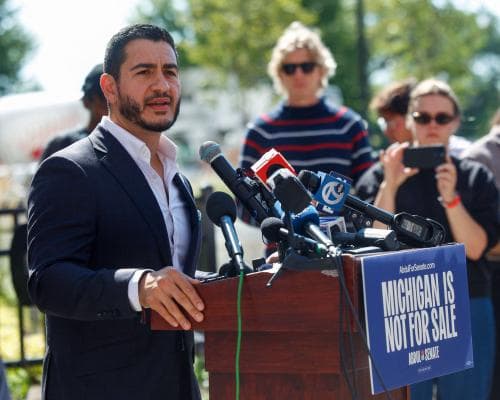
The upcoming general elections present a formidable challenge. Candidates like Abdul El-Sayed must not only secure primary victories but also demonstrate the ability to forge broad coalitions capable of winning in less favorable territories. This is not merely an electoral necessity; it is a test of the left's capacity to govern effectively.
Long-Term Considerations
The ability to build durable electoral majorities is essential for the left's political project. Success in November will not only impact immediate electoral outcomes but will also influence the perception of leftist candidates in future presidential primaries.
Conclusion
While the left has made strides within the Democratic Party, the journey is far from complete. Each primary victory is a testament to the resilience and determination of the movement, yet it does not resolve the fundamental challenges ahead. The focus must remain on cultivating broad-based coalitions and preparing for the complexities of general elections. In this pursuit, virtue, wisdom, courage, justice, and temperance will be the guiding principles that ensure the left's continued growth and success.
Source Body Text
The ideological struggle within the Democratic party continued on Tuesday night with primaries in Kansas, Michigan, Missouri, Virginia and Washington. The results showed an increasingly intense conflict within the party, with high Democratic primary turnout and bruising ideological battles up and down the ballot. The Democratic electorate is shifting, becoming more progressive and more willing to challenge party leadership, but not as quickly or uniformly as many assumed. Progressives and socialists scored another round of victories, most notably Abdul El-Sayed for Senate, but also downballot with Donavan McKinney and Will Lawrence in congressional races, and in state legislative seats such as Chris Gilmer-Hill in Detroit. But the scale and breadth of those victories fell short of the expectations created by polling and media coverage. A few key lessons have emerged. First, building a mass left in the United States is a slow and bruising process, and there is no single tipping point at which the party and its voters suddenly become committed leftwing partisans. Second, the left is nonetheless growing rapidly, able to win beyond young, deep-blue urban areas where concerns about general-election viability against Republicans are relatively limited, and across an entire statewide Democratic primary electorate in a swing state. This is a major step in the left’s development as an electoral force. Third, the left’s next and most important challenge is winning swing states and competitive seats against Republicans. The left has enjoyed a string of notable electoral victories during the second Trump administration, beginning with Zohran Mamdani’s primary win in New York City, and continuing up through the 2026 primaries. The Democratic electorate’s attitudes are changing: party leadership has grown less popular, while democratic socialism has gained support. The left has quickly gone from an extremely marginal force, with just a handful of members of Congress, largely confined to deep-blue urban districts and a small number of favorable constituencies, to a driving force in the party. Much of the media coverage has portrayed the party as being overtaken by an ascendant left. That broader narrative, reinforced by favorable polling, created an expectation that El-Sayed would win resoundingly. In practice, the recent wave means that a meaningful additional share of Democratic primary voters, perhaps 10-15%, is now willing to consistently support left candidates, on top of the existing leftwing base. It does not mean that every candidate backed by the DSA or the broader progressive movement will automatically win, or every Democrat backed by Aipac will lose. The actual campaign still matters tremendously; a large share of Democratic voters remain moderate, cross-pressured or primarily candidate-driven. Politics just doesn’t move that fast. The project of building a leftwing base and turning it into a durable majority, even within the Democratic party, is still a long-term one. El-Sayed’s narrow victory has been described as disappointing, because of favorable polling and the expectations created by the recent wave of leftwing victories. It is anything but. The polling miss has distorted how the result is being interpreted. Viewed against Michigan’s demographics, the left’s previous statewide performance, spending disparities, endorsements and comparable results elsewhere in the country, the victory was historically significant. The left has not previously won a genuinely competitive statewide Democratic primary of this kind, nor has a left candidate previously assembled a winning primary coalition extending this far beyond the movement’s urban base, especially in a swing state where voters are likely to weigh general-election viability. The left’s strategy over the past decade has been one of patience, winning seats in friendly areas, knocking doors and slowly building a base. It began by winning city council and state legislative victories and expanded more recently into successful mayoral and congressional races, all in deep blue areas. This is the first time the left has real proof of concept that beyond urban cores with friendly demographics, it can win over a majority of Democratic voters. It also offers early evidence that a left candidate could compete seriously in a Democratic presidential primary in 2028. The next test is November. The left has been battle-tested in primaries against moderate candidates, party institutions and well-funded outside groups such as Aipac and the crypto lobby. But a general election in a swing state is a different and less hospitable terrain. El-Sayed, along with Francesca Hong if she advances in Wisconsin, needs to demonstrate the left can win not only a winning Democratic primary coalition, but a broad enough general-election coalition to prevail outside deep-blue territory. This matters in the near term, for Democrats to win the Senate and retain governorships; in the medium term, because presidential primary voters in 2028 will want evidence that left candidates can win competitive general elections; and in the long term, because the leftwing political project rests on being able to twin and govern with durable electoral majorities. On Tuesday, the left continued its string of victories, activating young voters and bringing Arab and Muslim voters back into the Democratic fold. But these victories do not resolve the movement’s central challenges. Every primary remains a brutal fight, highly contingent on candidates, organization, spending and local conditions. And the movement must now prepare for the more difficult terrain of November. The left is increasingly winning within the Democratic party, but it still needs to prove that it can build general-election coalitions capable of defeating Republicans. Ben Davis works in political data in Washington DC. He worked on the data team for the Bernie Sanders 2020 campaign and is an active member of the Democratic Socialists of America