
August 23, 2026
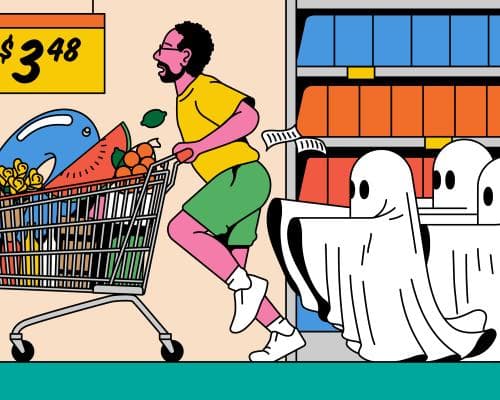
Stores are selling Halloween stuff in August. Time has lost all meaning | Dave Schilling
Talking Points
Protagonist: Dave Schilling, a humorist and cultural commentator, grapples with the absurdity of Halloween merchandise appearing in August.
Argument: Schilling argues that the premature arrival of Halloween decorations symbolizes a troubling shift in our relationship with time and seasons, driven by consumerism and climate change. He laments the erosion of traditional holiday timelines, suggesting that our lives are increasingly dictated by retail schedules rather than natural rhythms.
Implications: This trend not only reflects a loss of seasonal distinctiveness but also raises concerns about our societal values, where analytics and capitalism overshadow genuine experiences. As we adapt to a world where holidays blend and time loses meaning, we risk losing touch with the natural cycles that once grounded our celebrations.
Stoic Response
Citizens of the Agora, gather ‘round and lend me your ears! Today, I stand before you not merely as a commentator on our culture, but as a fellow traveler in the maze of modernity, where time itself seems to be slipping away from our grasp. I speak of the absurdity that has become our reality: Halloween decorations gracing our stores in the sweltering heat of August. This phenomenon is not just a trivial annoyance; it is a harbinger of deeper societal shifts that threaten our connection to the very rhythms of nature.
In the spirit of temperance, let us reflect on the cardinal virtues that guide us. The virtue of temperance teaches us moderation, reminding us to savor the seasons as they come, rather than rushing headlong into the next commercialized holiday. Consider this: as of last year, a staggering 40% of Americans reported feeling overwhelmed by the rapid pace of consumer culture. This statistic is not merely a number; it is a reflection of our collective psyche, a sign that we are losing sight of the joys that come from waiting, from anticipation, from the natural progression of time.
The early arrival of Halloween merchandise signifies more than just an overzealous marketing strategy; it reveals a troubling trend where our lives are increasingly dictated by retail schedules rather than the cycles of the earth. We are witnessing the erosion of seasonal distinctiveness, a phenomenon that threatens our ability to celebrate life’s milestones in meaningful ways. As the seasons blend into one another, we risk losing the very essence of what it means to celebrate: the unique flavors, sights, and sounds that each season brings.
Let us not allow ourselves to be swept away by the tide of consumerism, where analytics dictate our experiences and the calendar becomes a mere illusion. Instead, let us cultivate the virtue of wisdom, using our discernment to cherish the traditions that ground us. We must reclaim our time, our seasons, and our celebrations from the clutches of big data and corporate greed.
So, I charge you, citizens of this great Agora: resist the allure of premature holidays! Embrace the beauty of waiting, of celebrating in alignment with the natural world. Let us stand together to preserve the sanctity of our seasons, ensuring that each holiday remains a distinct and cherished experience. For in doing so, we not only honor our traditions but also reclaim our connection to the earth and to one another.
Article Rewritten Through Stoic Lens
The Stoic Perspective on the Absurdity of Premature Celebrations
Understanding the Dichotomy of Control
Dear students, let us reflect upon the words of Dave Schilling, who observes the curious phenomenon of Halloween merchandise appearing in August. This situation presents us with a profound opportunity to practice our Stoic principles, particularly the dichotomy of control. We cannot control when retailers choose to display their wares, but we can control our reactions and judgments regarding these external events.
The Absurdity of Consumerism
Schilling laments the erosion of traditional holiday timelines, attributing it to consumerism and climate change. Here, we see a clear teaching moment: while we cannot dictate the actions of corporations, we can choose how we engage with them. Let us not be swept away by the currents of commercialism. Instead, we must cultivate discipline in our desires and judgments.
Seasonal Distinctiveness and Natural Rhythms
As the seasons blend into one another, we risk losing touch with the natural cycles that once grounded our celebrations. This blending serves as a reminder that our true values should not be dictated by retail schedules. Reflect on what truly matters: the essence of each season and the experiences they bring. We must strive to align our lives with nature's rhythms rather than the artificial timelines set by others.
The Influence of Analytics and Capitalism
Schilling's observations about analytics overshadowing genuine experiences prompt us to examine our own values. Are we allowing data to dictate our lives? Recognize that while we cannot change the analytics that drive consumer behavior, we can choose to prioritize authentic experiences over superficial ones. This is a practice in judgment and right action.
Embracing the Present Moment
In a world where holidays may blend and time loses meaning, we must cultivate mindfulness. Each moment is an opportunity to practice gratitude for the present, regardless of external circumstances. Let us not become like leaves blown by the wind of societal trends. Instead, we should anchor ourselves in the present, finding joy in the natural unfolding of time.
The Path Forward
As we navigate this evolving landscape, we face a choice: to surrender to the whims of capitalism or to assert our agency in how we celebrate life. The Stoic path encourages us to engage with the world thoughtfully, recognizing what is within our control and what is not.
Conclusion: The Pumpkin Spice Season of Life
In closing, let us remember that the absurdities of life, like the premature arrival of Halloween, offer us valuable lessons. We can choose to respond with humor, discipline, and a commitment to our values. As we await the arrival of pumpkin spice season, let us also cultivate a deeper understanding of what it means to live in accordance with nature and our own principles.
Embrace each moment, dear students, and let the teachings of Stoicism guide you through the absurdities of life.
Source Body Text
Happy spooky season, everyone! Get those jack-o’-lanterns out, because Halloween is just around the corner! Just kidding, no, it’s not. It’s August, for God’s sake. Every day, I wake up to 90F weather – my skin moist with sweat and my eyelids stuck together. I can’t drink coffee on my porch without being consumed by an army of voracious mosquitoes that seem to find my blood to be the most delicious of all. And it’s not just Los Angeles that’s withering under a summer of discontent. The east coast heatwaves are piling up, sending millions of young people to the absolute last place they want to be: an air-conditioned movie theater. But you want to tell me it’s fine to be putting out Halloween decorations? If I don’t store my giant bag of fun-size Twix in a standup freezer, the whole damn thing will melt into chocolate soup. (Don’t even get me started on recent claims you should eat soup when it’s hot outside. It’d rather slurp up my own sweat from a bowl.) Why am I fuming about this? Even though I love Halloween, I’m mad because our glorious big-box overlords have declared, via careful inventory selection, that Halloween season has begun. In August. I find all of that unacceptable. It feels like a violation of the natural order, a realignment of one of the few glorious constants left in the world. I yearn to go back to the tidy order of holidays, where no two ever cross paths. At most, Halloween celebrations should start in late September. Not a month after Independence Day. I fear those days are done, that our world has irrevocably changed and I need to start getting ready to give in to the new normal. I first became aware of Halloween’s creep into the summer during a recent sundries run at Target. There are costumes, life-size skeletons, treats and various decorations on offer in-store. I’ve seen massive candy bags positioned to move at CVS. There’s even a smattering of greeting cards, which I find doubly frustrating, as I’ve never in my life considered buying someone a card for Halloween, a holiday that most adults spend binge drinking or squeezing into provocative outfits. What does a Halloween greeting card even say? “I Boo-lieve You Should Get an Uber Home”? “Have a Spooktacular One-Night Stand With Your Marginally Attractive Co-Worker”? On that Target outing, my friend Halle (an admitted Halloween pervert) bought a miniature cauldron from the growing, metastasizing spooky section. I asked what she expected to do with such a trivial piece of merchandise. “Maybe I can put my keys or some change in here.” For two months? Then what? Do you say Back to the closet with you and wait another nine months before getting your coin cauldron out again? I know there are people with boxes and boxes of festive decorations who swap them out season after season. Christmas ends, but Easter is just around the corner. Once that’s done, you chuck the bunny rabbits and start bedazzling your home with American flags to prep for the Fourth of July. Now I’m seeing the insidious truth: we aren’t far off from that Fourth-to-Halloween corridor shrinking even further. I see a world in which witches, demons and vampires slowly start bleeding into our patriotic revelries. It’ll get to the point where some of us might start thinking Frankenstein’s monster fought at the battle of Yorktown. One day, we’ll all just celebrate whichever holidays we want, whenever we feel like it. As the climate crisis renders the idea of distinct seasons and unique weather conditions a relic of a bygone era, why wouldn’t we just all live our own little celebratory truths? Even if my local store isn’t carrying Halloween decorations, I could feasibly buy them year-round on Amazon – my mailbox jammed up with boxes of plastic fangs, fake blood and green grease paint. If it never gets cold again, then Halloween can be whenever. Though I suppose the lifestyle I’m describing already has a name and it’s “being goth”. It could be that our society is naturally evolving to be unbound by passé limitations such as “calendars” and “nature”. Instead of using holidays to mark the phases of the harvest or cycles of the moon (boring), they can be dictated by big data (chill and modern). Surely retailers around the country have statistics that point to consumers having a hankering for Halloween by August. Otherwise, why would Target be hawking rubber bats or decorative ghosts right now? We’re giving ourselves over to analytics in almost every other sector of our lives. Why not holidays? If the data says we want Halloween in the heat, then data shall be respected and worshipped. Who am I to argue with hard numbers? If the sun’s always shining, the grass is consistently brown and the acrid bite of wildfire smoke is clogging our lungs, the average human being might not be able to differentiate between the phases of our natural world. The only way for me to not continue to rage against this phenomenon is to surrender to capitalism completely. Instead of putting my finger out and seeing which way the wind blows, I just have to pop into Target to know what season it is. The cognitive dissonance I might feel carrying my friend’s cauldron to my car in August is something my son might never feel. Time passes under the pall of climate control and fluorescent lighting. Our lives are measured by the movement of currency undulating and cresting like waves in the ocean. As this existentially crippling revelation washes over me, I take comfort in one thing: Soon, sooner than you think, it will be pumpkin spice season. Dave Schilling is a Los Angeles-based writer and humorist