
September 22, 2026
AI is generating a new wave of US populism. It could be a tipping point | Robert Reich
Executive Summary: AI and the Rise of Populism in the U.S.
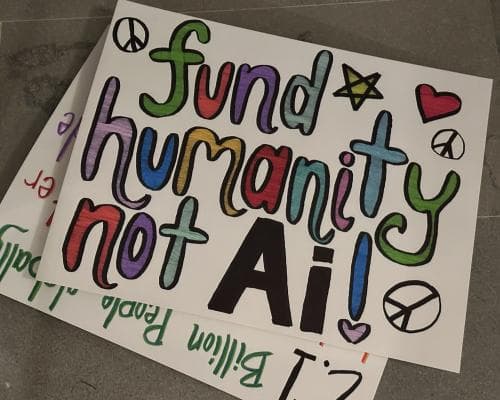
Recent discussions led by figures like Bernie Sanders and Steve Bannon highlight a growing bipartisan concern over AI and its implications for economic inequality. Key data indicates that, as of mid-2026, workers' share of the economy has plummeted to a record low of 52.9%, exacerbated by AI's potential to further diminish jobs and wages. Public sentiment is shifting, with over 60% fearing AI could threaten humanity, and 70% opposing data centers. This environment presents a pivotal moment for political leaders to address the disconnect between corporate interests and the needs of average Americans, potentially reshaping the political landscape as concerns over corporate elitism rise.
Stoic Response
Stoic Meditation for Dawn Practice
Author's Claim
Robert Reich posits that the rise of AI is exacerbating economic inequality, as evidenced by the alarming drop in workers' share of the economy to a mere 52.9%. He argues that this technological shift is not only a threat to jobs and wages but also a catalyst for populist sentiments against corporate elites who prioritize profit over people.
Weighing Against Nature and Logos
In the natural order, every action has consequences, and the pursuit of profit at the expense of community welfare disrupts the equilibrium. The Stoic principle of logos—reason and rationality—teaches us to consider the greater good. Reich’s assertion that "giant corporations have been raking it in while workers have been taking it on the chin" reflects a dissonance with the Stoic ideal of communal harmony.
Paraphrased Quote
Reich emphasizes that the corporate elite's greed has led to a blatant disregard for the needs of average Americans, exposing a system that prioritizes wealth over wellbeing.
Actionable Reflections
-
Examine Your Values: Reflect on your own priorities. Are they aligned with the collective good, or do they lean towards personal gain? In the face of rising inequality, consider how your choices impact your community.
-
Practice Empathy: Engage in conversations with those affected by economic shifts. Understanding their experiences can deepen your compassion and foster a sense of community.
-
Advocate for Change: Use your voice to support policies that promote fair wages and equitable distribution of resources. Participate in local initiatives that aim to address these disparities.
-
Cultivate Resilience: Acknowledge the challenges posed by AI and corporate greed, but also focus on what you can control. Develop skills and cultivate adaptability to thrive in an evolving job market.
-
Meditate on Impermanence: Remind yourself that both economic systems and technologies are transient. Reflect on the Stoic teaching that true wealth lies in virtue and character, not material possessions.
Conclusion
As dawn breaks, let this meditation serve as a reminder to align your actions with Stoic virtues. Embrace the opportunity to contribute positively to society, fostering a sense of unity in the face of growing inequality. In doing so, you not only honor your own values but also the interconnectedness of humanity.
Article Rewritten Through Stoic Lens
Executive Summary: AI and the Rise of Populism in the U.S. Through a Stoic Lens
In the face of rising concerns about AI and economic inequality, we find ourselves at a crossroads. Figures like Bernie Sanders and Steve Bannon have emerged, not as adversaries, but as unlikely allies in calling for a measured response to the rapid advancements in AI technology. This moment serves as a test of our virtues—wisdom, courage, justice, and temperance—as we navigate the complexities of the modern economy.
Wisdom: Recognizing the Root of the Challenge
Recent data reveals that as of mid-2026, the workers' share of the economy has fallen to a record low of 52.9%, a stark decline from over 65% in 1947. This downward trajectory is not merely a statistic; it is a call to cultivate wisdom in understanding the implications of AI on our economic landscape.
Public sentiment reflects a growing unease, with over 60% fearing that AI could threaten humanity. Such apprehension invites us to reflect on our values and priorities. It is essential to approach these fears not with outrage, but with a commitment to discernment and thoughtful action.
Courage: Confronting the Status Quo
The recent collaboration between Sanders and Bannon is emblematic of a courageous stand against the entrenched interests of corporate oligarchs. Their unified voice against AI and data centers signifies a pivotal moment where both sides of the political spectrum recognize the need for reform.
The reality is that many politicians have historically avoided criticizing wealthy elites, fearing repercussions on their campaigns. However, the courage to confront these interests is a vital test of character. As we observe the growing awareness among the populace regarding corporate greed, we must ask ourselves: Are we willing to stand firm against the tide of complacency?
Justice: A Call for Equitable Solutions
The current political climate reveals a significant disconnect between corporate interests and the needs of average Americans. As AI continues to generate wealth for its backers while diminishing job opportunities, we must advocate for justice in our economic systems.
A recent NBC poll indicates that 54% of Americans feel powerless in the face of political and corporate machinations. This sentiment underscores the importance of fostering a just society where the needs of the many are prioritized over the desires of the few. The question remains: Will our leaders seize this opportunity to champion the cause of economic equity, or will they remain beholden to powerful interests?
Temperance: Embracing Gratitude Amidst Uncertainty
As we navigate these turbulent waters, it is crucial to practice temperance—balancing our responses to both challenges and successes. With 70% of the public opposing data centers and a growing skepticism towards AI, we have a unique opportunity to express gratitude for the awareness that is blossoming among the populace.
Rather than clinging to anger or despair, we should cultivate an attitude of gratitude for the dialogue that is emerging around these issues. Successes in raising awareness about economic inequality and corporate accountability should be seen as steps toward a more virtuous society, devoid of attachment to specific outcomes.
Conclusion: The Future of America
As we reflect on the current landscape, we must remember the words of Franklin D. Roosevelt, who warned against the dangers of “business and financial monopoly.” The future of America hinges on our collective ability to embrace the virtues of wisdom, courage, justice, and temperance.
Will we rise to the occasion and advocate for a more equitable society in the face of AI's challenges? Or will we succumb to the allure of complacency and the siren songs of wealth? The choice is ours, and it is a test of our character that we must face together.
Robert Reich, a former U.S. Secretary of Labor and public policy professor emeritus at UC Berkeley, reminds us that the stakes are high—not just for political parties, but for the very fabric of our society.
Source Body Text
Last week, the unlikely duo of Bernie Sanders and Steve Bannon both spoke before a Washington group demanding a stop to AI and its datacenters. Notably, both lambasted the corporate oligarchs behind AI. The most potent force in US politics is anti-establishment fury at a system seen as rigged against average working people. AI has become Exhibit A. Until recently, both parties largely avoided criticizing the wealthy corporate elites that funded their campaigns. In politics as in nature, one does not bite the hands that feed. Trump Republicans have instead aimed populist fury at immigrants, LGBTQ+ people, Black and Latino people, “communists”, Muslims, so-called “woke” leaders, “coastal elites”, “childless cat ladies” and other scapegoats. Democrats – with the exceptions of Bernie Sanders, AOC and a few others – have also avoided criticizing wealthy corporate elites, aiming their populist fury at Trump. This may be changing. It’s becoming obvious to much of the US that giant corporations have been raking it in while workers have been taking it on the chin. As of mid-2026, according to the Bureau of Labor Statistics, the percentage of the total economy going to workers as wages had fallen to a record low of 52.9% (down from above 65% when tracking began in 1947) – leaving the rest to investors, business owners, and corporate profits. AI is on the way to causing far more inequality – generating billions for its backers while reducing the number of jobs and real wages. Trump and his regime, meanwhile, have exposed the greed, venality, cupidity and corruption of the US’s wealthy corporate elites by allowing them to do anything they wish – including create energy-guzzling, water-depleting AI datacenters – as long as they kiss his assets by funding his Pac, paying for his ballroom and singing his praises. Trump has thereby revealed the truth about corporate America that for years had been hidden behind corporate PR about “corporate social responsibility”, corporate charity and “trickle-down” economics: the captains of corporate America are willing to throw average working Americans under the bus to make billions more. Corporate avarice under Trump has become so blatant and corporate America’s contempt for the needs of average Americans so flagrant that most Americans are now catching on. In a recent NBC poll, 54% of Americans agreed that “when it comes to politics and society, nothing really matters because powerful people will always do whatever they want.” AI may well be the final tipping point. Data centers are unpopular – about 70% of the public opposes them. And Americans harbor deep suspicions of AI. More than 60% believe AI could destroy humanity (this includes 60% of Trump supporters). Fears about AI are provoking larger concerns about wealthy corporate elites bribing politicians – not just to get generous subsidies for AI but also to reduce the corporate elite’s tax bills, kill off unions, slash social safety nets, deregulate Wall Street, attain no-bid government contracts, receive exclusive licenses, open tax loopholes, get tariff exemptions, use public lands, and become even bigger monopolies. Because of Trump, Americans are coming to view those wealthy corporate elites as more aligned with Republicans than with Democrats. According to last week’s Times-Sienna poll, when likely voters were asked which party the word “elitist” describes, a remarkable 43% said Republicans while 33% said Democrats. This is something of a return to how the US’s two major political parties used to be seen. Ninety years ago, Democrats were assumed to be on the side of working people against wealthy corporate elites. On the eve of his 1936 re-election, Franklin D Roosevelt told the American people they were fighting “business and financial monopoly, speculation, reckless banking, class antagonism, war profiteering … We now know that government by organized money is just as dangerous as government organized by the mob.” Will Democrats seize the moment and embrace the new AI-fueled economic populism? Or will they continue to succumb to the siren songs of big money? According to Politico, some Democratic political consultants are quietly urging candidates in the toughest battleground races to stay mum on AI “over fears that powerful and well-resourced pro-AI interest groups could spend money pummeling them in the final weeks of the midterms”. It’s not just the future of the Democratic party that’s at stake; it’s the future of America. Robert Reich, a former US secretary of labor, is a professor of public policy emeritus at the University of California, Berkeley. He is a Guardian US columnist and his newsletter is at robertreich.substack.com. His new book, Coming Up Short: A Memoir of My America, is out now in the US and in the UK