
September 23, 2026
Trump’s UN speech was delusional and dangerous | Kenneth Roth
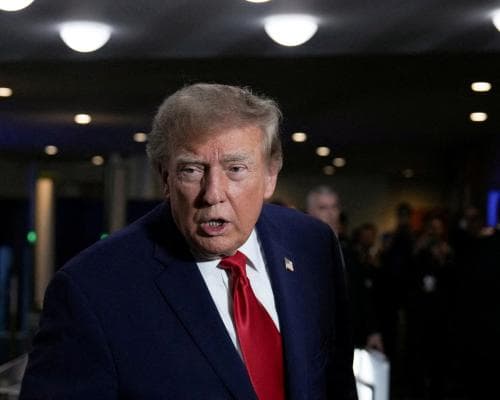
In his recent speech to the United Nations, Donald Trump showcased a troubling blend of self-delusion and aggressive rhetoric, undermining the very principles of international diplomacy. Kenneth Roth highlights Trump's alarming threats against Iran and his dismissive attitude toward global issues like climate change and humanitarian crises, revealing a dangerous inclination toward unilateralism. The speech, marked by grandiose claims of peacemaking, belied the ongoing violence and instability in regions like Gaza and Ukraine, while Trump’s disdain for institutions like the International Criminal Court further complicates the global landscape. As Roth concludes, the U.S. finds itself in a precarious position under a leader more focused on self-promotion than on fostering genuine international cooperation.
Stoic Response
Address to the Students in the Stoa
Greetings, seekers of wisdom. Today, let us reflect on the troubling currents of our time, as exemplified by the recent discourse at the United Nations.
The Headline Issue
We witness a leader entangled in self-delusion and aggressive rhetoric, undermining the very principles of diplomacy. This is not merely a political failure; it is a failure of character.
Challenge Unhealthy Judgments
- Do not be swayed by grandiose claims: Recognize that words can mask intentions.
- Examine the motives behind actions: Is there a genuine desire for peace, or merely a thirst for power and recognition?
- Reject the allure of unilateralism: Understand that true strength lies in cooperation, not in isolation.
Anchor Your Advice in Discipline
To navigate these turbulent waters, we must cultivate discipline in three areas:
-
Desire
- Desire for virtue over power: Seek to embody integrity rather than chase fleeting accolades.
- Desire for truth: Let your pursuit of knowledge guide your judgments, not the whims of the moment.
-
Impulse
- Pause before acting: Reflect on the implications of your responses. Is your reaction rooted in wisdom or in emotion?
- Cultivate patience: Understand that true change requires time and thoughtful engagement.
-
Assent
- Scrutinize your beliefs: Do not accept ideas at face value. Challenge your own assumptions and the narratives presented to you.
- Align your judgments with reason: Let your decisions be informed by reason, not by fear or desire for approval.
Imperatives for Action
- Engage with clarity: Speak truthfully and with purpose.
- Foster dialogue: Encourage discussions that elevate understanding over division.
- Stand firm in your principles: Uphold justice and compassion, even when faced with opposition.
In the face of chaos, let us remain steadfast in our pursuit of wisdom and virtue. The world may be fraught with challenges, but through discipline and reason, we can contribute to a more harmonious existence.
Let us strive to be the architects of peace, not merely spectators of conflict.
Article Rewritten Through Stoic Lens
The Stoic Teacher's Reflection on Leadership and Discourse
The Dichotomy of Control: Understanding Our Sphere
In observing the recent speech delivered at the United Nations, we must first recognize the fundamental Stoic principle: what is within our control and what is not. The speaker's rhetoric, marked by self-aggrandizement and aggression, serves as a reminder that while we cannot control the words of others, we can control our reactions and judgments.
Self-Delusion vs. Reality: A Lesson in Judgment
The speaker's claims of peacemaking amidst ongoing violence highlight a discrepancy between perception and reality. Here lies an opportunity for us to practice discernment. We must ask ourselves: Are we swayed by grandiose claims, or do we seek the truth beneath the surface? This is a moment to cultivate our judgment, ensuring that we align our beliefs with reality, rather than illusions.
Discipline in Response: The Art of Right Action
When faced with threats against nations, such as those directed at Iran, we witness a call to discipline and restraint. The Stoic teaches us that while we cannot dictate the actions of others, we can choose our responses. Let us reflect: How do we respond to aggression? With further aggression, or with a commitment to dialogue and understanding? This is our opportunity to embody the Stoic virtue of temperance.
The Nature of War: A Reflection on Ethics
The speaker's rhetoric around military action raises profound ethical questions. We are reminded that violence begets violence, and that true strength lies in restraint and justice. In these moments, we must consider: What is the right action? The Stoic path encourages us to seek justice, not through the sword but through reasoned discourse and ethical conduct.
The Role of Institutions: Upholding Justice
The dismissal of institutions like the International Criminal Court presents a critical teaching moment. We must recognize the importance of justice and accountability in our world. While we cannot control the actions of leaders, we can advocate for the principles of justice and support institutions that uphold them. Let us ask ourselves: How can we contribute to a just society?
The Illusion of Control: Recognizing Our Limitations
The speaker’s claims of personal victories in global conflicts illustrate a profound misunderstanding of the complexity of international relations. We must remember that the outcomes of global events are often beyond our individual control. In this, we find an invitation to humility. Let us focus on what we can influence: our own actions, our communities, and our responses to the world around us.
Engagement with Global Issues: A Call to Action
As the speaker trivializes pressing global issues like climate change, we are reminded of our responsibility to engage with these challenges. The Stoic encourages us to act in accordance with our values, advocating for the greater good. Reflect on this: How can we contribute to meaningful change in our own lives and communities?
Conclusion: A Stoic Path Forward
In summary, the recent speech serves as a rich tapestry of lessons for us as Stoics. We are called to practice discernment, discipline, and ethical action in the face of external chaos. Let us embrace the Stoic principles of wisdom, courage, and justice, using every opportunity to cultivate our character and contribute positively to the world. Remember, while we cannot control the actions of others, we can control our responses and strive for a life aligned with virtue.
Source Body Text
Donald Trump’s speech on Tuesday to the United Nations general assembly was an object lesson in his lawless rule and remarkable capacity for self-delusion. Disregarding the UN charter’s emphasis on the peaceful resolution of disputes, he doubled down on his violent unilateralism while denigrating the global issues that the UN is designed to address. For many, the headline remark was his musing about whether to “annihilate the Islamic Republic” of Iran. “Do I drive them into hell with no chance of survival and no hope of future greatness or generations?” But it was probably less a genuine threat than a clumsy effort to influence negotiations where he has little leverage. Trump is in desperate quest of some face-saving gesture that will allow him to feign “victory” and extract himself from his disastrous war of choice. He spoke of destroying the “Islamic Republic”, which might imply the Iranian military, a legitimate military target. But his reference to precluding future generations suggests he meant to threaten the Iranian people. Attacking them would be a blatant war crime. In July, he already vowed to destroy Iran’s bridges or power plants – itself a threat to commit war crimes. The international criminal court (ICC) has charged four Russian military commanders for doing precisely that in Ukraine. Trump didn’t even bother to offer a coherent rationale for his threat. Once more, he proclaimed: “I will never allow Iran to have a nuclear weapon.” But Tehran has long disavowed that goal. He claimed that other American presidents “just wanted to ignore” the issue. But Barack Obama negotiated a deal to constrain Iran’s ability to build a nuclear weapon. Trump ripped it up, preferring his utterly counterproductive military solution, which has brought Iran far closer to a nuclear weapon than ever before. Preposterously, Trump claimed, “when it comes to Iran,” the midterm election “doesn’t even enter my mind.” No one believes that. If the Republicans face the disastrous showing that the polls now predict, he knows the election will be seen as a repudiation of his arbitrary tariffs and Iran war which have fueled inflation and aggravated the affordability crisis that he belittles. Trump also spotlighted his other acts of aggression. He celebrated the seizure of Venezuela’s dictator, Nicolás Maduro, emphasizing how some political prisoners have now been freed, although hundreds remain. But while Trump lauded his coerced deal with Venezuela’s remaining autocratic leaders to take a large chunk of the country’s oil, he said nothing about a democratic future. Instead, touting his might-makes-right beliefs, he proclaimed: “To the victor belong the spoils.” He noted the new agreement on Greenland without mentioning his earlier threat to seize the territory by force even though it has long been administered by Denmark, a fellow Nato member. He raved about slaughtering drug suspects at sea, claiming they are “at war with civilization” and “should be killed … as enemy combatants”. But there is no real war, only a rhetorical one. Drug traffickers form a criminal cartel, not an organized force in armed conflict with the United States. They should be arrested and prosecuted, not summarily executed by drone. The killings are murders and arguably crimes against humanity. Many of the victims were on boats registered in Columbia or Venezuela – both at the time members of the ICC. That would give the court jurisdiction over these crimes, which may be why Trump reprised his attack on this important institution of justice. Trump wants to be restrained only by his own warped “morality”. It has been reported that Trump may soon supplement his sanctions against 13 ICC personnel – judges and prosecutors – with sanctions against the court as a whole. But that would only compound the criminality of his conduct, because retaliation against court personnel for the performance of their official duties is obstructing justice under article 70 of the court’s statute. Trump emphasized his role as a peacemaker. “I have made peace,” he declared, as he claimed to have “settle[d] eight wars”. Yet the reality is more complicated. He said he had “ended the war in Gaza”. In fact, despite the “ceasefire”, Israel’s continuing attacks continue to raise the death toll. Trump mentioned his 20-point peace plan for Gaza without noting that virtually none of it has been implemented. Israel continues to kill Palestinians and block needed supplies, while Hamas has not disarmed. He didn’t even bother to mouth the word “Palestinian”. Indeed, the Trump administration has rejected a leading candidate for the next UN secretary general because she has publicly recognized that Israel committed genocide in Gaza, suggesting that Trump will accept only future UN leaders who are willing to deny this reality. He claimed to have “contribute[d] to peace” between Rwanda and the Democratic Republic of the Congo, without noting that Rwanda’s M23 militia continues to occupy large swathes of eastern DRC. Trump seems fine with that, so long as the murderous M23 brings the region’s mineral riches to the western market. He claimed to be making progress in securing peace in Ukraine, without acknowledging his prior suggestion to reward Vladimir Putin’s aggression by having Ukraine not only cede territory already illegally occupied by Russia but to hand over additional chunks of its territory as well. Meanwhile, Trump belittled the problems that the UN, able to convene the world’s nations, is ideally suited to address. He called the existential threat of climate change a “hoax” Ignoring the enormous risks posed by artificial intelligence, he attempted to relabel AI as “superintelligence” and derided efforts to regulate it as “globalist.” This week Trump meets with the Chinese leader, Xi Jinping. Yet rather than outline the important issues to be addressed, Trump chose to self-promote: “We’re leading now over China by a lot” Most would say only that Trump is leading in national embarrassment. It is sad and dangerous that at such a perilous moment, the United States is saddled with a president who excels mainly in disseminating self-promoting fantasies and while flouting the most basic rules of decency. His UN speech put that all on painful display. Kenneth Roth is a Guardian US columnist, a senior fellow at Yale University and a former executive director of Human Rights Watch. He is the author of Righting Wrongs: Three Decades on the Front Lines Battling Abusive Governments