
October 19, 2026
Saudi Arabia is learning the hard way: they can’t count on Trump for protection | Mohamad Bazzi
Headline: Saudi Arabia is learning the hard way: they can’t count on Trump for protection | Mohamad Bazzi
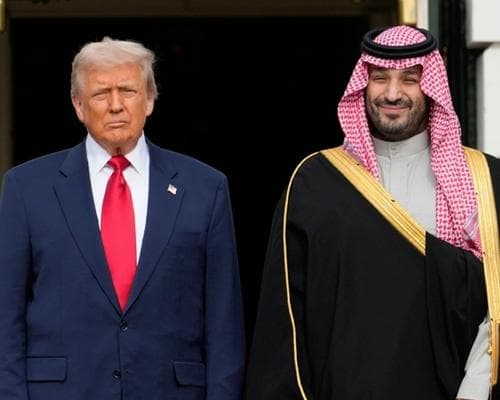
Saudi Arabia’s Crown Prince Mohammed bin Salman, once confident in his alliance with Trump, now faces the harsh reality that U.S. support is far from guaranteed amid escalating Houthi attacks. Despite billions invested in American arms and infrastructure, the kingdom is receiving only lukewarm backing as Trump prioritizes domestic concerns over foreign entanglements. This situation underscores a critical lesson for Gulf autocrats: reliance on transactional relationships can leave them vulnerable in times of crisis.
Stoic Response
The Illusion of Control
In the article, the chief tension lies in the disillusionment of Saudi Arabia’s Crown Prince Mohammed bin Salman regarding his reliance on the U.S., particularly on Donald Trump, for protection. The expectation that transactional relationships would ensure security has proven to be a fragile foundation. As the article states, “never count on Trump to protect you,” highlighting the precariousness of depending on external powers for safety.
Recognize What You Can Control
The first step in navigating this tumultuous landscape is to acknowledge the Stoic principle of the dichotomy of control. Understand what is within your power and what is not. The actions of foreign leaders, the whims of political alliances, and the outcomes of conflicts are beyond your control. Instead, focus on your responses and decisions.
Cultivate Resilience
In the face of uncertainty, cultivate resilience. Rather than investing all your trust in external allies, strengthen your internal resources. This means fostering self-reliance and preparing for potential adversities. As Marcus Aurelius might advise, “You have power over your mind—not outside events. Realize this, and you will find strength.” Build a robust strategy that does not solely depend on the goodwill of others.
Act with Wisdom
Finally, act with wisdom in your dealings. Engage in diplomatic relations, but do so with a clear understanding of the risks involved. Diversify your alliances and investments to mitigate vulnerability. As the article illustrates, the consequences of blind trust can be dire. Instead, embody the Stoic virtue of prudence: evaluate your choices carefully, and ensure that your actions align with your values and long-term goals.
In summary, recognize what you can control, cultivate resilience, and act with wisdom. This is the path to navigating the complexities of external relationships with a Stoic mindset.
Article Rewritten Through Stoic Lens
Reflections on the Nature of Alliances and the Human Condition
The Illusion of Security
In the unfolding events surrounding the Crown Prince of Saudi Arabia, I am reminded of the transient nature of human alliances. Mohammed bin Salman, once buoyed by his relationship with a powerful leader, now grapples with the stark reality that reliance on external forces for security is a precarious endeavor. The essence of virtue lies not in the pursuit of power through others but in the cultivation of inner strength and self-reliance.
The Lesson of Impermanence
The prince's investments in American arms and infrastructure, while seemingly wise in the moment, reveal a deeper truth: all things are subject to change. The fickleness of fortune teaches us that true security cannot be purchased. The reliance on transactional relationships, as the Crown Prince has learned, can lead to vulnerability. In this, we find an opportunity to embrace the impermanence of life and to cultivate resilience in the face of uncertainty.
Embracing the Present Moment
As the Houthi attacks escalate, the Crown Prince finds himself in a position of desperation, seeking intervention from a leader who prioritizes domestic concerns over foreign entanglements. This situation serves as a reminder that we must accept the circumstances we face, however challenging they may be. Instead of lamenting the lack of support from the U.S., one must turn inward and reflect on how to navigate the tumultuous waters of existence with grace and wisdom.
The Nature of True Leadership
In observing the actions of leaders, both in the East and West, we must ask ourselves: what constitutes true leadership? Is it the ability to wield power or the capacity to foster peace and understanding? The Crown Prince's reliance on military might and foreign alliances reveals a misunderstanding of the deeper responsibilities of leadership. A true leader cultivates harmony and seeks to resolve conflicts through dialogue rather than force.
The Call for Inner Virtue
As the world watches the unfolding conflict, let us not forget the importance of virtue in our own lives. In times of crisis, we are called to reflect on our values and to act with integrity. The Crown Prince may find himself at a crossroads, faced with the choice of continuing down a path of aggression or seeking a more diplomatic resolution. In this moment, he has the opportunity to embody the virtues of wisdom, courage, and justice.
The Acceptance of Nature's Order
Ultimately, we must accept that the universe operates according to its own laws. The Crown Prince's attempts to manipulate the tides of international relations have proven futile, as the natural order asserts itself. In this acceptance lies the path to tranquility. We are reminded that our true power resides not in the control of others but in the mastery of ourselves.
Conclusion: A Path Forward
As I reflect on these events, I am reminded that every challenge presents an opportunity for growth. The Crown Prince, like all of us, must navigate the complexities of existence with humility and wisdom. In doing so, he may find a way to transform adversity into virtue, emerging not merely as a ruler but as a leader who understands the profound interconnectedness of all beings.
Source Body Text
For years, Saudi Arabia’s crown prince, Mohammed bin Salman, cultivated a close relationship with Donald Trump and his son-in-law and former top adviser, Jared Kushner. The prince understood the president’s transactional approach to power: he signed deals to buy billions of dollars’ worth of US weapons and invested billions more in American companies. Days after Trump returned to the White House in January 2025, Prince Mohammed pledged to expand investment and trade with the US by $600bn over four years. He later promised to increase that investment to nearly $1tn, although it wasn’t entirely clear how Saudi Arabia would manage to plough a sum close to the kingdom’s entire annual GDP into a foreign economy over a few years. On a visit to Washington last November, Prince Mohammed sealed a defense cooperation agreement with the US and signed a deal for the monarchy to buy dozens of F-35 stealth fighter jets, America’s most advanced warplane. Behind this flurry of deal-making, Saudi Arabia’s de facto ruler expected the US to defend the kingdom if it was attacked, as Washington has done in the past. But Prince Mohammed, like the leaders of other Arab petrostates who have invested billions of dollars to appease Trump, is learning a hard lesson: never count on Trump to protect you. Over the summer, Trump’s war against Iran rekindled a years-long conflict between Saudi Arabia and the Houthi militia in Yemen. Last month, as the Houthis intensified their attacks on Saudi territory and the kingdom’s Yemeni allies, the prince called Trump multiple times in September, urging him to launch US airstrikes against the Houthis, who are allied with Iran. For now, Trump has resisted appeals from Prince Mohammed to drag American forces into the Houthi-Saudi battle – one of the best foreign policy decisions of an otherwise disastrous second term. But the conflict is escalating in dangerous ways. On 10 October, the Houthis fired a cruise missile at the international airport in the Saudi capital, Riyadh, killing at least 13 people and wounding more than 300. After that attack, when reporters in Washington asked Trump whether he would be more willing to order US strikes against Yemeni rebels, he was non-committal. “We may. We’re going to look at it,” he said. “We just found out about the recent attack. So we’ll make a decision.” The Houthi-Saudi conflagration is the latest illustration of Trump’s decision to attack Iran spiraling into an unpredictable regional conflict, as Middle East experts and some US intelligence officials warned would happen. It also reveals that Saudi Arabia and other Arab Gulf countries can’t rely on the Trump administration to protect them, even after they have spent tens of billions of dollars to buy American weapons and build US bases – some of which were decimated by Iranian attacks over the past seven months. Trump’s resistance to ordering US attacks on the Houthis has been particularly embarrassing for Prince Mohammed. Billions of dollars in Saudi investments have been directed into Kushner’s private equity firm and the president’s family business, the Trump Organization. Now Saudi Arabia is being rewarded with lukewarm US support against Yemeni rebels. For now, Trump seems worried about expanding the US role in a regional war that is deeply unpopular among Americans, including segments of Trump’s own Maga base that believed his repeated promises not to start new wars. The Iran conflict has increased gasoline and other energy prices, driving up the US inflation rate to 3.7% in September, weeks before midterm elections where Republicans are facing widespread anger over the cost of living. It’s unclear if Trump will continue to resist launching airstrikes against the Houthis after next month’s elections, when Democrats could win control of both houses of Congress. If the Houthis keep up their attacks on Saudi infrastructure and capture more territory held by Yemen’s Saudi-aligned government, Trump could face more pressure to intervene from the Saudis and hawkish Republicans. And he would be less constrained by worries about expanding the Iran war shortly before the midterms. Prince Mohammed, who is reeling from the war’s impact on Saudi oil exports, could also ratchet up pressure on Trump by threatening to withhold Saudi investments in the US economy and the president’s family business. That’s another danger underlying Trump’s corrupt and transactional style of governing: US interests can be subsumed by wealthy autocrats who try to exploit Trump through his extensive business ventures. In this case, rather than bombing one side to help another, there’s a clear US interest in promoting diplomacy and de-escalating the Houthi-Saudi conflict. Early in Trump’s first term, the Saudi leader developed a relationship with the president and his key advisers, especially Kushner. In May 2017, Trump upended tradition and chose Saudi Arabia as the first stop of his maiden overseas trip as president. The Saudis realized that Trump craved flattery: they feted him with banquets in gilded palaces and awarded him the kingdom’s highest civilian honor. At the time, Prince Mohammed was consolidating power as the monarchy’s de facto ruler under his ailing father, King Salman. The prince had also presided over a series of destructive regional policies, including a Saudi-led invasion of Yemen in 2015, and a subsequent campaign to blockade the kingdom’s tiny neighbor, Qatar. Trump and Kushner proved to be invaluable allies to the young, ambitious royal. In October 2018, Jamal Khashoggi, a dissident Saudi journalist, was assassinated inside the Saudi consulate in Istanbul by a 15-member hit team, who dismembered his body with a bone saw. US intelligence agencies quickly concluded that Prince Mohammed had ordered the killing, but Trump protected the royal from US sanctions and pressure from outraged members of Congress. A few years later, the prince found a way to return Trump’s favor. In January 2021, after a mob of Trump supporters stormed the US Capitol in an attempt to overturn the presidential election results, US banks and several large companies distanced themselves from the Trump Organization. But Saudi Arabia stood by Trump while he was out of power, generating real estate deals and new golf partnerships that helped Trump’s family business at one of its weakest points. After the uproar over Khashoggi’s assassination, the prince stayed away from the US for seven years – until Trump returned to office and invited him for a victory tour last November. Trump rolled out the red carpet, hosting Prince Mohammed for lunch with top administration officials at the White House. Trump also held a black-tie dinner with business executives who were eager to solicit new investments from the kingdom’s sovereign wealth fund, which is controlled by the crown prince. Beyond the extravagant welcome, Trump also defended Prince Mohammed when a reporter asked about Khashoggi’s killing. “A lot of people didn’t like that gentleman that you’re talking about,” Trump said, referring to the murdered journalist, who was a US permanent resident and contributor to the Washington Post. “Things happen,” Trump added, as he sat next to the Saudi leader in the Oval Office. He insisted that the prince “knew nothing about” Khashoggi’s assassination – despite the CIA reaching the opposite conclusion during Trump’s first term. Trump spent years defending and protecting his Saudi ally and benefactor. In the coming weeks, Trump risks expanding US involvement in a disastrous regional war to help the prince. Mohamad Bazzi is a Guardian US columnist. He is also director of the Hagop Kevorkian Center for Near Eastern Studies and a journalism professor at New York University