
November 2, 2026
Prediction market bettors are the new political pundits. Why are we listening to them? | Judith Levine
Executive Summary: Prediction Market Bettors as Political Pundits
Judith Levine's article highlights the growing influence of prediction markets—platforms where users bet on political outcomes—on public perception and voter behavior. While these markets claim to reflect the "wisdom of the crowd," research indicates that a small percentage of skilled traders drive the majority of profits, leaving casual bettors at a disadvantage. This dynamic not only distorts election forecasts but also raises concerns about potential fraud and insider trading, particularly as influential figures engage in these markets. Levine argues for the regulation or outright banning of prediction markets, emphasizing their detrimental impact on democratic discourse.
Stoic Response
Stoic Field Manual Entry: Prediction Markets and Political Discourse
What is Within Our Power
- Personal Response: We can choose how to engage with prediction markets and the information they provide.
- Critical Thinking: We have the power to question the validity and motivations behind prediction markets.
- Informed Decision-Making: We can decide whether to participate in these markets or to advocate for their regulation or banning.
What is Opinion
- Market Representations: The claim that prediction markets reflect the "wisdom of the crowd" is an opinion, not an absolute truth.
- Perception of Value: The belief that financial stakes enhance the authenticity of predictions is subjective and can be misleading.
- Public Sentiment: The prevailing view that prediction markets can influence voter behavior is an interpretation that requires scrutiny.
What Action Virtue Demands
- Advocacy for Integrity: We must advocate for transparency and ethical standards in political discourse and prediction markets.
- Education and Awareness: Promote understanding of the risks involved in prediction markets, particularly for casual bettors who may be misled.
- Regulatory Support: Support efforts to regulate or ban prediction markets to protect democratic integrity and prevent corruption.
Summary of Key Insights
- Disparity in Skill: A small percentage of skilled traders dominate the profits, leaving most casual bettors at a loss, which distorts public perception of political outcomes.
- Potential for Corruption: The lack of regulation opens doors for fraud and insider trading, undermining trust in the democratic process.
- Influence on Voter Behavior: Prediction markets can shape expectations and potentially alter voting behavior, raising ethical concerns about their role in democracy.
Conclusion
As Stoics, we recognize the importance of virtue and integrity in our actions and beliefs. Engaging with prediction markets requires a mindful approach, prioritizing ethical considerations over profit and influence. We must strive for a political discourse that is grounded in truth and fairness, rather than speculation and manipulation.
Article Rewritten Through Stoic Lens
Journal of Marcus Aurelius
On the Nature of Prediction Markets
In my reflections today, I ponder the rise of prediction markets, those platforms where men wager on the outcomes of political events. These markets, cloaked in the guise of popular wisdom, reveal a deeper truth about human nature and the folly of our pursuits.
The Illusion of Wisdom
It is said that these markets represent the "wisdom of the crowd." Yet, upon closer examination, I see that a mere fraction of skilled traders shapes the majority of the outcomes. The many, entranced by the allure of fortune, often find themselves at a disadvantage. Here, I am reminded that true wisdom does not lie in the multitude, but in the discerning few who understand the nature of the game.
Acceptance of Nature’s Order
As I observe the dynamics of these markets, I accept that nature has its order. The skilled few thrive while the many falter. This is not a matter of injustice, but a reflection of the varied capabilities bestowed upon us. It is within this framework that I must find my peace, recognizing that the universe operates on principles beyond my control.
The Pursuit of Virtue
In the face of such disparities, I am called to consider virtue. The casual bettor, losing more than they gain, must seek lessons in humility and prudence. Each loss can be a teacher, urging one to reflect on the nature of desire and the importance of temperance. It is in our struggles that we can cultivate resilience and wisdom.
The Distortion of Truth
The influence of these markets extends beyond mere speculation; they shape public perception and voter behavior. This power, however, is fraught with peril. When money speaks louder than reason, the truth becomes obscured. I must remind myself that the essence of democracy lies not in the manipulation of expectations, but in the honest exchange of ideas.
The Role of Regulation
As I contemplate the call for regulation of these markets, I recognize the necessity of order in human affairs. The potential for fraud and insider trading cannot be overlooked. It is the duty of the wise to advocate for structures that promote fairness and transparency, ensuring that virtue prevails over vice.
Reflection on Corruption
The history of electoral betting is steeped in corruption, echoing the tales of Tammany Hall and other political machinations. Yet, I must not despair. Instead, I accept that corruption is a part of human nature, a challenge to be met with integrity and resolve. The wise must remain vigilant, using their discernment to navigate the murky waters of politics.
The Balance of Participation
While some may argue against the morality of prediction markets, I find myself in a state of ambivalence. The ease of betting does not inherently corrupt the soul; rather, it reveals the character of those who engage. In matters of triviality, let the people wager, but in the sacred realm of democracy, we must strive for substance over spectacle.
Conclusion
In closing, I reflect on the lessons gleaned from the rise of prediction markets. They serve as a mirror to our desires, our follies, and our virtues. I shall embrace the wisdom of acceptance, the pursuit of virtue, and the call for integrity in all matters of the state. Thus, I will remain steadfast in my commitment to the greater good, ever mindful of the delicate balance between human ambition and the natural order.
Source Body Text
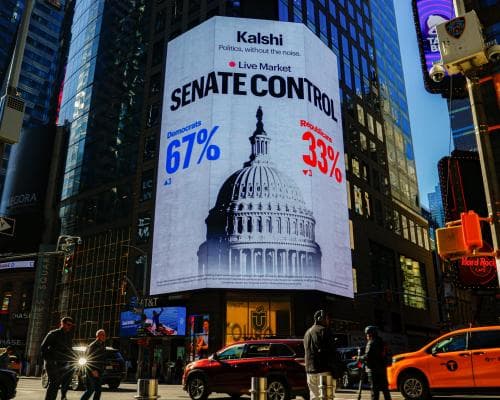
Online betting is a bit like Donald Trump. The prediction markets – platforms where users bet on whether events will occur – pretend to be populist, pushing the nabobs aside and representing the “wisdom of the crowd”. “This data is bottom-up, not elites-driven,” a Kalshi spokesperson told Reuters. But in fact, the markets are controlled by a few, skillful traders. Their users are led to believe they can strike it rich. But like gamblers everywhere, most of them lose most of the time, while enriching the casino and bankrolling the winner’s takings. The markets pretend honesty and transparency, but they open the door to fraud and insider trading. Like opinion polls, they affect voters’ expectations of the outcomes of elections but make them no smarter about whom to vote for. Fundamentally, the assumptions projected by the prediction markets are Trumpian. The companies suggest that their results are improved by the financial stake customers have in them. “Prediction markets are a way to see what people are saying when there’s money on the line,” said the Kalshi spokesperson. When money talks, in other words, its message is more authentic and valuable than mere political speech. The prediction markets made a better collective call on the 2024 elections than conventional polls and pundits, particularly in the swing states. But why? The authors of a much-cited 2025 study from Vanderbilt University infer that their results – that Polymarket was more accurate than polls – were “in alignment with research on the ‘Wisdom of Crowds’ theory, which suggests a large group of people are often accurate in predicting outcomes, even if they are not necessarily experts or closely aligned with the issue at hand”. But more recent analyses suggest that the betting masses are not so wise after all. A new working paper from scholars at the London Business School and Yale University looked at publicly available trading data from Polymarket. Whereas almost every wagerer’s outcomes were no better than chance, they discovered, the “accuracy comes from a minority of persistently skilled traders, around 3% of accounts”. The crowd “generates most of the volume but little of the information”. The crowd also furnishes most of the cash but reaps little of it. Analyzing 1.6m Polymarket accounts, or “wallets”, traded since November 2022, the Wall Street Journal found: “Casual traders are bleeding cash while a small number of sophisticated pros – including trading firms with access to vast streams of data – eat their lunch.” What skills do these pros employ? They react quickly to public and financial news, say the London and Yale authors. They gather poll data and buy access to big data streams, which can cost $200,000 annually. They analyze the data using “algorithms to predict price movements and manage risk”, says the Journal, “faster than any human”. Operating at scale and speed, with commensurate information and discipline, the pros can make tens of thousands of trades a day. And the more they trade, the more they earn. In the Journal’s analysis, three-quarters of the profits went to 0.1% of the accounts. Of at least 2.3 million accounts on Polymarket’s site, just 2,000 netted a total of almost half a billion dollars. Meanwhile, the median Polymarket user placed 46 trades across 10 active trading days in 2026, according to Pew Research. And because the few have the skills to trade against the mistakes of the many, the losses of the many bankroll the profits of the few. The traders steering the prediction markets are not PhD pollsters and PBS talking heads. But they are elites nonetheless – the same elites who dominate Wall Street and make economic policy, whichever party is in office. If it were a simply a matter of some people’s money squandered or increased, the problems of the traders would remain with the traders. But the press and the public are listening to them more and more. “Prediction market odds shift voters’ expectations substantially,” a study funded by the Brennan Center found. The same features that rig the markets in favor of the few can distort what we think we know about coming elections. Explained CoinMarketCal, a newsletter serving crypto traders: “A market price reflects trades, liquidity, and available capital, not a representative poll. A well-funded trader can move a thin contract without any change in voter sentiment.” And it’s not just expectations that prediction markets influence. They can also change voter behavior. “Elections have the property that what one believes is going to happen can actually affect what happens if a candidate is thought to be losing momentum or the campaign is flagging,” the Barnard College economics professor Rajiv Sethi told NPR. Gaming on votes is not new, and its history is thick with corruption. Tammany Hall, New York’s Progressive Era Democratic party machine, kept a war chest for electoral wagers and publicized them vigorously to boost political momentum. In the 1904 presidential elections, the New York Times accused the Republicans of finagling the betting odds to help Teddy Roosevelt. The corruption has simply moved online. There’s two-bit graft like the trick the expelled Republican representative George Santos pulled in 2023: he bought Kalshi contracts on whether he would attend the State of the Union address, posted on social media that he would, then stayed home and earned $18,000 on the bet. “There was absolutely no intent to deceive any person,” the compulsive liar’s lawyer protested. While prediction market participation by elected officials and candidates constitutes illegal insider trading, the law did not stop aides this spring from betting on their own candidates. Polymarket has investigated dozens of cases of potential fraud related to the midterms. But with millions of trades moving both in the country and offshore, it may be impossible for companies to keep up with the fraudsters. Especially not under an administration stinking of corruption and a presidential family deeply engaged in the crypto and prediction markets. Donald Trump Jr’s venture firm 1789 Capital has invested half a billion dollars in Polymarket. On the day after Daddy’s 2025 inauguration, Kalshi announced it was “beyond excited” that Junior had joined the exchange as a paid adviser. Trump Sr, who made $1.4bn on crypto in 2025 and has vowed to make the US the “crypto capital of the world”, declared in May that prediction markets also “will thrive” under his presidency. There is overwhelming popular, bipartisan opposition to betting on politics and elections. Half the states ban it to some degree. But federal regulation is unlikely any time soon. Before Michael Selig was appointed to chair of the Commodity Futures Trading Commission, which regulates online prediction and crypto markets, he was a corporate lawyer for prediction markets and crypto. Without government oversight or publicly traded stocks, it is even hard to evaluate election betting sites as businesses. Estimates of trading volume on the midterms range widely. The Anti-Corruption Data Collective, the New York Times’s source, says it has surpassed $220m in 2026, up from $92.4m in the 2024 election cycle. Meanwhile, CNN quotes spokespeople for the two biggest platforms, Kalshi and Polymarket, who claim a total of $1.4bn for the upcoming midterms. But the house doesn’t profit directly from the bets; users determine the prices and the odds. Revenue comes from trading fees and money earned on the funds sitting in the companies’ coffers between buys and payouts. Increasingly, media, financial and tech companies, including CNN, Fox, Dow Jones and Palantir, are striking deals to use the data. Kalshi was recently valued at $22bn and Polymarket at $9bn. This could be a bubble that will burst, as artificial intelligence’s appears to be doing. Some condemn the prediction markets as inherently morally and psychologically harmful. On this, I’m agnostic. A casino on your phone makes betting easier, but it does not turn every user into a fiend. And while the psychological profile of these online bettors – young, male, impulsive, irrationally optimistic, overly self-confident – makes them unnerving as pundits, if the question is whether Zimbabwe’s cricketers will beat Afghanistan’s or the US will confirm the existence of aliens, my feeling is, let the people bet. But democracy is not cricket. These markets commodify a politics already gravely corrupted by money and gamify a discourse ever thinner on content or nuance. They should be banned. Judith Levine is a frequent contributor to the Guardian. Her Substack is Today in Fascism