
November 3, 2026
Trump’s midterm campaign has distilled his vile message | Sidney Blumenthal
Executive Summary
In his recent midterm campaign, Donald Trump has intensified his divisive rhetoric, amplifying themes of misogyny, racism, and nativism, which have become central to his political identity. Key data points indicate a decline in support among critical voter demographics, including Latinos and working-class swing voters, as his aggressive language and behavior alienate potential allies. The Republican candidates have largely mirrored Trump's approach, further normalizing this extreme discourse and undermining traditional political norms. To address these challenges, stakeholders must consider strategies that promote inclusivity and civility, aiming to rebuild trust and broaden their appeal ahead of future elections.
Stoic Response
Stoic Field Manual Entry: Navigating Political Turmoil
What is Within Our Power
- Our Reactions: We can control how we respond to divisive rhetoric and political discourse.
- Our Choices: We have the power to choose our values and principles, and to act according to them, regardless of external pressures.
- Our Community Engagement: We can engage with our communities in a way that promotes inclusivity and civility.
What is Opinion
- Public Perception: The opinions surrounding political figures, such as Donald Trump, are shaped by rhetoric and media portrayal, often influenced by emotional responses rather than rational thought.
- Political Identity: The identities constructed around figures like Trump, including themes of misogyny, racism, and nativism, are opinions that can be challenged or reinforced by public discourse.
- Allegiance to Party: The tendency of Republican candidates to mirror Trump’s divisive strategies reflects a collective opinion that can shift based on the prevailing political climate.
What Action Virtue Demands
- Promoting Inclusivity: Actively work to foster environments that embrace diverse perspectives and encourage respectful dialogue.
- Rejecting Division: Stand against rhetoric that promotes hatred or division, choosing instead to advocate for unity and understanding.
- Cultivating Trust: Engage in actions that rebuild trust within communities, focusing on transparency, integrity, and mutual respect.
Conclusion
In the face of political turmoil and divisive rhetoric, it is our duty as Stoics to focus on what we can control—our reactions, our choices, and our engagement with others. By recognizing the opinions that shape our political landscape and taking virtuous action, we can contribute to a more civil and inclusive society.
Article Rewritten Through Stoic Lens
The Stoic Reflection on Contemporary Political Discourse
Executive Summary
In the current political landscape, we observe a figure, Donald Trump, whose rhetoric embodies a departure from virtue and wisdom. His campaign has become a study in the effects of divisive language, which, though it may resonate with a segment of the populace, ultimately alienates many. This situation presents an opportunity for reflection on what is within our control—our responses and our choices—and what is not—the actions and words of others. As we navigate this discourse, we must strive for inclusivity and civility, recognizing that true strength lies in virtue, wisdom, courage, justice, and temperance.
The Nature of Discourse
Trump’s recent campaign statements illustrate a profound departure from the virtues of reason and respect. His reliance on themes of misogyny, racism, and nativism reflects a choice that is not conducive to the flourishing of civic life. While it is tempting to react with indignation, we must instead examine the causes and effects of such rhetoric. The Stoic perspective teaches us to focus on our own virtue rather than the failings of others.
The Illusion of Control
The decline in support among key demographics, such as Latinos and working-class voters, serves as a reminder that the consequences of one’s actions are often beyond one’s control. Trump’s aggressive language may have initially attracted attention, but it also serves to alienate potential allies. This highlights the importance of understanding what is within our control: our own responses and choices. We can choose to engage in discourse that promotes understanding rather than division.
The Role of Virtue
The actions of Trump and those who follow him illustrate a troubling normalization of extreme discourse. This is reminiscent of the concept of “defining deviancy down,” where society lowers its standards to accommodate behaviors that undermine the common good. As Stoics, we must strive to uphold virtue even in the face of adversity. We should seek to embody wisdom, courage, and justice in our interactions, recognizing that our character is defined by our responses to external events.
Reflection on Leadership
The behavior exhibited during campaign events, characterized by vulgarity and disdain for opponents, is a reflection of a deeper malaise within political leadership. Rather than assigning blame, we must reflect on the underlying causes of such behavior. The pursuit of power at the expense of virtue leads to a cycle of alienation and discontent. True leadership, from a Stoic perspective, is rooted in the pursuit of the common good and the cultivation of virtue.
The Importance of Inclusivity
As we observe the current political climate, it is crucial for stakeholders to consider strategies that promote inclusivity and civility. The Stoic ideal emphasizes the interconnectedness of humanity; thus, we must seek to rebuild trust and broaden our appeal. This requires a commitment to justice and temperance, recognizing that our actions have consequences that extend beyond ourselves.
Conclusion
In conclusion, the current political discourse serves as a reminder of the importance of virtue and wisdom in leadership. While the actions of others may be beyond our control, our responses are not. We are called to reflect on our own character and choices, striving for a discourse that embodies the Stoic virtues of courage, justice, and temperance. In doing so, we can contribute to a more inclusive and civil society, fostering an environment where true dialogue can flourish.
Source Body Text
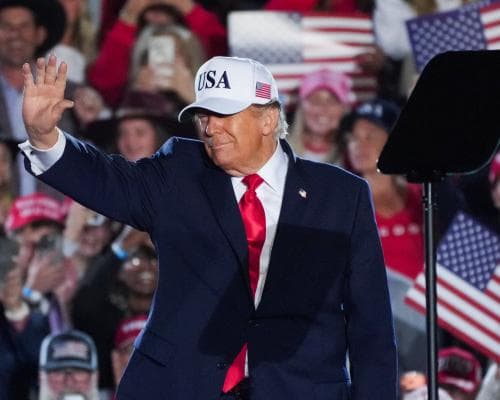
Far from veering off his track, Trump in his ceaselessly vile midterm campaign statements has attained an optimal level of Trumpism. He has distilled the raw elements of misogyny, racism and nativism to the purified essence of his political philosophy. The Republican candidates and his vice-president have followed him down the trail of “defining deviancy down”, as explained by Daniel Patrick Moynihan, in his essay in The American Scholar in 1993, about lowering the bar to make abnormal criminal behavior seem normal, coping through denial of its obvious presence, and through that process trivializing “the manifest decline of American civic life”. Moynihan wrote:“Here is a theory that clearly implies that there are circumstances in which society will choose not to notice behavior that would be otherwise controlled, or disapproved, or even punished.” Trump’s disinhibition has been on neon display. In nearly every public speech he has delivered in the last month, he has spewed profane or vulgar language. He has directed his obscenities at Democrats, “dumb sons of bitches”, to whom he is going to “shove it up their ass”, but also called Norway a “shithouse country” for not awarding him the Nobel peace prize. Trump used to hold up Norway as a model Nordic country as opposed to the “shithole countries” of Africa and Haiti. He has lately been confusing his racial disparagement with his personal peeves and forgetting that his trademark denigrating word is “shithole”, not “shithouse”. Wielding his vulgarity, Trump has refined Maga without excuses. His animus springs from a deep well of resentment, in the beginning considered enticing forbidden fruit by TV talkshow hosts who gave him $2bn in free airtime in 2016. His rants are little different in substance, even if they now are rancid. In escalating his hyperbole, he fails to realize that such excesses have now become self-discrediting. Alienating Latinos with his ICE roundups, the young men of his now tattered manosophere and working-class swing voters who believed he would benefit them economically, his supposed 2024 coalition is long gone with the wind. He’s down to his last resort. At his Republican mini convention in September – for a minimum $25,000 attendance fee; $89,000 for a picture with Trump – he demanded that the paying customers raise their right hands to recite after him: “I pledge, to the greatest president in the history of the United States, that loves us so much he can’t even breathe, that I will go out with my family, my friends, I’ll do it any way, I don’t care if I’m registered or not, I’m going try and cheat like hell …” The bounder from Queens who frenziedly sought the approval of the Manhattan elites, but whose own clownishness and bankruptcies curdled his dearest desire, has risen on inciting his Maga minions against these specters of elitism. Yet now, the more he gets his Maga followers to dance to YMCA, and show ever greater devotion in the face of self-evident failure, the more his condescension for them leaks out. “I could say the stupidest things, and you’d clap me,” he said on 11 October in Tennessee to a Maga crowd that immediately burst into applause. Trump’s routine and flagrant lies about his Iran war, as if he attacked out of necessity because Iran was on the verge of developing a deliverable nuclear weapon, are now accompanied by his proposal to rename the strait of Hormuz “the Trump strait”, which he has frequently been calling the “Hormone strait”, perhaps in the recesses of his mind a conflation. He hails the “greatest” economy, and promises $5,000 to everyone “if the Republicans win”, his unfulfillable lies a series of false incentives. Trump tosses out the allure of his ridiculous bribes almost as an aside to get to the red meat. On 27 October, after deriding the Democratic candidate for the Senate from Texas falsely as a vegan, Trump yelled: “I love the meat! Ahhh, I love it! Look!” while he rapidly jerked his hand back and forth from his mouth and grunted, closely resembling either clumsily eating a sausage or an act of fellatio. This disturbing act followed his weeks-long obsession with men’s “asses”, repeated more than a half-dozen times across four states beginning when he leeringly declared about the Republican candidate for the Senate from Ohio Jon Husted on 12 October: “I don’t do this with men very often. I started examining his body … And I looked, and I watched up and down, and I looked at his ass … ” His hankering for the aesthetics of men’s asses was matched with his expressions of contempt for women’s professional status whether they were Democratic candidates or members of the press. He told female journalists they were “fake”, “dumb”, should “be quiet” and to one: “Your whole outfit is fake, and so are you.” He referred to the Democratic candidate for the Senate from South Carolina, Annie Andrews, a pediatrician and public health expert, as “Annie Trannie”, and to the Democratic candidate for the Senate from Florida, Angie Nixon, a state representative, as a “very low IQ person” and someone “who can’t speak or think properly”. She is in fine company as the ninth prominent Black official, from Kamala Harris to the supreme court associate justice Ketanji Brown Jackson, whom Trump has called “low IQ”. These insults are for Trump simply commonplaces. He has reached new territory, however, with his defense of the ad produced by Vivek Ramaswamy, the Ohio Republican candidate, that charged his opponent Amy Acton, a physician and former director of the Ohio department of health, with lying about being raped repeatedly as a 12-year-old girl by her stepfather. In fact, the records show that she was a victim. In effect, the ad was a cloaked defense of pedophilia. Trump called it “hitting pay dirt”, while JD Vance slammed the ad’s Republican critics for “whining”. Trump neatly recapped his nostalgic Roy Cohn-era Red Scare, nativism and bigotry in his attacks on Abdul El-Sayed, the Democratic candidate for the Senate from Michigan, labeling him a “jihadist lunatic”, a communist and “on the side of the terrorists”. Trump told a Maga crowd to “send him back to where he came from”. El-Sayed, born in Michigan, was already back where he came from. JD Vance came to Michigan to prove his superiority as a man of the people and an intellectual at the same time to falsely assert that El-Sayed “says not only should we have sharia law, but if you criticize it you’re a white supremacist”. Mike Rogers, the Republican candidate in Michigan, insistently and falsely claimed that El-Sayed had “pledged his support to the Muslim Brotherhood” and adhered to “this radical Islamic agenda”. In Kansas, the Republican senator, Roger Marshall, facing a tough challenge from Adam Hamilton, the Democratic candidate and pastor of the largest United Methodist congregation in the country, accused Hamilton of pedophilia: “He pushes drag shows for kids … is that grooming? Yeah, he probably is grooming.” Perhaps the most pathetic descent of the Republican candidates to validate their credentials in Trump’s cult of personality through imitation was the wan effort of Darline Graham Nordone, whom Trump had induced into the Senate seat in South Carolina left vacant by the death of her brother, Lindsey Graham. Utterly unprepared for the position, floundering like a broken-winged sparrow, she introduced Trump at a rally on her behalf, by calling her opponent Annie Andrews “batshit crazy”. She had managed to eke out “batshit” to please Trump. On 27 October, Trump stumped at a rally in Texas for Ken Paxton, the scandal-ridden Republican candidate for the Senate, dangling his $5,000 promise if Republicans win. “You’ll be my guest at Mar-a-Lago,” Trump said. “The problem is that for $5,000, the most you’ll be able to buy is a hamburger and maybe a small dessert. I’m not even sure you could buy that. No, don’t go there. That’s not a good place if you’re price-conscious.” And so, Trump mocked his followers and their economic plight, for which they cheered and laughed. Four days later, Trump staged a lavish jungle-themed Halloween costume and drag party at Mar-a-Lago, with tables spread with caviar and king crab as the “trick-or-treat”, flashing green strobe lights, performers hanging from the ceiling, dancers in full-body spandex animal print leotards, face-painted guests in drag style, some with reptilian headdresses, a live miniature pony and a caged zebra. The House speaker, Mike Johnson, and attorney general, Todd Blanche, were among the revelers. On 20 April 1945, on the night of Hitler’s last birthday, as the Red Army closed in on Berlin, Hitler held a staid little party with Heinrich Himmler and Hermann Goering after which they fled the capital. Above the Führerbunker, in the Old Reich Chancellery, the staff and officers remaining broke into stores of champagne, played jazz records and held a wild hedonistic party. An annoyed Hitler trying to sleep below sent an aide up to order them to shut off the phonograph and stop the party. But the Führer’s command was disobeyed. The end was near. As the Mar-a-Lago Halloween drag party reached a fever pitch, Donald Trump burst in wearing his blue suit and red tie, and flapping open his jacket. “I came as Donald Trump,” he announced. “I had 10 minutes … rich people spend nine hours getting ready.” He raved with pride: “Look at all my rich members. They spent all day getting ready. Look at these guys.” And he danced to YMCA. Sidney Blumenthal, former senior adviser to Bill Clinton and Hillary Clinton, has published three books of a projected five-volume political life of Abraham Lincoln: A Self-Made Man, Wrestling With His Angel and All the Powers of Earth. He is a Guardian US columnist and co-host of the Court of History podcast