
November 15, 2026
Why would anyone want a smart fridge? | Dave Schilling
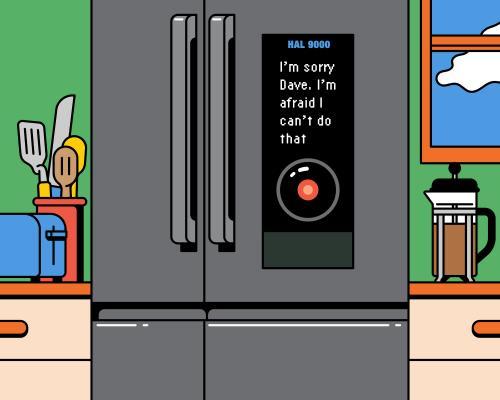
In "Why would anyone want a smart fridge?", Dave Schilling argues that the rise of smart refrigerators poses a significant risk, particularly during the holiday season when food consumption peaks. He highlights recent cyberattacks on supermarket refrigerators in Europe, which could lead to widespread food spoilage and chaos during festive gatherings. Schilling emphasizes the absurdity of relying on technology for basic tasks like food storage, suggesting that a return to simpler, manual methods might be necessary to safeguard against potential hacking threats. This matter is critical as it underscores the vulnerabilities in our increasingly connected world, especially during times when people rely heavily on food for comfort and celebration.
Stoic Response
Addressing the Students of the Stoa
Greetings, seekers of wisdom. Today, we gather under the shade of this stoa to reflect upon a pressing matter: the temptation of reliance on technology in our daily lives, particularly during this festive season. We must challenge the unhealthy judgments that lead us to surrender our autonomy and well-being to devices that promise convenience but may bring chaos.
The Nature of Desire and Impulse
-
Desire for Convenience:
- Recognize that the desire for ease can lead us astray.
- Reflect on whether this technology serves your needs or enslaves you to its whims.
-
Impulse to Overindulge:
- The holiday season tempts us with gluttony and excess.
- Discipline your impulses; seek moderation over mindless consumption.
Assent to Rational Judgments
-
Question Your Assumptions:
- Why do we embrace smart fridges that can be hacked?
- Consider the vulnerability of our reliance on such technology.
-
Embrace Simplicity:
- Return to the basics: manual methods of food storage and preparation.
- Find strength in simplicity; it fosters resilience against chaos.
Anchoring Advice in Stoic Discipline
-
Discipline Your Desires:
- Seek fulfillment in moderation, not in excess.
- Cultivate a sense of gratitude for what you have, rather than yearning for more.
-
Control Your Impulses:
- When faced with temptation, pause and reflect.
- Ask yourself: Does this choice align with my values and well-being?
-
Exercise Assent Wisely:
- Before accepting new technologies into your life, weigh their benefits against their risks.
- Choose wisely what you allow to influence your thoughts and actions.
Conclusion
As we navigate this festive season, let us remain vigilant against the allure of convenience that distracts us from our true purpose. Embrace the discipline of desire, impulse, and assent. In doing so, we safeguard not only our physical well-being but also our inner tranquility.
Act: Reflect, simplify, and choose wisely. The path to wisdom lies in your hands.
Article Rewritten Through Stoic Lens
Reflections on the Nature of Consumption and Technology
Embracing the Present Moment
As the seasons turn, I find myself amidst the holiday festivities, a time when indulgence seems to beckon with an irresistible allure. The darkness of winter draws me inward, tempting me to surrender to the comforts of warmth and excess. Yet, I must remind myself that true peace lies not in gluttony, but in moderation and mindfulness.
The Nature of Desire
In this season of abundance, I observe the proliferation of peculiar culinary creations designed to entice the palate. These "picky bits," as they are whimsically termed, serve as a reflection of our desire for novelty and distraction. Yet, I must question: do these novelties nourish the soul, or do they merely satiate fleeting cravings? It is within my power to choose wisely, to seek nourishment that uplifts rather than merely fills.
The Vulnerability of Our Constructs
Recent events remind me of the fragility of our modern conveniences. The cyberattacks on refrigeration systems in Europe serve as a stark reminder of the vulnerabilities inherent in our reliance on technology. In our quest for ease and efficiency, we have woven a web of dependence that can be easily disrupted. This chaos, however, is not to be feared; rather, it is an opportunity to reflect on the nature of control and the impermanence of our comforts.
The Wisdom of Simplicity
Perhaps there is wisdom in returning to simpler methods of sustenance. The notion of digging a hole to preserve food, while seemingly archaic, invites contemplation on the balance between nature and technology. In our pursuit of convenience, we must not forget the virtues of patience and labor. There is dignity in tending to our needs through our own efforts, a reminder that we are not merely consumers but stewards of our resources.
Acceptance of Nature's Order
As I ponder the implications of these technological advancements, I am reminded of the Stoic principle of acceptance. The world is governed by forces beyond our control, and it is futile to resist the inevitable. Should calamity strike, I must cultivate resilience and adaptability. My emotional well-being should not hinge upon the whims of machines or the abundance of festive foods. Instead, I shall find solace in the knowledge that true contentment arises from within.
The Path Forward
In this season of celebration, let us embrace the opportunity to cultivate virtue. Rather than succumbing to anxiety over potential disruptions, I will focus on fostering gratitude for what I have. The essence of the holiday spirit lies not in the abundance of food, but in the connections we forge and the love we share.
Let us not be slaves to our desires or the whims of technology. Instead, may we strive for a life of balance, where our choices reflect our values and our actions align with the greater good. In this way, we can navigate the complexities of our modern existence with grace and wisdom.
Source Body Text
We are deep into the holiday season now, past Halloween and a mere two weeks away from American Thanksgiving. I’ve already given up taking care of my body, surrendering fully to gluttony, vices, and going to bed at 7pm because it’s pitch black outside. I’ve begun to hibernate like a slothful bear, my blanket and pillow never too far from my grasp. The only thing closer to my hands than my bedsheets is a slice of cold pizza. I just want to eat in peace, thank you very much. Grocery retailers are keen to take advantage of holiday-related binge eating, developing and releasing ever-more-depraved festive novelty foods to subdue us into carb-induced slumber. In the UK, Marks & Spencer is expected to unleash hoards of weird, miniature packages of comical junk, affectionately known as “picky bits”, to prevent your digestive system from ever idling into park. “Ham and Barber’s Cheddar Crumpets”. “Twelve Mini Chicken Kyivs”. “British Melton Mowbray pork pie”. These dishes either sound like a thing a tertiary character orders in a Harry Potter novel or the last meal of a 60s British gangster. In America, we have Trader Joe’s. There’s no fun name like “picky bits” for the plastic tubs of slop they sell in the refrigerator section. Instead, we turn to our spouses and partners and mumble: “Pick me up some of that crap.” Toffee-flavored cheddar cheese. Pumpkin spice yogurt dip. An advent calendar … for dogs. I don’t begrudge anyone for cramming their shopping carts with intentionally whimsical perishable food products for depressed people. Overeating is a better use of your hibernation time than drunk-driving into an Arby’s at 2am. This is a holiday rite of passage: the junk food gauntlet. It’s as crucial to the festive season as a decorated tree and a surplus of good cheer. But what if I told you that with the press of a button, the entire picky bits industrial complex could collapse before we even have a chance to open our canine advent calendars? In France last month, supermarket refrigerators across the country were shut off remotely by Iranian terrorists. Other European countries have been hit with similar attacks, which occasionally lead to food having to be thrown out. My entire body goes numb thinking about what it would do to US and British citizens if their supermarkets were similarly affected during the holidays. Can I muddle through another family get-together without a large, rapidly-warming bowl of chicken uncured bacon ranch dip to soothe my anxiety? Doubtful. The chaos would be unprecedented. It’d be like Judge Dredd, Blade Runner and The Purge rolled into one, but with worse catering. You might be wondering how someone even hacks a fridge. Well, industrial fridges like the ones hacked in France are operated remotely via computer. It makes some sense that large-scale operations like grocery stores need to have the ability to make temperature changes quickly, without a bunch of fumbling around with knobs and buttons. But internet-connected fridges are available to consumers, too. Refrigerators from brands such as LG and Samsung allow regular people to change the temperature of their fridge from a smartphone app. My house is not nearly big enough to require me to adjust the settings on my appliances from another room. I only have six rooms (counting the bathrooms, with which I am very familiar during the holidays). Once again, technology aims to solve a problem that doesn’t exist. All we’re doing is trying to get closer to the God-level control of everything at the push of a button. The issue with that is: if we are God to our machines, then the devil also exists, and he knows how to code. Maybe there are a few useful applications of this technology for those of us who are supremely lazy. Some fridges have cameras and AI capabilities that tell you what food is inside, so that you might maintain a clean, tidy food storage system – one that tells you when your groceries are about to go bad. As though your actual human eyes and hands don’t work. That old broccoli is in there. Do I need a computer to tell me what my poisoned nose already can sense? Yup, that’s rotten food. Confirmed. Until there’s a robot that can take the food out for me, move it to the compost bin, and hose down the interior, I’ll pass on the smart fridge. I’ve already pointed out that computers have overwhelmed our cars, but this feels far more ominous. I need my holiday trash. I need my 2,000-calorie tandoori chicken bites. I can’t function without uncured ham and swiss cheese pockets. This is existential. It goes beyond mere sustenance. This is my emotional support during trying times. If black-hat hackers can shut off my fridge and spoil my food, I might start picking my hair out or nibbling on one of my less crucial digits. If my mouth isn’t full of goop and slop, then I might be forced to have a conversation with an uncle. These are the things nightmares are made of. The calamity is coming. Someone with more computer savvy will realize that the most vulnerable moment in our society is right now, during the holidays. The time when we need our buffalo chicken garlic bread bites the most. The only solution is to rip the computers out and go back to the switches, toggles and tactile buttons that used to maintain our civilization. The alternative is risking a holiday season without parmesan-crusted chocolate chip cookies or peppermint orange chicken. If you’re sweating right now, your blood pressure rising like a crimson tide, then you’re a normal human being. This is the proper response to a doomsday scenario otherwise unfathomable by the average mind. Alternatively, we could go back to digging holes in the backyard and filling them with ice and food. Hackers can’t access your refrigeration hole. They can’t melt ice from thousands of miles away. We must go back to nature – potato cheese sticks and cookie dough ice cream bites preserved as the Lord intended. Grab a shovel and get to work. Just make sure you have a functioning microwave. Dave Schilling is a Los Angeles-based writer and humorist