
November 20, 2026
If Democrats want to win, blue-collar populists are the key | Dustin Guastella and Jared Abbott
Thesis: To secure a lasting majority in 2028, Democrats must pivot towards blue-collar populists who resonate with working-class voters, rather than relying solely on professional progressives or centrist candidates.
Stakes: With a significant portion of the electorate lacking a college degree, Democrats risk alienating this crucial swing demographic if they fail to address their economic concerns and cultural values.
Takeaway: Investing in candidates who authentically represent working-class experiences and frustrations is essential for Democrats to reclaim the support of blue-collar voters and effectively implement progressive policies.
Stoic Response
1. Correspondence to the Magistrate
Seneca: "Noble magistrate, the echoes of our times call upon us to lead with wisdom and virtue. As the tides of change sweep through our Republic, it is not merely our duty to govern, but to understand the hearts of our people."
Musonius Rufus: "Indeed, it is the laborers—the backbone of our society—who must not be overlooked. Their voices are the pulse of our community, and to ignore them is to court ruin. We must cultivate leaders who embody their struggles and aspirations."
2. The Stakes of Ignoring the Working Class
Statistic: "57% of 2026 voters lacked a four-year degree, and they swung seven points toward Trump in 2024."
Seneca: "To disregard this truth is to sow the seeds of discontent. A significant portion of the populace feels alienated, and their grievances must become our focus if we are to maintain stability."
Musonius Rufus: "A government that does not listen to the laborers risks becoming a tyrant. Their economic concerns and cultural values must be addressed, lest we fracture the very foundation of our society."
3. The Path Forward: Investing in Authenticity
Seneca: "Those who seek to lead must do so with authenticity, connecting with the lived experiences of the working class. It is not enough to merely reject the opposition; we must present a vision that resonates deeply with their realities."
Musonius Rufus: "Let us support candidates who have walked the path of labor, those who understand the weight of toil and the dignity of honest work. They will be the ones who can bridge the chasm between the elite and the everyday citizen."
4. Practical Maxims for Leadership
- Seek Authenticity: Invest in representatives who genuinely reflect the working-class experience.
- Listen and Adapt: Understand the economic and cultural concerns of the electorate to forge a connection.
- Embrace Diversity of Thought: A range of voices, especially from the working class, enriches our political discourse.
- Act with Integrity: Govern not just for the present, but with a vision for a united and prosperous future.
Article Rewritten Through Stoic Lens
Journal of Marcus Aurelius: Reflections on Political Dynamics
On the Nature of Political Change
In the unfolding tapestry of human affairs, I observe the recent triumphs of the Democrats, a moment marked by a significant shift in the political landscape. The victories on the third of November reflect not merely the whims of fortune but the deeper currents of human sentiment. It is a reminder that we must remain vigilant, for the tides of public opinion are ever-changing.
Acceptance of the Present Moment
The Democrats, buoyed by a backlash against a figure of division, have found favor in unexpected places. Yet, I am reminded that such victories are not guaranteed to endure. The lesson is clear: to rely solely on opposition to a singular adversary is to court folly. The true path lies in understanding the needs of the populace, particularly those who toil with their hands and bear the weight of labor.
The Value of Authentic Representation
In contemplating the electorate, I recognize a significant portion of our fellow citizens—those without the adornments of higher education—who feel estranged from the political discourse. It is incumbent upon leaders to bridge this divide, to speak to the heart of the working class. Their voices, often drowned out by the clamor of elites, must be heard and valued.
The Call for Virtuous Leadership
To reclaim the trust of these voters, the Democrats must seek candidates who embody the spirit of the working class. It is not enough to espouse progressive ideals from a distance; one must walk among the people, share their struggles, and articulate a vision that resonates with their lived experiences. The candidates who have triumphed are those who possess both a bold economic vision and the ability to communicate in a manner that is accessible and relatable.
Embracing the Wisdom of Experience
The data suggests that candidates who emerge from the working class outperform their more privileged counterparts. This is a testament to the power of authenticity. It is not merely the policies they espouse, but the very essence of their being that connects them to the electorate. As we navigate this complex landscape, let us remember that true leadership requires humility, understanding, and a commitment to the common good.
The Importance of Cultural Values
In our pursuit of a just society, we must also recognize the cultural values that bind us. The working class holds dear traditions and a sense of community that must not be disregarded. To dismiss these sentiments is to alienate those we seek to serve. A wise leader will honor these values while advocating for the economic reforms necessary to uplift all.
Contemplation on the Future
As I reflect on the path forward for the Democratic Party, I am struck by the need for a nuanced approach. The candidates who can navigate the complexities of class and culture will be those who can forge a lasting connection with the electorate. The time has come for a new breed of leadership—one that is rooted in the soil of the working class, yet aspires to the heights of justice and equity.
Conclusion: A Call to Virtue
In conclusion, let us embrace the challenges that lie ahead with courage and wisdom. The journey toward a more equitable society is fraught with obstacles, yet it is also rich with opportunities for virtue. May we strive to uplift those who labor, to honor their contributions, and to lead with integrity. In doing so, we align ourselves with the greater good, and in this alignment, we find our true purpose.
Source Body Text
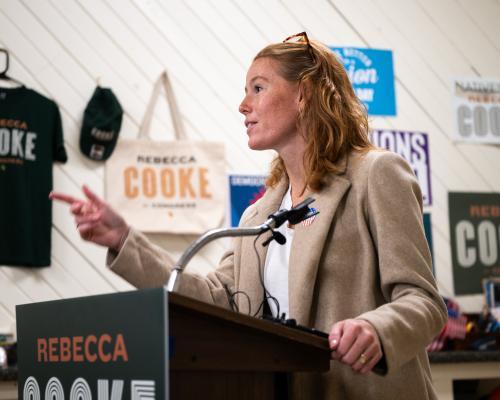
Democrats had a huge night on 3 November. The party ran an average of about 15 points ahead of Kamala Harris’s 2024 margins, and picked up seats that Trump carried by double digits just two years ago. Of course, the size and scope of the blue wave make it hard to draw specific lessons, and the results will inevitably serve as a Rorschach test reflecting each commentator’s prior beliefs. Democrats of all stripes won elections in all sorts of unlikely places. But it would be a big mistake to assume that because all sorts of Democrats won big in 2026 thanks to a backlash against Trump, any Democrat will do in 2028. There is now a decade of experience, 2026 notwithstanding, showing us that “I’m not Trump” is not the slam dunk Democrats want it to be. That’s to say Democrats still need a program and political pitch for 2028. One way to get a sense of what might be the best way forward is to look at which candidates did best relative to their districts’ political lean, demographic makeup and other Democrats. And here is the big story of the night: neither the down-the-line professional-class progressives nor the corporate-sponsored centrists did as well as the working-class populists who have a bold economic vision for working people but also know how to talk to workers. Before we dig into those results, first, some cold water. Despite Democrats’ big night, the party is still doing badly with working-class voters. That matters because not only is this group the largest in the electorate (57% of 2026 voters lacked a four-year degree), it is also a swing group. In 2024, voters without a college degree swung seven points toward Trump, from a six-point Republican margin in 2020 to a 13-point one. In 2026, they swung back hard, by 17 points. Still, Democrats won college graduates by 26 points and voters without degrees by just four points, leaving a 22-point education gap, and they lost white voters without degrees by 19 points. If Democrats want to win a commanding and durable majority, one capable of implementing their progressive economic plans and finally delivering for working Americans, they will need to do better with these voters. The question is, what kind of Democrat can do it? Progressives have long argued that they are the Democrats best suited to winning back the working class, but the results in 2026 don’t bear this out – at least not in a straightforward way. In general, though they of course performed well overall, the most liberal candidates fared worse compared with their centrist counterparts. Nominees backed by Justice Democrats ran about one point behind our estimate of how a typical Democrat would have done in the same district, given its 2024 presidential vote, demographics and whether an incumbent was running (a statistic known as “wins above replacement”, or War), and Bernie Sanders’s Senate endorsees ran about six and a half points behind. As a result, centrists have taken to social media to crow about how their brand of politics is more suited to building majorities. But here they might be overstepping, especially when it comes to the question of social class. Joe Weisenthal of Bloomberg’s Odd Lots podcast tweeted: “The whole theory that to expand the map that Dems had to nominate working classoids who dress in Carhartts just seems totally obliterated.” Is that true? Hardly. As it happens, blue-collar populists such as Brian Poindexter (a union ironworker in Ohio), Bob Brooks (a firefighter in Pennsylvania), Sam Forstag (a former smokejumper in Montana) and Rebecca Cooke (a waitress in Wisconsin), who were all backed by both Bernie Sanders and the moderate Blue Dog Democrats, as well as Randy Villegas (a community college professor from California’s Central valley), outperformed both professional-class progressives backed by Sanders and progressive Pacs – such as Abdul El-Sayed (a doctor) and Peggy Flanagan (a non-profit executive turned lieutenant governor) – and centrists backed by the New Democrat Coalition, such as Tom Suozzi and Jared Moskowitz. Compared with our estimate of a typical Democrat’s performance, Poindexter ran almost 11 points ahead, Forstag about five, Cooke about four and Brooks about two, for an average of about +5, compared with about +2 for nominees backed only by the Blue Dogs and about even for those backed only by Sanders. Villegas, whose race is still being counted, ran about 14 points ahead. El-Sayed and Flanagan ran five and six points behind, and Suozzi and Moskowitz trailed by one and a half and six points, respectively. As a group, the four Blue Collar Brigade nominees (Poindexter, Villegas, Forstag and Brooks), union-backed working-class candidates who ran as a slate, averaged a War of nearly +8, and all four ran ahead of comparable Democrats, by about eight points on average. No other progressive or centrist group’s nominees averaged better than about +3. In fact, the sweet spot looks like the vaunted “Bernie-dog” candidate who leans left on wages, jobs and the economy, is good at talking about those issues in plain language, and steers toward the center on issues like immigration and criminal justice. These are candidates who are justifiably frustrated with trade deals that shipped their communities’ jobs overseas, who value patriotism and tradition while sticking up for the working class against the economic giants that are grinding them into dust. Plus, it really does matter when populist candidates come from the popular classes. While professional-class progressives, like El-Sayed, soak up a lot of media attention, and moderates like Jon Ossoff clean up with donors, blue-collar candidates remain underappreciated for their ability to break through. Social class remains a major issue unto itself and blue-collar populists are uniquely able to tap into the frustrations of blue-collar voters. Just look at Troy Jackson, the soon-to-be senator from Maine. Jackson was subject to a late-campaign attack ad that questioned his competence by virtue of his background. Susan Collins’s now-infamous “cord of wood” ad implied that Jackson was better suited to logging than legislating. That kind of visceral class condescension makes the Gilded Age economy much more real for voters and could have shifted his margins in a favorable direction. Jackson succeeded in unseating the supposedly untouchable Susan Collins. It’s not clear what direction the Democratic party will go in the future but one thing is certain: blue-collar populists are still the most underrated current in the party and if the bigwigs want to win back working-class voters, they really ought to start investing in candidates who are used to showering at the end of the day rather than in the morning. Dustin Guastella is a research associate at the Center for Working Class Politics and the director of operations for Teamsters Local 623 Jared Abbott is the director of the Center for Working-Class Politics