
November 22, 2026
As the real world falls apart, Grand Theft Auto looks more and more appealing | Dave Schilling
Talking Points: "As the Real World Falls Apart, Grand Theft Auto Looks More and More Appealing" by Dave Schilling
-
Protagonist and Argument: In his piece, Dave Schilling positions himself as a skeptical observer amidst the fervor surrounding the release of Grand Theft Auto VI. He argues that as real-world systems falter—evidenced by tech outages and societal disruptions—many are drawn to the escapism and control offered by video games, particularly those that allow for chaotic behavior, like GTA VI.
-
Cultural Reflection: Schilling highlights the troubling implications of this trend, suggesting that as our reliance on technology grows, so does our desire to escape into virtual worlds where we can exert power and agency that feels increasingly absent in our daily lives.
-
Dependency on Technology: The narrative underscores a paradox: while we become more dependent on technology, its failures prompt a deeper longing for the very systems that often let us down. This cycle reinforces our attachment to digital environments, where we can reclaim a sense of control.
-
Call to Action: Schilling ultimately challenges readers to reflect on their relationship with technology and the allure of virtual escapism, urging a reconsideration of how we engage with both the digital and real worlds, especially as they increasingly intertwine.
Stoic Response
Correspondence to a Roman Magistrate
From the Wisdom of Seneca and Musonius Rufus
1. The Protagonist's Dilemma
In the spirit of inquiry, we reflect upon the modern protagonist, much like the citizens of our Rome, ensnared by the allure of distractions. As Dave Schilling observes, "Our collective addiction to virtual mayhem is guaranteed to crash productivity all across the globe." This mirrors our own struggles against the distractions of the amphitheater and the circus. The magistrate must recognize that the allure of escapism, whether in games or spectacles, reveals a deeper malaise within society—a craving for control amidst chaos.
2. Cultural Reflection and Moral Stakes
Schilling’s insights echo the Stoic understanding of virtue and vice. As technology falters, the populace seeks refuge in the chaos of virtual worlds, where they reclaim agency lost in reality. "Increasingly, reality resembles a video game like GTA VI," he notes, highlighting the troubling convergence of our lives with the fabricated. This reflects a moral imperative for the magistrate: to foster an environment where citizens engage with reality, cultivating resilience rather than retreating into a digital abyss.
3. Dependency and the Paradox of Control
The paradox of our age is stark. As Schilling articulates, "When you can’t access your Chase bank account for a few hours, why wouldn’t you fall to your knees to give thanks to the benevolent tech lord?" This dependency on technology mirrors the reliance on the state. The magistrate must cultivate a society that values autonomy and personal agency, lest we become mere NPCs in our own lives, subject to the whims of external forces.
4. Practical Maxims for the Magistrate
In light of these reflections, we offer the following maxims to guide your governance:
- Engage the People: Encourage civic participation, fostering a sense of agency in the real world.
- Promote Balance: Advocate for moderation in technology use, ensuring it serves humanity rather than enslaves it.
- Cultivate Resilience: Create programs that empower citizens to confront challenges, rather than escape them.
- Embrace Reality: Remind the populace of the beauty and complexity of life beyond the screen, nurturing appreciation for the tangible world.
In this way, let us steer our society toward virtue, ensuring that while we may enjoy the games of life, we do not lose sight of the grander narrative of our shared existence.
Article Rewritten Through Stoic Lens
The Stoic Perspective on Escapism in a Troubling World: Reflections on Grand Theft Auto VI
Protagonist and Argument
In the discourse surrounding the release of Grand Theft Auto VI, we observe a manifestation of human behavior that merits rational examination. The anticipation for this game, while fervent, reflects a deeper yearning for control and agency in an increasingly chaotic world. As we witness societal systems falter—through technological failures and disruptions—we must recognize that our responses are within our control, while the external circumstances often are not.
Cultural Reflection
This trend of seeking solace in virtual realms highlights a critical aspect of human nature: the desire for power and agency. However, we must reflect on the implications of this reliance on escapism. The Stoic philosopher understands that true power lies not in chaotic behavior but in the cultivation of virtue, wisdom, and self-discipline. As we engage with these digital worlds, let us not lose sight of the virtues that ground us in reality.
Dependency on Technology
The paradox of our dependency on technology is evident. While we increasingly rely on these systems, their failures evoke a longing for stability. This cycle reinforces our attachment to digital environments, where we may feel a semblance of control. Yet, as Stoics, we must recognize that our true power resides in our ability to respond to adversity with equanimity. The failures of technology serve as reminders that we should focus on what we can control—our reactions and our choices—rather than lamenting the unpredictability of external systems.
Call to Action
In light of these reflections, we are called to examine our relationship with technology and the allure of virtual escapism. The intertwining of our digital and real lives necessitates a conscious engagement with both realms. We must cultivate temperance, ensuring that our pursuits in the digital world do not overshadow our responsibilities in the real world. As we navigate these complexities, let us strive for justice in our actions, wisdom in our decisions, and courage in facing the uncertainties of life.
In conclusion, while the allure of Grand Theft Auto VI may offer an escape, it is imperative to remember that the true journey lies in the cultivation of virtue amidst chaos. Let us embrace the challenges of our reality with a Stoic mindset, focusing on what we can control and striving for a life of purpose and integrity.
Source Body Text
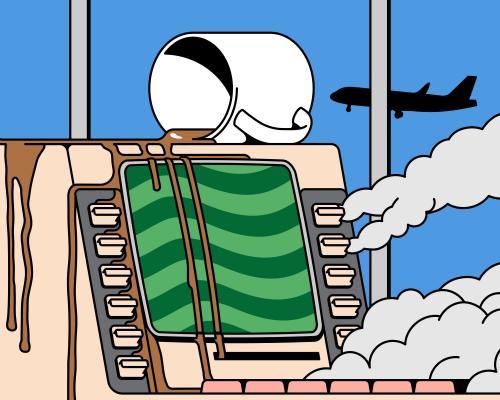
This week marked the release of the highly anticipated video game Grand Theft Auto VI. Millions around the world checked out of their usual responsibilities in order to immerse themselves in a game where you run errands for your girlfriend in between murdering people. I feel completely alone in not caring about GTA VI, as I famously only play video games where you get to be RoboCop – issuing public nuisance citations to graffiti taggers in between murdering people. I’m a man who knows what he likes. GTA VI has been over a decade in the making. The anticipation built to a fever pitch, with gaming enthusiasts practically going feral at the prospect of finally getting to schlep groceries and engage in casual bird-watching after brutally running over a pedestrian with a stolen Porsche. Our collective addiction to virtual mayhem is guaranteed to crash productivity all across the globe. I shudder to think what would happen if the game glitched out for everyone all at once, rendering your PS5 a slickly manufactured plastic paperweight. Would there be Paris-style riots turning every major city into a dystopian nightmare riddled with flaming trash bins and smashed shop windows? In a sense, that would be a boon to fans of the game, as the world of flesh would start to resemble GTA come to blood-curdling life. Meanwhile, gaming is trending in the opposite direction. Most modern video game systems don’t even accept physical media anymore. The days of buying an actual disc in a little plastic box are nearly gone. Each game purchase is now just exchanging invisible digital money for the right to access the pixels and data that make virtual worlds come to life on your TV screen. It’s ephemeral, intangible, and it could all disappear in an instant. But hey, that’s life in 2026, a time when hackers can turn off your refrigerator from halfway around the world. GTA VI digitally vaporizing at random would be catastrophic, but it wouldn’t be the first computer-related global inconvenience of the year, let alone the month or the week. For the last seven days, the news has been dominated by outages in our tech infrastructure: grounded planes, broken email systems, bank accounts fritzing in and out of existence like a flickering lightbulb. The troubles have been blamed on software bugs, faulty patches, and outdated equipment. The truly bored among us prefer to claim worldwide conspiracy theories, malicious hackers, or government manipulation that would have James Bond tossing his martini in the air and screaming: “This is all too much for me to handle.” Meanwhile, AI companies like Anthropic are growing exponentially as they seek to further entangle everyday life on Earth with their complex, interdependent, free-thinking computer systems. Even if these outages aren’t the direct result of AI, it’s all part of our brave new world. For the simple price of your money occasionally being completely inaccessible, you can have AI write a novel for you or remind you to pay your car insurance bill with the money you can’t use. This plan seems to be a huge success for everyone but actual human beings with normal, non-billionaire lives. Besides tech companies, I suppose the other biggest winners in all this are bar owners, especially the ones at airports. When absolutely nothing works, the only sane response is to have a pint and laugh about it. Increasingly, reality resembles a video game like GTA VI. Maybe without all the gruesome, wanton mayhem and surface-to-air missiles, but certainly with all of the other bits. As games start folding in more mundane tasks like shopping, going to the gym, or fixing a leaky roof, real life is taking on the rigid, mission-based thrill ride of the arcade. Sorting through a health insurance claim is almost as annoying as a boss fight in a classic Sonic the Hedgehog game – repeated button-smashing, gnashed teeth, and frayed nerves. The mere notion of a shadowy cabal flipping switches to shut off various critical services makes me think of a caffeine-addled bachelor cackling as they wreak havoc in a particularly malicious game of Sim City. I often feel like a cuckolded non-playable game character, or NPC, watching more exciting events happen around me that I’m unable to control. If I want to be able to get on an airplane that actually leaves on time, I’m going to have to level up my XP or purchase a pay-to-win upgrade. It’s not uncommon for me to imagine myself as an NPC avatar while strapped into the back of a Waymo driverless taxi, tooling from one checkpoint to another, silently praying the computer shuttling me to my destination doesn’t decide to change its mind and fly off a bridge into a river. We’re all at the mercy of virtual powers beyond our comprehension. One can’t help but sink into the despairing realization that life is now a series of slights perpetuated by an algorithm with a callous disregard for the whims of corporeal beings. So, what do we do when nothing works and everything is impossible? Go outside and do some actual bird watching? Repair a real roof instead of one in a video game? Surely not. If anything, these technological disruptions further underline our need for our gadgets and gizmos to exist. Absence, as they say, makes the heart grow fonder. When Microsoft Outlook crashes, it just reminds people how much they need Microsoft Outlook. Our dependency on these tools has become second nature, so ingrained in the hum of the world that every so often, they have to go away for us to even notice them. When you can’t access your Chase bank account for a few hours, why wouldn’t you fall to your knees to give thanks to the benevolent tech lord for seeing fit to bring it back to life? Better, then, to stop worrying about things you can’t control and focus on what you can … in GTA VI. The last vestige of absolute power is inside video games, a realm where you can do everything and anything you want, down to even the most antisocial behavior the mind can conjure. The main characters of video games have all the agency real people lack. If they run out of money, they can steal a car and get away with it. If all flights are grounded at the airport, they can hijack a helicopter. The only sane response to the feeling of ineffectual reality is to further retreat into the digital frontier, where anything is possible. After all, there’s only around a month left before Christmas, and your fake digital girlfriend is expecting a gift. Dave Schilling is a Los Angeles-based writer and humorist