
Stoic Bio
Chrysippus
Systematizer of Stoicism who wrote hundreds of works on logic, ethics, and determinism.
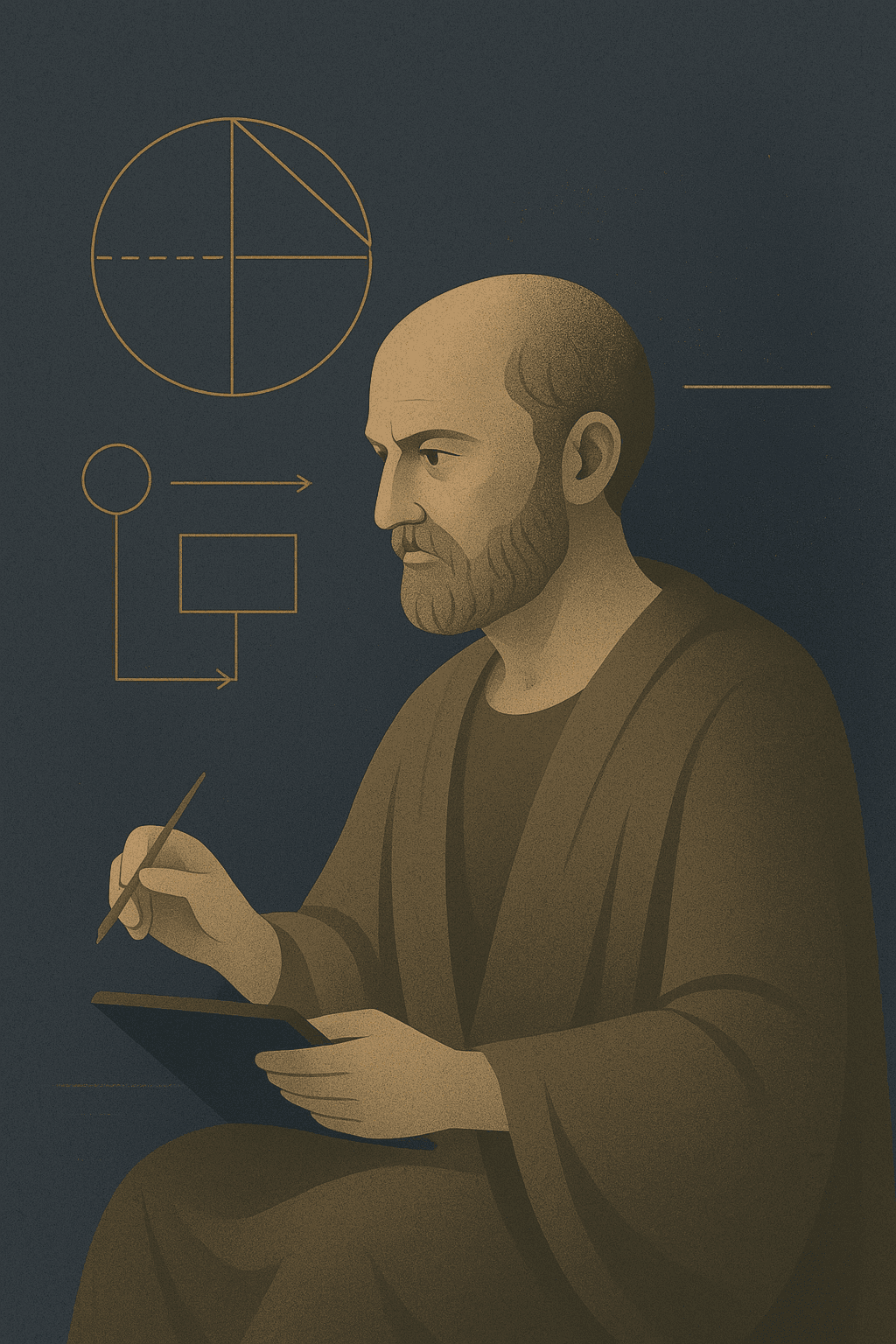
Chrysippus, rendered from classical references.

Chrysippus systematized Stoic logic so adversity could be reasoned with, not feared.
Chrysippus
Chrysippus of Soli (c. 279–206 BCE) was a Greek Stoic philosopher and the third head of the Stoic school in Athens. Often called the “second founder of Stoicism,” he systematized and expanded the teachings of Zeno and Cleanthes, giving Stoicism its intellectual rigor. Though most of his writings are lost, ancient sources credit him with hundreds of works that shaped Stoic logic, ethics, and physics. His influence ensured Stoicism’s survival and prominence in the Hellenistic world and beyond.
Biography
Chrysippus was born in Soli, in Cilicia (modern‑day Turkey), around 279 BCE. He moved to Athens and studied under Cleanthes, eventually succeeding him as leader of the Stoic school. Known for his sharp intellect and prolific writing, Chrysippus reportedly authored over 700 works, covering logic, ethics, physics, and theology. His ability to defend Stoicism against critics and refine its doctrines made him central to the school’s identity. He died around 206 BCE, leaving a legacy that defined Stoicism for centuries.
Key Teachings
- Logic and argumentation: Developed Stoic propositional logic, emphasizing clarity in reasoning and debate.
- Determinism and fate: Argued that all events follow from divine reason (logos), yet human freedom lies in rational assent.
- Virtue as the only good: Reinforced the Stoic principle that virtue alone leads to happiness.
- Indifferents: Distinguished between “preferred” and “dispreferred” indifferents (like health or wealth), clarifying their role in ethical life.
- Living in harmony with nature: Urged alignment with the rational order of the cosmos.
- Ethics of responsibility: Advocated fulfilling one’s duties in society while maintaining inner freedom.
Influence & Legacy
- Systematizer of Stoicism: His work gave Stoicism a coherent structure, making it resilient against rival schools.
- Philosophical impact: Influenced later Stoics such as Seneca, Epictetus, and Marcus Aurelius.
- Logic and philosophy: His contributions to logic anticipated ideas in modern propositional logic.
- Defender of Stoicism: Successfully countered criticisms from Skeptics and Epicureans, strengthening Stoicism’s intellectual standing.
- Enduring relevance: His emphasis on rational assent and determinism continues to inform debates in philosophy and psychology.
Memorable Quotes
Fragments of Chrysippus’ thought survive through later writers:
-
“If I follow God, I shall never err.”
— Expresses the Stoic belief in aligning with divine reason. -
“Virtue is a harmonious disposition of the soul.”
— Defines virtue as inner balance and rational order. -
“No evil is honorable; but death is honorable: therefore death is not evil.”
— A logical defense of Stoic views on mortality. -
“The wise man is free, even if he is a slave.”
— Highlights the Stoic idea that freedom lies in rational self‑mastery.
Chrysippus ensured that Stoicism became a robust philosophical system, capable of guiding both personal conduct and intellectual inquiry. His legacy as the architect of Stoic doctrine continues to shape how philosophy is practiced as a discipline of reason, virtue, and resilience.