
Stoic Bio
Cleanthes
Successor to Zeno who preserved Stoicism through hymns, notes, and patient teaching despite poverty.
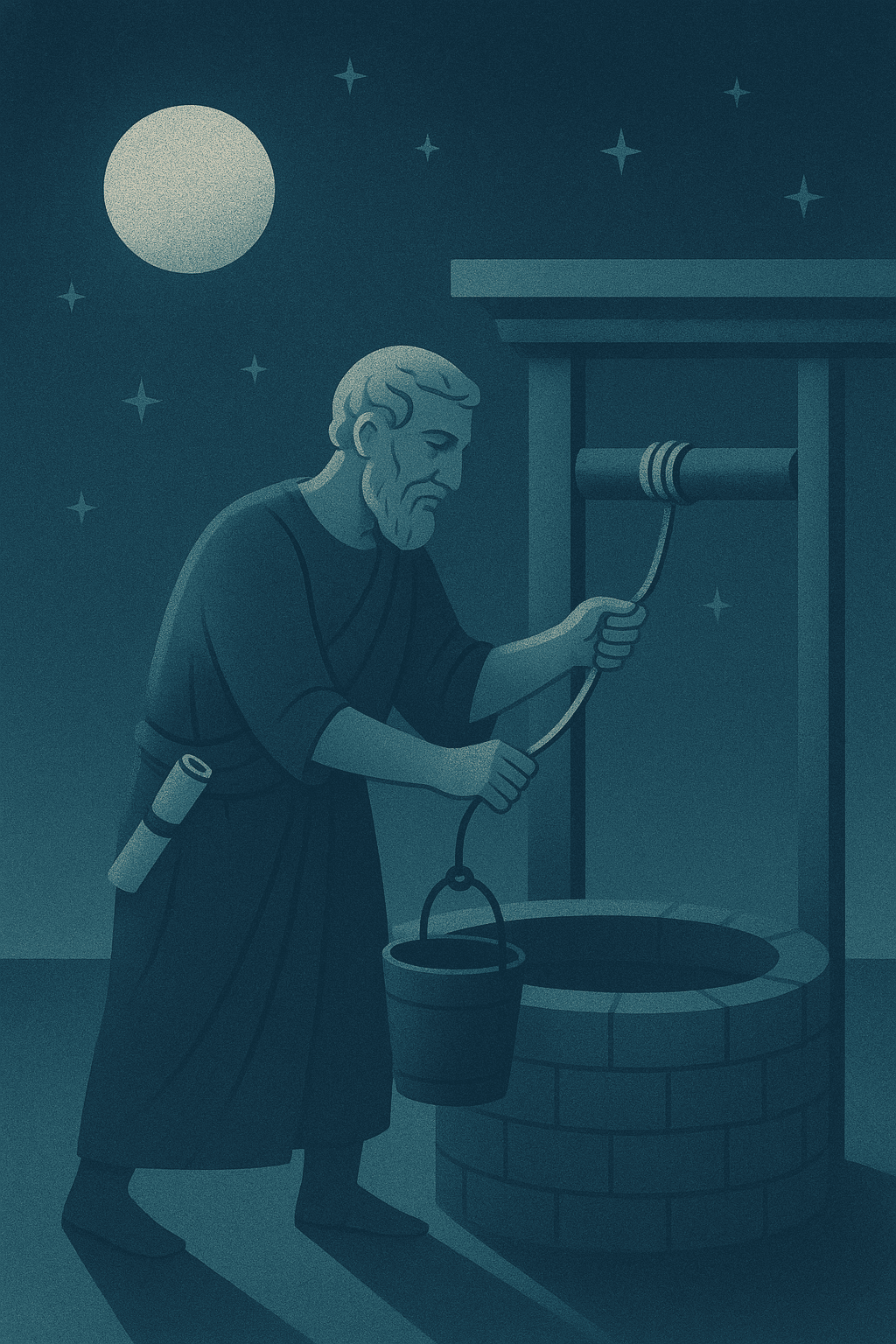
Cleanthes, rendered from classical references.

Cleanthes sang gratitude to Zeus, reminding us to praise each mortal dawn.
Cleanthes
Cleanthes (c. 330–230 BCE) was a Greek Stoic philosopher and the successor to Zeno of Citium as head of the Stoic school in Athens. Known for his perseverance and humility, he helped preserve and expand Stoic thought during its formative years. His writings, though mostly lost, emphasized the unity of the cosmos, the importance of virtue, and the rational order of nature. He is remembered for his devotion to philosophy and his famous Hymn to Zeus, which celebrates the divine reason guiding the universe.
Biography
Cleanthes was born in Assos, in Asia Minor, around 330 BCE. Arriving in Athens with little means, he worked menial jobs to support his studies, including carrying water at night. Despite poverty, he became a devoted student of Zeno of Citium and eventually succeeded him as the leader of the Stoic school. His dedication earned him respect among contemporaries, and his teachings reinforced Stoicism’s emphasis on living in harmony with nature and reason. Cleanthes led the school until his death around 230 BCE, leaving behind fragments and testimonies of his thought.
Key Teachings
- Divine reason (logos): The universe is governed by a rational principle, often identified with Zeus.
- Virtue as harmony with nature: Human flourishing comes from aligning actions with the rational order of the cosmos.
- Resilience through discipline: Endure hardship with patience and self‑control, as Cleanthes himself modeled in his life.
- Unity of all things: The cosmos is a single, interconnected whole, and humans are part of this larger order.
- Gratitude for existence: Life is a gift shaped by divine reason, and acceptance of fate brings peace.
Influence & Legacy
- Stoic continuity: As Zeno’s successor, Cleanthes ensured the survival and growth of Stoicism in Athens.
- Philosophical contributions: His emphasis on divine reason influenced later Stoics, especially Chrysippus, who systematized Stoic doctrine.
- Cultural impact: His Hymn to Zeus remains one of the most famous Stoic texts, blending philosophy with poetic devotion.
- Model of perseverance: His personal story of poverty and dedication became a symbol of philosophical commitment.
- Modern resonance: Cleanthes’ vision of a rational, interconnected cosmos continues to inspire discussions of ethics, spirituality, and science.
Memorable Quotes
Fragments of Cleanthes’ writings survive, often through later sources:
-
“Lead me, Zeus, and you, Fate, wherever you have assigned me. I shall follow without hesitation.”
— From the Hymn to Zeus, expressing acceptance of destiny. -
“The wise man is led by reason; the fool resists it.”
— A reflection on the importance of rational guidance. -
“All things are full of Zeus.”
— Emphasizes the divine rational order permeating the universe. -
“If you obey reason, you will be free.”
— A reminder that freedom comes from living in harmony with nature’s law.
Cleanthes stands as a bridge between Zeno and later Stoics, embodying the discipline and devotion that defined the early school. His life and teachings remind us that philosophy is not only about ideas but also about living with resilience, gratitude, and alignment with the rational order of the cosmos.