
Stoic Bio
Diogenes of Babylon
Head of the Stoic school in the 2nd century BCE who introduced Stoicism to Rome.
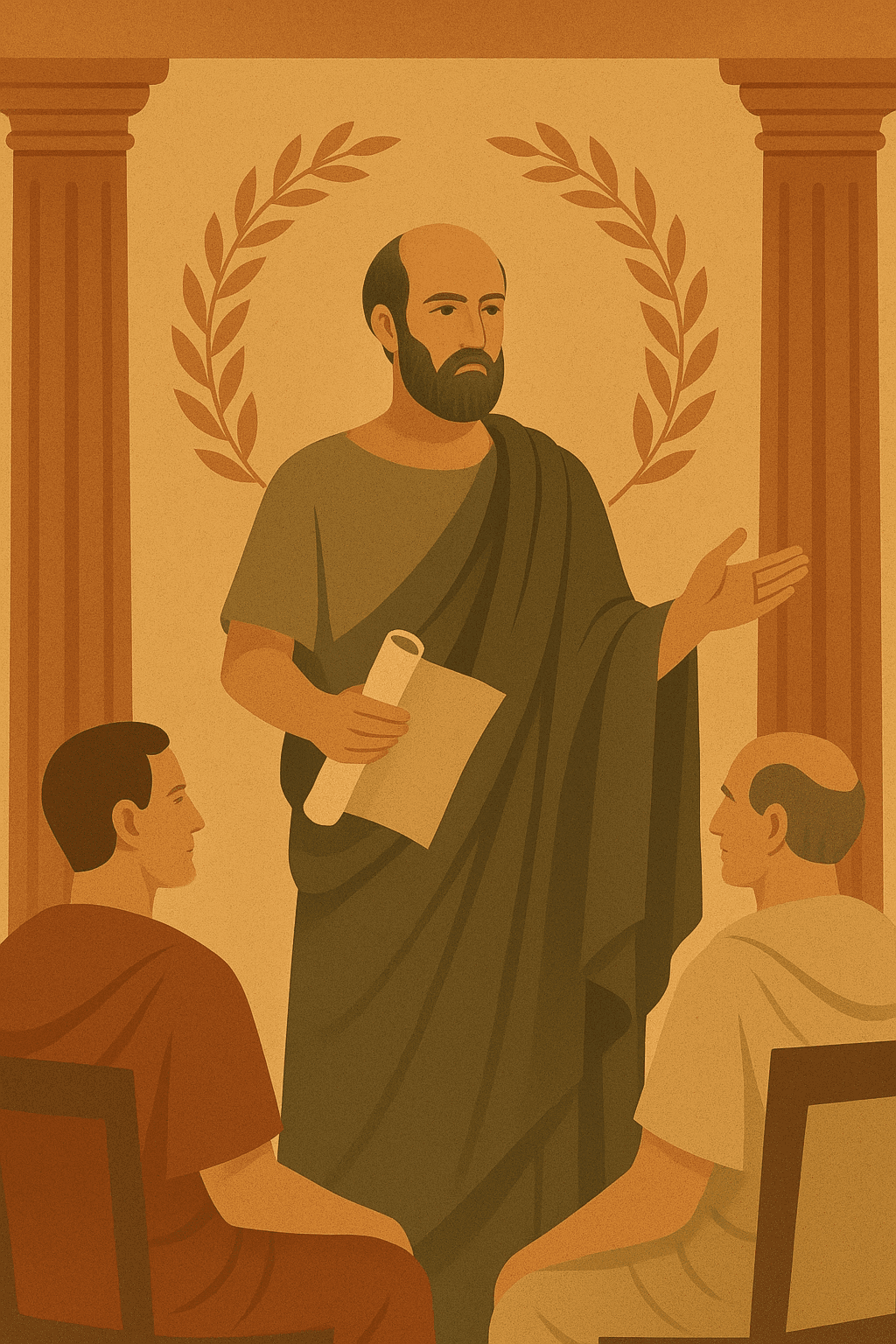
Diogenes of Babylon, rendered from classical references.

Diogenes of Babylon bridged cultures and showed how deeply our fates intertwine.
Diogenes of Sinope
Diogenes of Sinope (c. 412–323 BCE) was a Greek philosopher and one of the most famous figures of the Cynic school. Known for his unconventional lifestyle and sharp wit, he challenged social norms and material excess, advocating for simplicity, self‑sufficiency, and living in accordance with nature. Though not a Stoic himself, his ideas deeply influenced Stoicism, especially its emphasis on virtue and independence from external goods.
Biography
Diogenes was born in Sinope, a city on the Black Sea, around 412 BCE. Exiled from his hometown, he moved to Athens, where he studied under Antisthenes, a pupil of Socrates and founder of the Cynic tradition. Diogenes became notorious for his radical rejection of social conventions, living in poverty and often residing in a large ceramic jar. He used humor, provocation, and public acts to expose hypocrisy and encourage philosophical reflection. Despite his eccentricity, he was respected by some contemporaries, including Alexander the Great, who famously sought him out. Diogenes died in Corinth around 323 BCE.
Key Teachings
- Living in accordance with nature: Reject artificial desires and live simply, guided by natural needs.
- Self‑sufficiency (autarkeia): True freedom comes from needing little and relying on oneself.
- Critique of convention: Social norms, wealth, and status are distractions from virtue.
- Virtue as the only good: Happiness depends on moral character, not possessions or reputation.
- Fearlessness and frankness (parrhesia): Speak truth boldly, regardless of social consequences.
- Minimalism: Reduce life to essentials, finding contentment in simplicity.
Influence & Legacy
- Impact on Stoicism: His emphasis on virtue, independence, and living in harmony with nature shaped early Stoic thought.
- Cultural icon: Diogenes became a symbol of defiance against materialism and corruption.
- Philosophical provocateur: His life served as a living critique of society, inspiring later thinkers to question norms.
- Enduring image: Stories of Diogenes — such as searching for an honest man with a lantern — remain vivid examples of philosophical satire.
- Modern relevance: His radical simplicity resonates with movements like minimalism and critiques of consumer culture.
Memorable Quotes
Though Diogenes wrote little, many sayings are preserved through anecdotes:
-
“I am looking for an honest man.”
— Said while walking with a lantern in daylight, highlighting human hypocrisy. -
“He has the most who is content with the least.”
— A reflection on self‑sufficiency and simplicity. -
“I threw away my cup when I saw a child drinking from his hands.”
— Illustrates his commitment to reducing possessions to essentials. -
“Stand out of my sunlight.”
— His famous reply to Alexander the Great, showing indifference to power and status. -
“The foundation of every state is the education of its youth.”
— A reminder of the importance of virtue and wisdom in society.
Diogenes remains one of philosophy’s most colorful figures. His fearless rejection of convention and embrace of simplicity continue to challenge us to reconsider what truly matters in life. Though extreme in practice, his vision of freedom through virtue and self‑sufficiency laid important groundwork for Stoicism and still inspires reflection today.