
Stoic Bio
Epictetus
Born enslaved in Hierapolis, Epictetus founded a school in Nicopolis and stressed radical responsibility over external events.
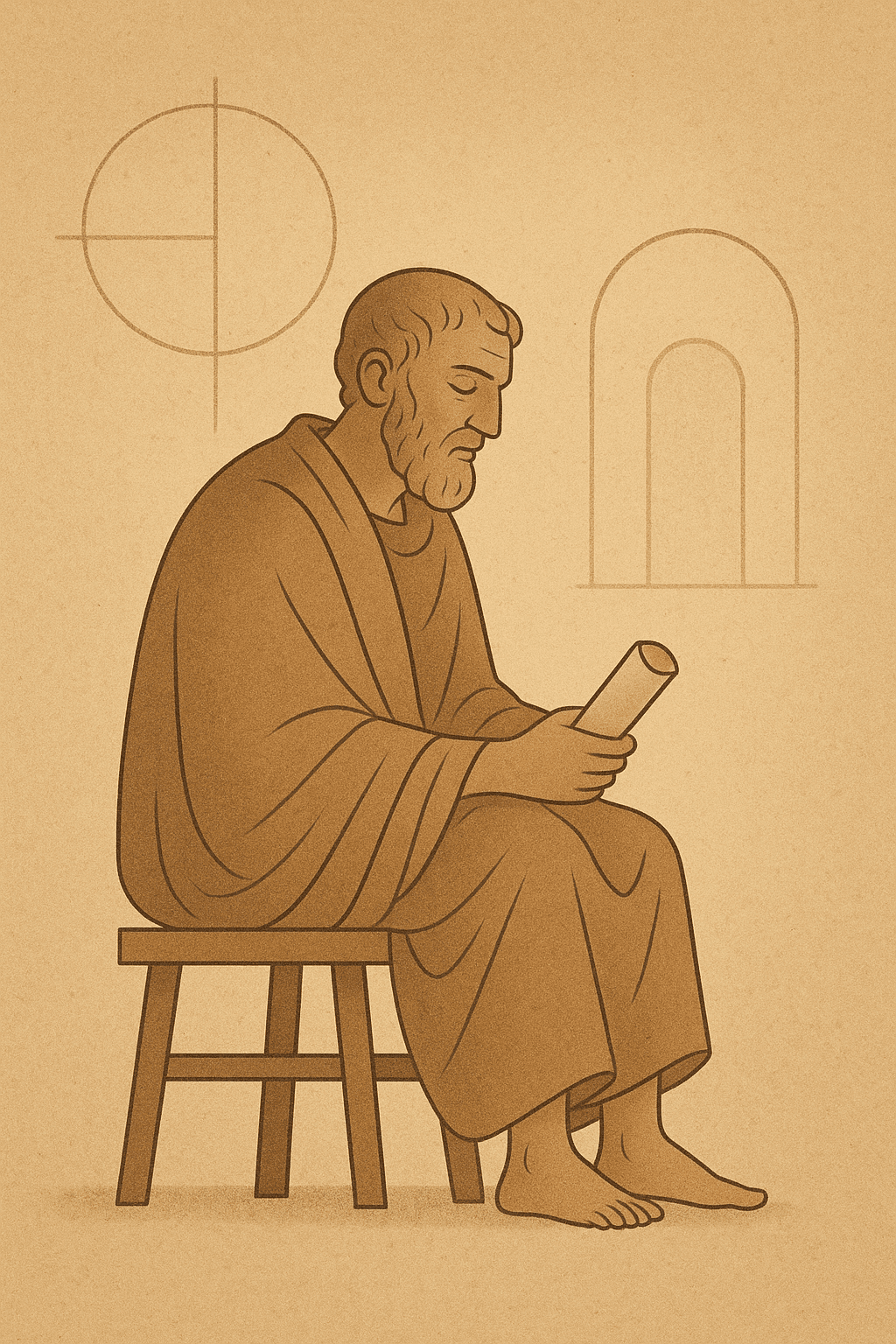
Epictetus, rendered from classical references.

Epictetus taught that freedom begins when we master our own judgments.
Epictetus
Epictetus (c. 50–135 CE) was a Stoic philosopher born into slavery in the Roman Empire. Despite his early hardships, he became one of the most influential teachers of Stoicism. His ideas, preserved through the Discourses and Enchiridion, emphasize freedom through self‑mastery, the distinction between what is within our control and what is not, and the pursuit of virtue as the highest good. His teachings continue to inspire those seeking resilience and clarity in modern life.
Biography
Epictetus was born in Hierapolis, Phrygia (modern‑day Turkey) around 50 CE. Enslaved in Rome, he studied philosophy under the Stoic teacher Musonius Rufus. Eventually freed, he established his own school in Nicopolis, Greece, where he taught until his death around 135 CE. Unlike Marcus Aurelius, Epictetus never held political power, but his influence came through direct teaching and dialogue. His students recorded his lessons, ensuring his philosophy reached far beyond his classroom.
Key Teachings
- Control and freedom: True freedom comes from focusing only on what lies within our control — our thoughts, choices, and actions.
- Acceptance of fate: External events are beyond us; peace comes from accepting them without resistance.
- Virtue as the highest good: Living with wisdom, courage, justice, and moderation is the path to fulfillment.
- Discipline of desire: Train yourself to desire only what is good and avoid being ruled by passions.
- Role ethics: Fulfill your duties in life — whether as a parent, citizen, or friend — with integrity.
- Resilience through perspective: Hardship is not inherently bad; it is an opportunity to practice virtue.
Influence & Legacy
- Philosophical reach: His ideas shaped later Stoics and influenced Christian thought, Enlightenment philosophers, and modern psychology.
- Practical philosophy: The Enchiridion became a handbook for soldiers, leaders, and everyday people seeking guidance.
- Modern relevance: His emphasis on control and acceptance resonates with cognitive behavioral therapy and mindfulness practices.
- Cultural impact: Epictetus is often cited in leadership training, resilience studies, and self‑help literature.
- Enduring clarity: His teachings are valued for their directness and practicality, making Stoicism accessible to all.
Memorable Quotes
-
“It’s not what happens to you, but how you react to it that matters.”
— A core Stoic principle on resilience and perspective. -
“Freedom is the only worthy goal in life. It is won by disregarding things that lie beyond our control.”
— Highlights the Stoic path to inner liberty. -
“No man is free who is not master of himself.”
— A reminder that self‑discipline is the foundation of freedom. -
“First say to yourself what you would be; and then do what you have to do.”
— Encourages clarity of purpose followed by consistent action. -
“Wealth consists not in having great possessions, but in having few wants.”
— A reflection on simplicity and contentment.
Epictetus remains a guide for those seeking strength and serenity in uncertain times. His voice, forged in adversity, continues to remind us that true freedom lies in mastering ourselves and living in harmony with reason and virtue.