
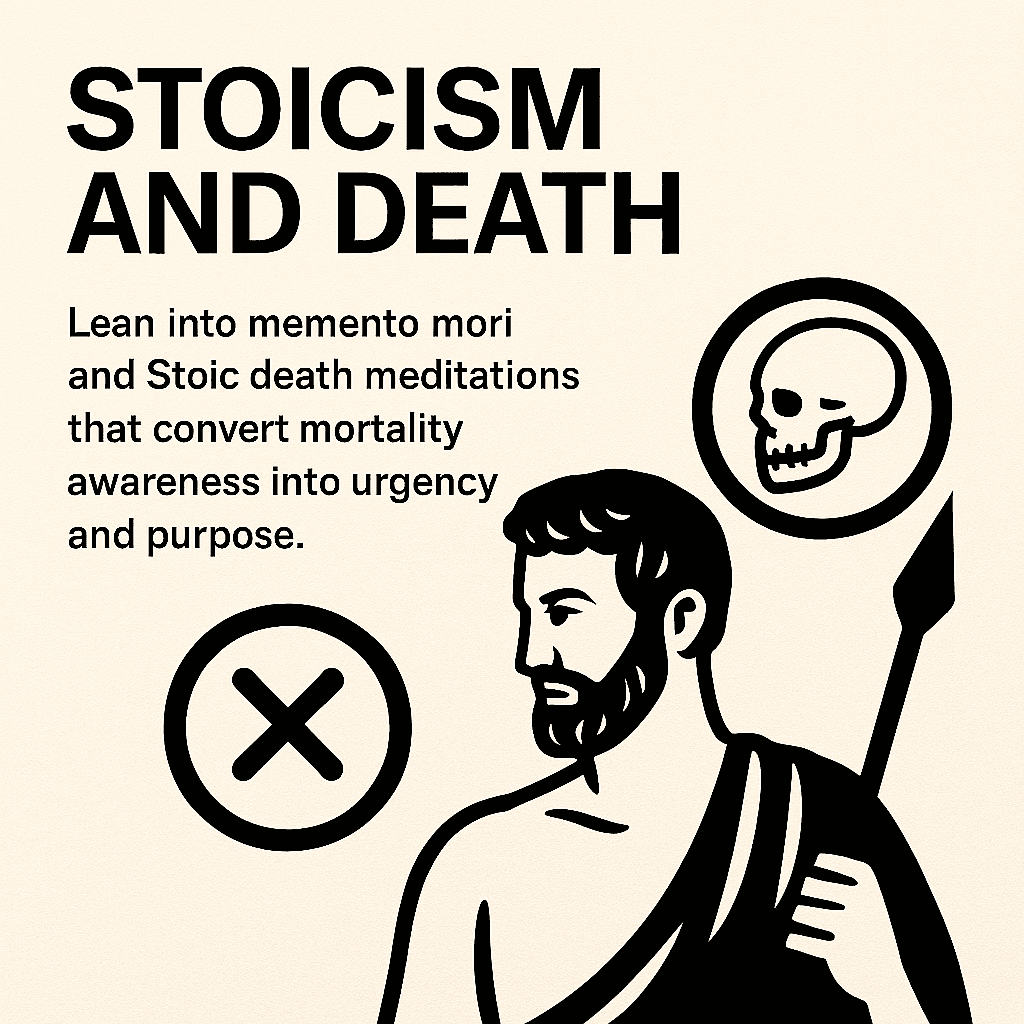
Stoicism and Death
Law 8: Embrace Death – Live with Urgency and Purpose
Death is the great equalizer — the one certainty in an uncertain world.
Most people flee from the thought of it, burying it under distractions, denials, and endless tomorrows.
The Stoics did the opposite: they stared it down daily, not with morbid fascination, but with clear-eyed acceptance.
This practice turned mortality from a terror into a teacher, fueling lives of profound purpose and presence.
Law 8:
Embrace death – live with urgency and purpose.
By keeping the end in mind, you strip away the trivial, sharpen your focus on what truly matters, and transform every moment into a deliberate act of living.
Process orientation from Detachment from Outcomes & Law 7 plus the hardship practice in Voluntary Hardship & Law 6 makes memento mori feel actionable.
Memento Mori: Remember You Must Die
The Latin phrase memento mori — "remember that you must die" — was a cornerstone of Stoic practice.
It was not about dwelling in darkness, but about illuminating life.
Stoics kept reminders everywhere: skulls on desks (as legend has it for some), daily meditations, even triumphant Roman generals had slaves whisper "memento mori" during parades to counter hubris.
Seneca captured it perfectly:
"Let us prepare our minds as if we’d come to the very end of life. Let us postpone nothing. Let us balance life’s books each day… The one who puts the finishing touches on their life each day is never short of time." (Letters 101.7–8)
Marcus Aurelius, facing his own mortality amid wars and plagues, wrote relentlessly:
"You could leave life right now. Let that determine what you do and say and think." (Meditations 2.11)
"Perfection of character: to live your last day, every day, without frenzy, or sloth, or pretense." (Meditations 7.69)
This was no abstract theory. Epictetus, who endured slavery and exile, reminded his students: "Death is not terrible, else it would have appeared so to Socrates." (Enchiridion 5) The fear of death, not death itself, is the real thief of life.
How Awareness of Mortality Shapes Meaning and Urgency
Stoics saw death as nature's design — a return to the cosmos from which we came.
It is indifferent, neither good nor bad, just inevitable.
But embracing it unlocks extraordinary power:
- Urgency Without Panic: Knowing time is finite cuts through procrastination. Why waste a day on grudges, gossip, or mindless scrolling when it could be your last? Death awareness turns "someday" into "today."
- Clarity of Purpose: Mortality strips illusions. Wealth, fame, possessions — all dust. Only virtue endures. Ask: "If I died tomorrow, would this matter?" It refines your actions to what builds character and helps others.
- Deeper Appreciation: When every breath is borrowed, gratitude surges. Relationships deepen, simple joys (a sunrise, a conversation) become profound. Seneca: "You act like mortals in all that you fear, and like immortals in all that you desire." (Letters 103.5)
- Freedom from Fear: By rehearsing death, you rob it of surprise. It becomes a familiar horizon, not a sudden abyss. This equanimity lets you live boldly — taking risks for justice, love, or growth without paralysis.
In practice, this awareness does not breed despair; it breeds vitality. Stoics lived more fully because they knew the clock was ticking.
Practical Exercises for Memento Mori
Integrate death awareness gently but consistently. Start small to avoid overwhelm.
1. Daily Death Meditation (Morning or Evening, 3–5 Minutes)
Sit quietly and visualize:
- Your life ending today — what unfinished business? What regrets?
- Say silent goodbyes to loved ones.
- Reflect: "This body is temporary. What will I do with today?"
Marcus used this to govern wisely: "Think of yourself as dead. You have lived your life. Now take what’s left and live it properly." (Meditations 6.2)
2. The "Last Time" Mindset (Throughout the Day)
Treat routine moments as potential finales:
- Hug your child as if it is the last embrace.
- Work on a project as if it is your final contribution.
- Eat a meal savoring it fully.
This infuses ordinary life with extraordinary presence.
3. Mortality Reminders (Ongoing)
- Wear a memento mori token: a ring, necklace, or phone wallpaper with a skull or hourglass.
- Read obituaries weekly: Note how lives are summed up by character, not possessions.
- Journal: "What would I change if I had one year left? One month? One day?" Act on one insight immediately.
4. The Bedtime Rehearsal (Nightly)
As you lie down, think: "This could be my last sleep." Release the day's worries; resolve to wake (if you do) with purpose. Seneca recommended reviewing the day as if sealing a final account.
Comparisons with Other Traditions
Stoicism's embrace of death echoes across wisdom traditions, showing its universal truth:
- Buddhism: Like memento mori, Buddhist maranasati (death mindfulness) uses corpse meditations to foster detachment from ego and impermanence (anicca). Both traditions see death awareness as a path to liberation from suffering, though Buddhism emphasizes rebirth cycles while Stoics focus on one rational life in harmony with nature.
- Existentialism: Thinkers like Heidegger ("being-toward-death") and Camus (absurdity of life) mirror Stoic urgency. Sartre's "existence precedes essence" aligns with Stoic self-creation through virtue. But where existentialists often grapple with meaninglessness, Stoics find inherent purpose in rational virtue and cosmic order.
These parallels highlight death's role as a catalyst for authentic living — a shared human insight refined by the Stoics into practical action.
Law 8 in One Line
Death is not to be feared, but befriended — for it alone teaches us to live with fierce purpose and gentle acceptance.
Embrace it not to hasten the end, but to enrich every beginning. Your life, right now, is the only one you have. Make it count.