
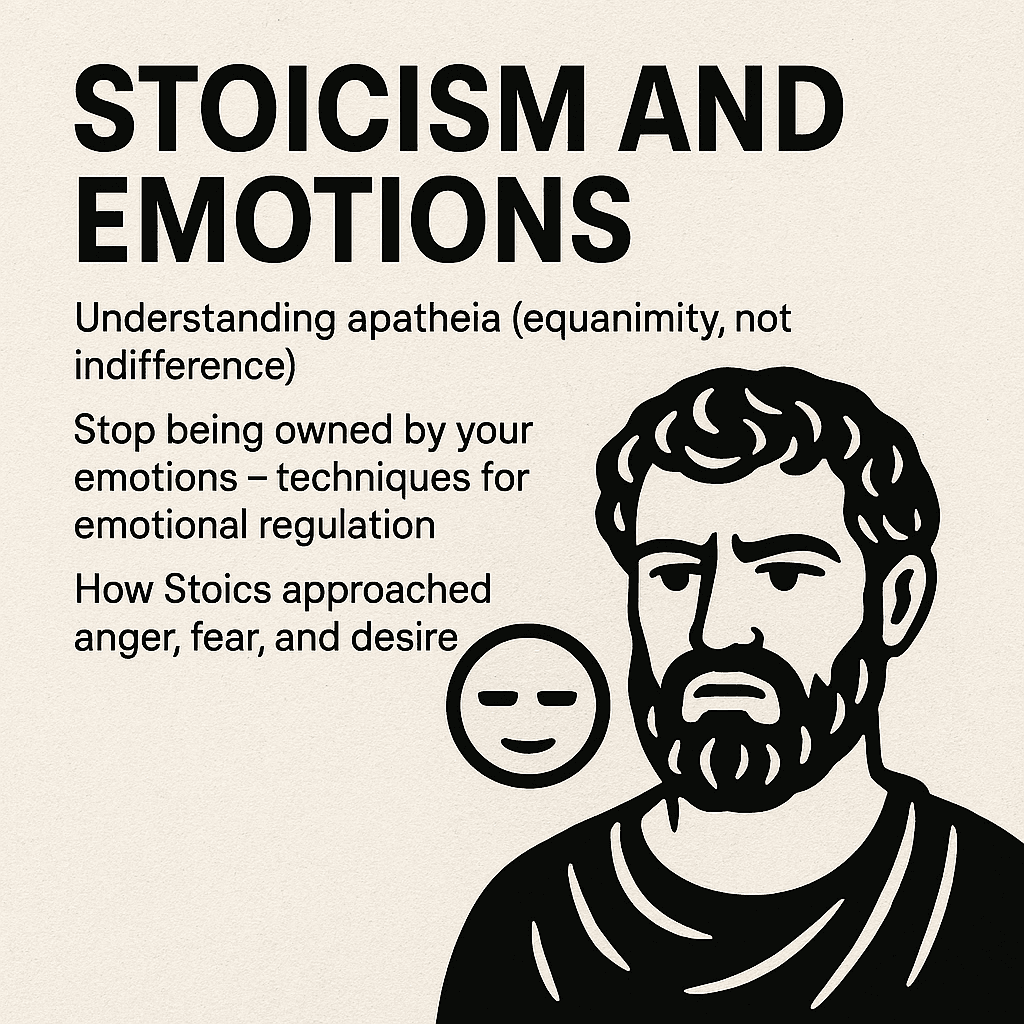
Stoicism and Modern Psychology
Stoicism is not a relic of ancient scrolls — it is a practical toolkit for the human mind, remarkably aligned with cutting-edge psychology.
While the Stoics drew from observation and reason in a pre-scientific era, modern research has validated many of their insights, showing how these 2,000-year-old practices build mental resilience, reduce suffering, and foster well-being.
Yet Stoicism is not therapy; it is a philosophy of life that goes beyond symptom relief to cultivate virtue and purpose.
In this deep dive, we explore the bridges and boundaries between Stoic wisdom and contemporary science.
Keep the mortality urgency from Stoicism and Death (Law 8) and the process mindset in Detachment from Outcomes in mind as you compare Stoicism with CBT.
Parallels with Cognitive Behavioral Therapy (CBT)
No connection is stronger than that between Stoicism and CBT, the gold-standard psychotherapy for anxiety, depression, and stress.
CBT's founder, Aaron Beck, explicitly drew from Stoic ideas, and his protégé Albert Ellis created Rational Emotive Behavior Therapy (REBT) as a direct modern adaptation of Epictetus.
At the core: Both teach that it is not events that disturb us, but our interpretations of them.
- Stoic Foundation: Epictetus: "Men are disturbed not by things, but by the views which they take of them." (Enchiridion 5) This is the Dichotomy of Control (Law 2) — focus on judgments, not externals.
- CBT Parallel: Cognitive distortions like "catastrophizing" (exaggerating threats) or "all-or-nothing thinking" mirror Stoic "passions." CBT techniques like cognitive restructuring — identifying irrational beliefs and replacing them with evidence-based ones — echo Stoic reframing.
Example Exercise Comparison:
| Stoic Practice | CBT Technique | Shared Goal |
|---|---|---|
| Premeditatio Malorum (visualize worst-case scenarios to reduce fear) | Decatastrophizing (question "What's the worst that could happen?") | Build emotional resilience by normalizing adversity |
| Evening Journal (review actions against virtues) | Thought Records (log triggering events, automatic thoughts, and balanced responses) | Increase self-awareness and rational decision-making |
| Amor Fati (love of fate; accept what happens) | Radical Acceptance (from Dialectical Behavior Therapy, a CBT offshoot) | Reduce resistance to reality, lowering stress |
Studies show CBT reduces anxiety by 50–60% in 12–16 sessions; Stoic practices, applied daily, offer similar benefits without a therapist — a democratized mental health tool.
Resilience and Mental Health Applications
Stoicism's emphasis on voluntary hardship (Law 6), emotional regulation (Law 4), and process over outcomes (Law 7) aligns with resilience research from positive psychology.
- Resilience Building: Martin Seligman's "learned optimism" and Angela Duckworth's "grit" reflect Stoic endurance. Practices like voluntary discomfort mirror exposure therapy, desensitizing us to stress. A 2018 study in Frontiers in Psychology found Stoic training increased resilience scores by 20% in participants facing chronic stress.
- Mental Health Outcomes:
- Anxiety/Depression: Negative visualization (premeditatio malorum) reduces rumination, per fMRI studies showing decreased amygdala activity (fear center) after similar mindfulness exercises.
- PTSD/Trauma: Stoic acceptance helps reframe suffering as growth, akin to post-traumatic growth therapy. Veterans' programs like "Stoic Resilience Training" report lower PTSD symptoms.
- Addiction/Impulsivity: Temperance (one of the four virtues) parallels impulse control in motivational interviewing; detaching from desires curbs cravings.
- Everyday Applications: Apps like "Stoic" or "The Stoic" gamify journaling and memento mori (Law 8), backed by data showing daily reflection boosts well-being metrics like life satisfaction.
Stoicism complements pharmacotherapy too — it empowers agency where meds manage symptoms.
Where Stoicism Complements or Diverges from Modern Science
Stoicism and psychology overlap, but they are not identical. Science focuses on empirical evidence and symptom reduction; Stoicism on ethical flourishing (eudaimonia) in a cosmic context.
Complements:
- Evidence-Based Validation: Neuroplasticity supports Stoic habit-building — repeated reframing rewires neural pathways. Evolutionary psychology explains why we default to negative biases (survival mechanism), which Stoics counter with reason.
- Holistic Integration: Stoicism enhances therapies like Acceptance and Commitment Therapy (ACT), which uses defusion (detaching from thoughts) much like apatheia. A 2020 meta-analysis in Journal of Contextual Behavioral Science found Stoic-inspired interventions improved emotional regulation in 85% of studies.
- Preventive Power: While psychology often reacts to disorders, Stoicism prevents them by building virtue proactively — a "mental vaccine" for life's chaos.
Divergences:
- Scope of "Good": Psychology aims for happiness or well-being (subjective); Stoics define the good solely as virtue (objective). Hedonic adaptation (we adjust to pleasures) supports Stoic indifference to externals, but therapy might encourage pursuing joy — Stoics would call this risky if it compromises character.
- Role of Emotions: Modern emotion-focused therapies validate feelings as valid signals; Stoics see irrational passions as errors to correct. Divergence: Stoicism might underplay trauma's biological roots, where science prescribes empathy-first approaches.
- Cosmic vs. Individual Focus: Stoics viewed humans as part of a rational universe (logos), fostering cosmopolitanism. Psychology is more individualistic, less metaphysical. Critique: Stoicism's fatalism (amor fati) could discourage activism if misapplied, though true Stoics like Marcus balanced acceptance with action.
- Limitations of Science: Not all Stoic claims are testable (e.g., virtue as the sole good), and psychology's replication crisis questions some findings. Stoicism offers timeless wisdom where data falls short.
In essence, Stoicism complements science by providing a philosophical framework; science refines Stoicism with data-driven tweaks.
Integrating Stoicism into Modern Mental Health
To blend them:
- Use CBT apps (e.g., MoodKit) alongside Stoic journaling.
- Join Stoic communities for accountability, like modern Stoa groups.
- Consult professionals for clinical issues — Stoicism supports, but does not replace, therapy.
As William Irvine notes in A Guide to the Good Life, "Stoicism is psychology before psychology existed." Together, they offer a robust path to resilience.